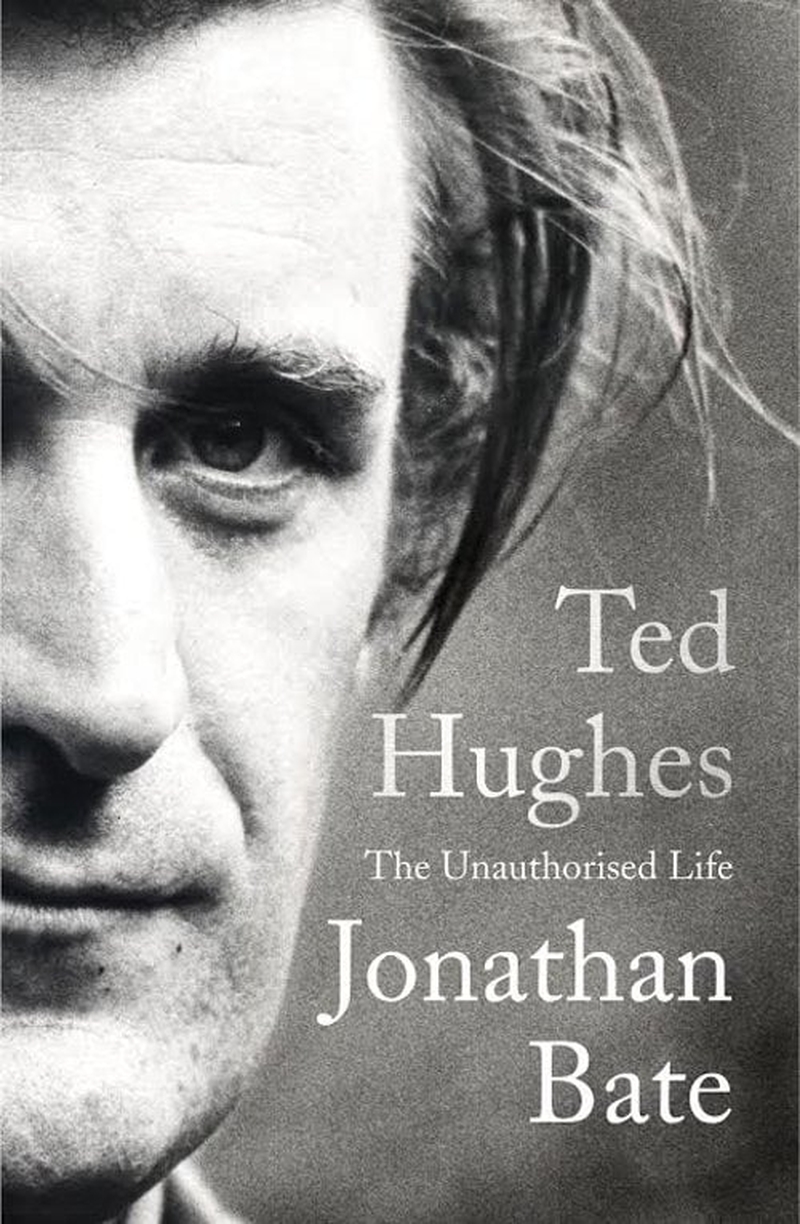
Ted Hughes, born in 1930, was Poet Laureate of England from 1984 until his death in 1998. He and Sylvia Plath, an American poet, married in June 16, 1956, Bloomsday in fact, a date chosen to honour James Joyce. Plath committed suicide on February 11, 1963 at the age of 30, the couple had separated the previous year. In 1969, Hughes’s lover, Assia Wevill, an aspiring poet, took her own life and that of their four-year old daughter, Alexandra Tatiana Elise.
Leaving Cert students will be familiar with the poetry of Sylvia Plath, the first wife of Hughes and mother of their two children, Frieda Rebecca, born in 1960 and Nicholas Farrar, born in 1962. So much of this absorbing story is inevitably ringed by an aura of tragedy and sadness and the air of unsolved mystery that attends suicide.
However, much of the book is about a healthy appetite for life and Hughes’s rural upbringing in Yorkshire is brought vividly to the page - his life-long passion for fishing produced one of his best poems, The Pike. As a boy, Hughes developed an enduring, almost messianic fascination with nature and wildlife, with the lives and deaths of crows, magpies, owls and curlews, creatures which inspired the themes of his best poetry. Foxes and badgers too, of course were animals he closely watched and The Thought-Fox is perhaps his best-known poem.
Most of the readers of this vast book, however, will be interested in the poet's relationship with Plath, the matter, incidentally, of a 2003 biopic, Sylvia, which starred Gwyneth Paltrow, Daniel Craig, Jared Harris, and Michael Gambon.
The Hughes estate withdrew support for Bate's endeavour when he already had much of the work done, much of it based on the poet’s unpublished writings. The author duly re-wrote it - the biography is described as “unauthorised”- and he uses no direct quotations from poems or archive material. Nevertheless, he felt capable of delivering a convincing biography using notes based on almost 100,000 pages of Ted Hughes's manuscripts, paraphrasing from the poet’s private journals at the British Library. He also drew on 100 books which Hughes had written or edited. Memoirs by friends and family also assisted him in his task.
The poet received a wave of late acclaim for Birthday Letters, a memoir in free verse about life with Plath, published in 1998, shortly before his death from cancer. The key collections, however, are The Hawk in the Rain, published in 1957 and Crow (1970) whose carefully wrought poems throb with nature red in tooth and claw, described by the Scots poet, Don Patterson, as “the death metal of poetry.”
His close friend, Seamus Heaney gave the oration at Hughes’ funeral. "No death outside my immediate family has left me feeling more bereft, “ Heaney said. “He was a tower of tenderness and strength, a great arch under which the least of poetry's children could enter and feel secure.”
Paddy Kehoe