The girls walked from one end of the place to the other/ remembering songs,/ wanting attention.
The boys walked from one end of the place to the other/ remembering songs,/wanting attention.
Ar Chreag i Lár na Farraige (from On the Raft with Fr Roseliep, Arlen House, 2006)
As Seamus Heaney’s date of death – August 30, 2013 – recedes ever further, his work is somehow beginning to stand on its own, an inevitable development when the author is no longer around to talk about it or to give readings. The abundant work of the poet James Liddy, also no longer with us, is much less-known in his native country and indeed in his adopted America. However, his numerous collections of verse are arguably of equal importance in the pantheon of Irish poetry, albeit in an entirely different field of versifying.
Suffice to say that the Pulitzer Prize-winning poet, John Ashbery, one of the most revered poets currently working in the USA, is one of Liddy's greatest admirers. “ I consider him (Liddy) to be one of the most original among living Irish poets, perhaps the most, “ Ashbery once declared, as quoted by Michael S Begnal in the afterword to Liddy's 2003 collection, I Only Know That I Love Strength in My Friends and Greatness. (That somewhat grandiose, but effective title derives from a line in a Jack Spicer poem.)
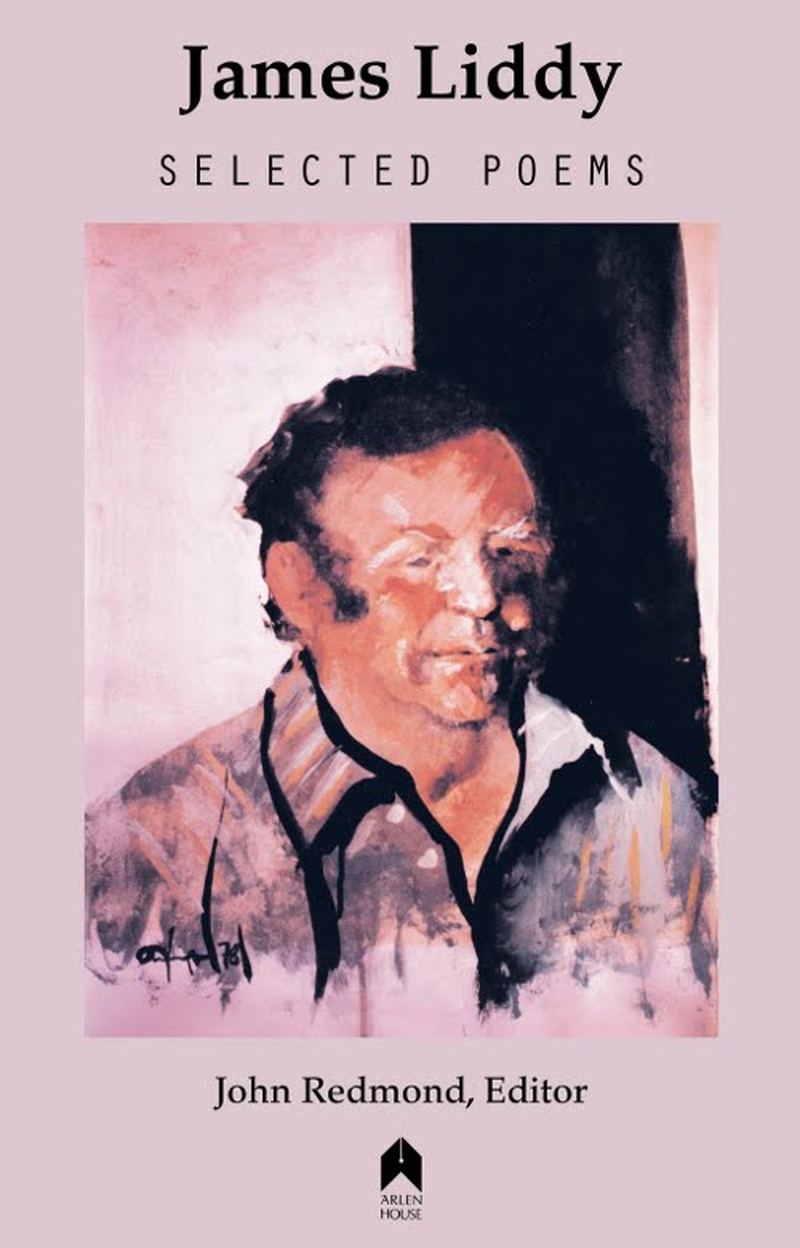
Liddy's Selected Poems, published in 2011, is as good a place to start as any and the selection contains a perceptive introductory essay by John Redmond from the University of Liverpool. Both Selected Poems and the I Only Know That I Love Strength in My Friends collection are published by Arlen House.
Influenced to an appreciable degree by the vibrant Beat poetry scene encountered during a mid-sixties sojourn in San Francisco, Liddy’s own poetry does offer challenges. This writer, for instance, recalls reading the long poem, Glass After Oblivion for the first time and being utterly mystified. Yet although he wanted the poems complex - the work wasn’t worth doing otherwise - many of them offer large glimpses of accessibility. The passing of the years too has offered a kind of clarity, the fog has lifted and the poetry now often glows with its own electric charge, for this reader anyway. Most importantly, that complexity to which I refer had a purpose, it was not obscurity for obscurity's sake, or for any vain motive.
Born on Lower Pembroke Street in Dublin in 1934, the irasicble - nay, irrepressible - poet and professor died from renal cancer in November 2008, after a short stay in a hospital in his adoptive city of Milwaukee, Wisconsin. In fact he passed away during the night after Barack Obama won the US Presidential elections. That makes it some five years before Seamus Heaney’s death in 2013. Yet Liddy’s death seems more recent to those of us who knew him, as the iconoclastic personality and that mischievous sense of humour endures, and forcefully in the poems. Such perceptions regarding dates of death, of course, work conversely in the case of those who knew Heaney and were not acquainted personally with Liddy. It is interesting in its own way, however, that both men – both so different in their approach to poetry- should die at 74.
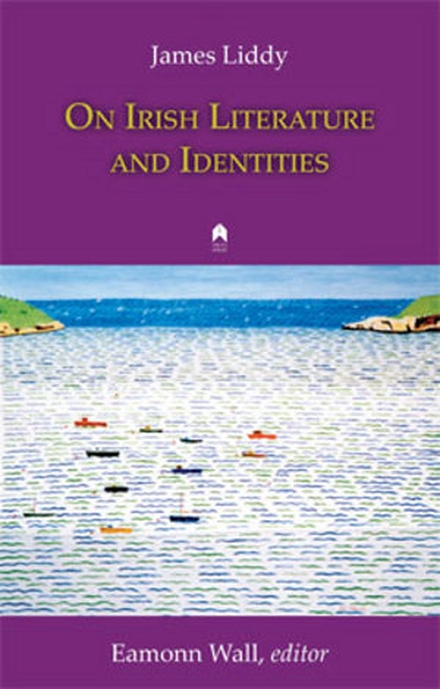
Our subject encouraged many aspirant poets in the County Wexford area, firstly in broadsheets and subsequently in issues of The Gorey Detail. He particularly encouraged Eamonn Wall. “James Liddy’s late night conversation was memorable, hilarious, insightful, gossipy, and frequently unprintable, “ writes Wall in his introduction to Liddy’s book of essay and reviews, On Irish Literature and Identities.“Liddy’s work is guided by a fierce and an independent intelligence and by an unwavering faith in the importance of poetry,” he has declared elsewhere. A companion volume of essays and reviews, On American Literature and Diasporas, also edited by Wall, was published in 2013, both available from Arlen House.
A doctor's son and a gregarious, generous sort, James Liddy had been a good friend of Patrick Kavanagh, and a dear friend until her death, of Kavanagh’s widow, Katherine. He frequently dropped names in the best possible sense - illustrious names from history, Irish and otherwise, his dramatis personae often found in compromising situations, to say the least, pressed into unusual service like Bunuel's flawed heroes. He was a member of a definable 1970s Dublin literary circle which customarily gathered in McDaids pub, and later, in Grogans.
While he would never draw attention to fame in the way we impressionable young poets might have occasionally done, he himself had form, or pedigree, in poetry. His first two books of poems had been published by the legendary Dolmen Press and a magisterial poem, To the Memory of Bernard Berenson, had been included in Brendan Kennelly’s 1970 anthology, The Penguin Book of Irish Verse.
The family home was some miles north of Gorey, in the village of Coolgreany, Co Wexford although he also had a home in Kilkee, Co Clare through family connections. He taught at the University of Wisconsin in Milwaukee for many years, and his mother, Clare Reeves, was an American. He tended to spend his summers in Ireland and worked the rest of the year in the USA. The result of this bi-located adult life was a loamy soil in which the poet could grow his poems, with all their faux-sensational stances, and relentless broadcast of his staged, internal dialogue. Liddy's guileful lines were often drawn from the speech of real figures throughout history- mostly Irish history- with impersonations and potent quotes leading to a Beat-inflected, Joycean stream-of-consciousness. Indeed, Joyce and Yeats were constantly referenced and the young poet spent a period as curator of the Joyce Museum in Sandycove.
So much for the local colour he made sure seeped into the verse. The (local) Technicolor he manufactured himself, in vivid, garishly provocative poems. He was an intuitive devotee of Baudelaire, Rimbaud, Jack Kerouac, Allen Ginsberg, Jack Spicer, William Burroughs and Frank O'Hara. Moreover, having frequented the Haight Ashbury area of San Francisco during the Beat years, he embodied in his very being the antidote to that idea of poetry as an unattainable art which one sometimes encountered in sniffy university circles during the 1970s.
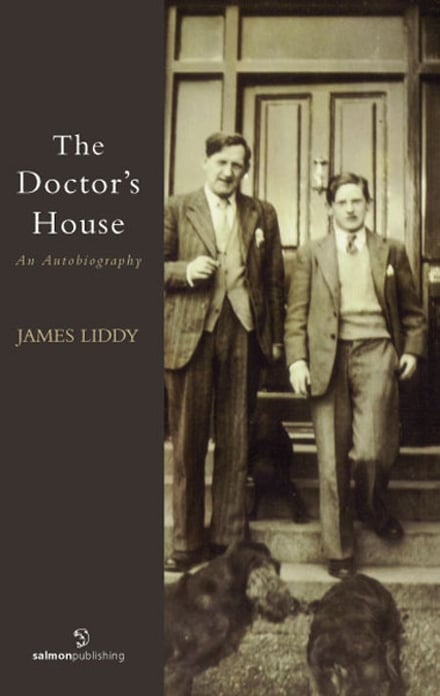
He wrote two exceptional memoirs, The Doctor’s House and The Full Shilling, although the first is more vivid than the second. The Doctor’s House, published in 2004, bears some comparison with near-contemporary Aidan Higgins’s equally resonant memoir, Donkey’s Years. Both writers dealt confidently and lyrically with the relics of old decency, the twilight of the Anglo-Irish in the Big House. Liddy was particularly on form with witty and wise vignettes and escapades in The Doctor’s House. Both memoirs are published by Salmon Poetry.“One need not be gay, Catholic, or Irish (or even American) to love James Liddy, “ declares Begnal in that aforementioned afterword to the I Only Know That I Love Strength in My Friends volume.
“As a poet James wrote from deep within himself, but he rarely (if ever) leaves you on a sombre note “ writes Drew Blanchard, in his afterword to It Swings From Side to Side, the last slim volume, published posthumously in 2011 by Arlen House. “He has the rare ability to balance above his head, Atlas-like, a romantic yearning (without an excess of pathos) and an ironic kick under the table (not too hard, yet not too soft.) “
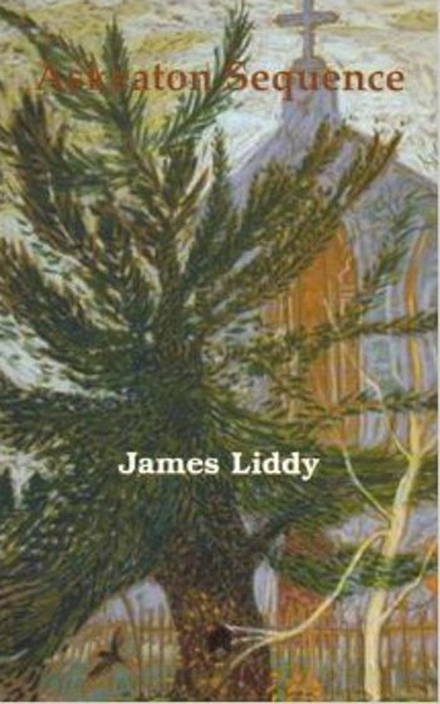
Arlen House and Salmon, Liddy's publishers, along with Creighton Press in the USA, must be given credit for keeping the Liddy flame lit, Arlen House for the attractive editions of his later poetry (some would argue his best years were the last decade.) Askeaton Sequence, Rome That Heavenly Country, Wexford and Arcady, It Swings from Side to Side and Fest City number among the other volumes in the Arlen House catalogue.
I was officially loved /by some in the world /thus not without merit/but disdain for others/was tornado-dark.
- Black Hawk Island (from On the Raft with Father Roseliep, Arlen House, 2006)
Paddy Kehoe