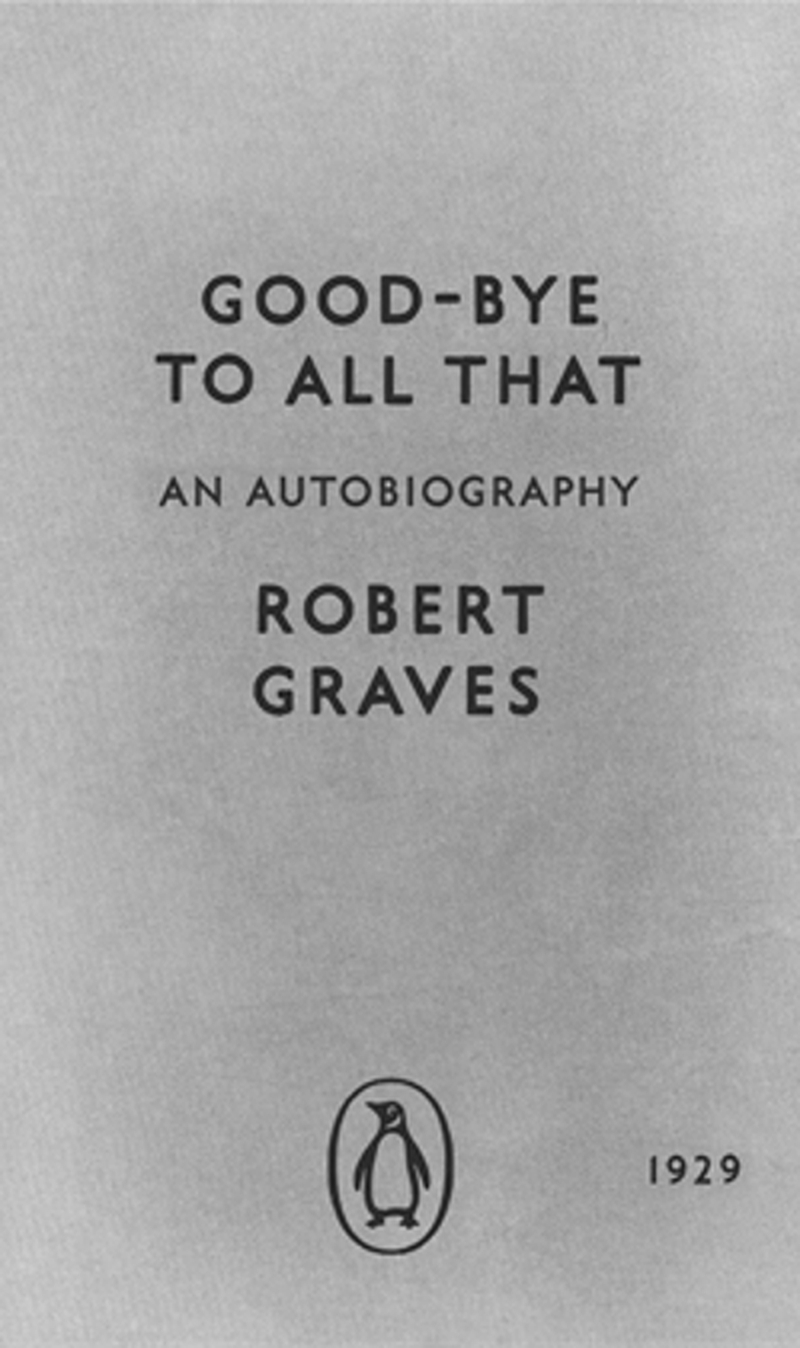
“There was no patriotism in the trenches, “ wrote the late Robert Graves, in Good-Bye to All That, his autobiography which was first published in 1929. “It was too remote a sentiment, and rejected as fit only for civilians. A new arrival who talked patriotism would soon be told to cut it out.”
Graves was born in 1895 in Wimbledon, the son of Dubliner Alfred Perceval Graves, whose father,The Rt. Rev Charles Graves, was the Church of Ireland Bishop of Limerick.
The Bishop was an antiquary who discovered the key to ancient Irish Ogham script. “He and the Catholic Bishop were on the best of terms, “ writes Graves early on in his lively account. “They cracked Latin jokes at each other, discussed fine points of scholarship, and were unclerical enough not to take their religious differences too seriously.”
Robert’s father, Alfred Perceval, was a school inspector in Ireland, and, like his son, he was a poet. He was also a song-writer who penned the classic Irish ballad, Father O’Flynn.
In August 1914, young Robert enlisted in the Royal Welch Fusiliers, following England’s declaration of war on Germany. He was drafted to Northern France in May 1915 and was wounded in July 1916 at the Battle of the Somme.
A false report circulated that he ‘died of wounds.’ Far from it, Graves would go on to write not just this autobiography - which does not shirk the ridiculous and the farcical aspects of his service - but much-lauded works of fiction and history and many celebrated poems.
Years after the span of this classic memoir, he would gain fame as the author of the Roman empire-era novels I, Claudius and Claudius the God, both of which were published in 1934. Both novels would be adapted, many years afterwards, for a celebrated BBC TV series in 1976, starring Derek Jacobi, John Hurt, Siân Phillips, and Brian Blessed.
Graves’ raw, uncompromising, and acerbic account of life in the trenches of Northern France was instantly acclaimed when it was first published in 1929. “One of the most candid self-portraits, warts and all, ever painted, “ enthused the Times Literary Supplement.
This new edition has been newly edited and annotated by Graves expert Fran Brearton, and contains an illuminating introduction by Andrew Motion.
Graves died in 1985, aged 90, at his home in the beautiful coastal village of Deià, Majorca where he had lived for many years.
Paddy Kehoe