Tests are carried out and a station director appointed as preparations continue for an Irish radio service.
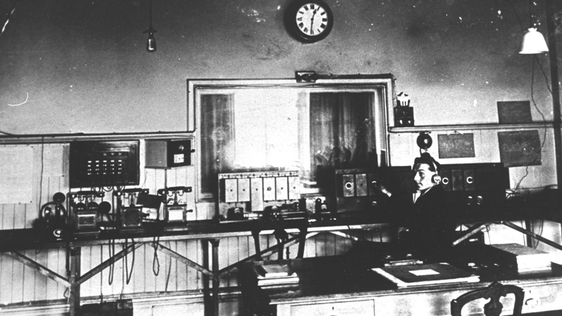
The Wireless Exhibition opened at the Mansion House in Dublin on 11 November 1925. Organised by the Wireless Society of Ireland, the event offered those attending the chance to hear from radio experts and see a range of appliances. There was also the promise that the proposed Dublin Broadcasting Station would carry out a test during the exhibition.
A test message, "This is 2RN the Dublin Broadcasting Station testing", was sent to air and could be heard during the event.
For the young Irish Free State, recovering from a civil war, the establishment of a national radio service would be another financial challenge. There was much discussion and debate about what an Irish broadcast service should offer the Irish people. Should there be an emphasis on education and instruction over entertainment? Could transmissions be of assistance to agriculture and business? Will this wireless service be able to educate, entertain and communicate items of national interest and importance?
In late October 1925, the Department of Post and Telegraphs ran newspaper advertisements looking for applications for the job of director for the Dublin Broadcasting Station.
A man of broad views and wide sympathies, interested in life and in literature and especially in Irish literature and culture, is required.
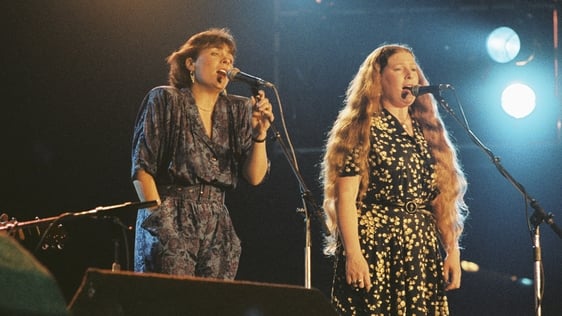
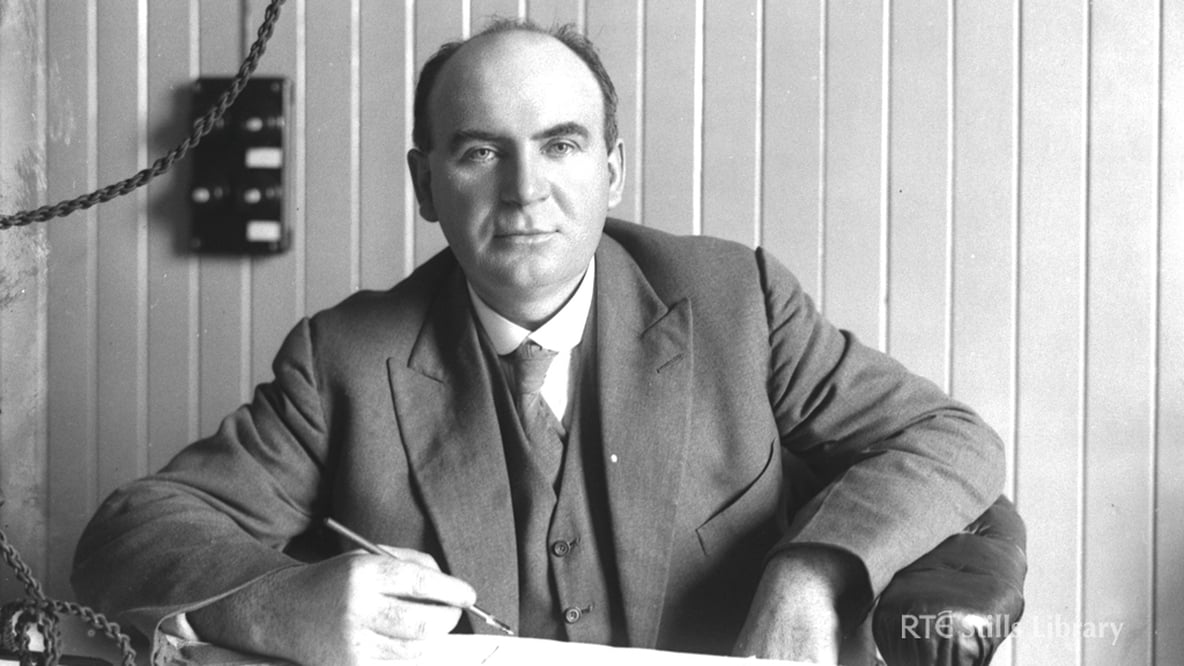
Seamus Clandillon was appointed to the position of Director of the Dublin Broadcasting Station in November 1925. A Galway man and a graduate of UCD Seamus Clandillon was a civil servant, a Senior Inspector of the National Health Insurance Commission. Like his wife Maighréad Ní Annagáin he was also a singer, recording artist and a collector of songs.
Other key positions put in place at the new service included Vincent O'Brien as the Musical Director of Broadcasting and Seamus Hughes as Station Announcer.
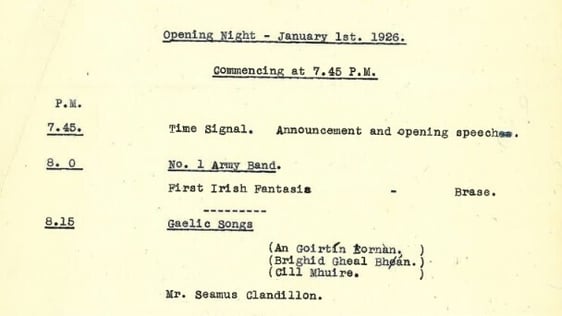
The planning of the opening night of 2RN got underway. Seamus Clandillon invited a number of artists to perform during an evening of music and song to be broadcast on 1 January 1926. Singers Joan Burke, Joseph O'Mara and J.C. Doyle were booked. Seamus Clandillon and his wife Máighreád Ní Annagáin would both sing songs in Irish. It was not possible to organise a choir to sing in Irish for the opening. Solo musicians approached included Arthur Darley violin, Annie Fagan harp, Dina Copeman piano and James Ennis Senior and William Andrews on pipes. While the Army No.1 Band would also take part.
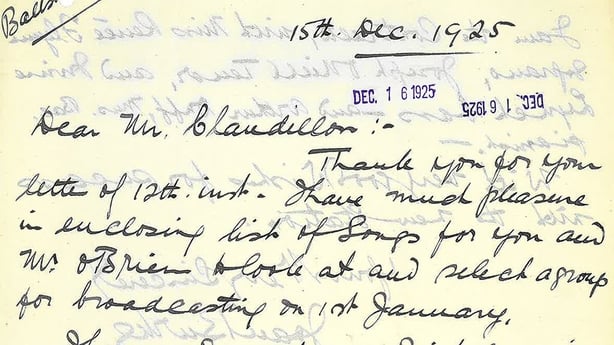
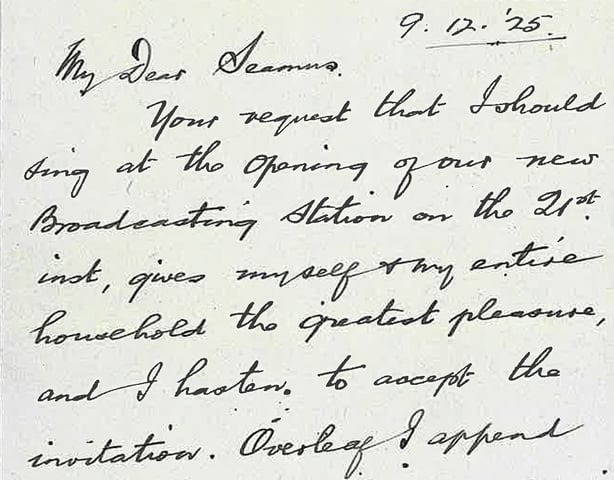
Joan Burke replied to Seamus Clandillon,
I have much pleasure in enclosing list of songs for you and Mr O'Brien to look at and select a group for broadcasting on 1st January.
J.C. Doyle was also delighted to accept the invitation, writing back to Seamus Clandillon about singing on radio with the observation,
I understand from cross channel singers that generally speaking they consider it a gruesome experience.
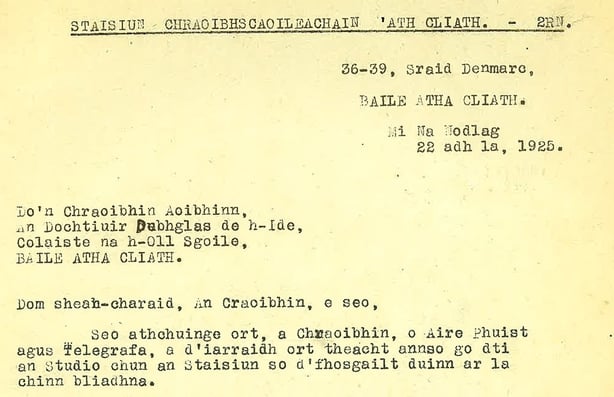
Seamus Clandillon also wrote to Dr Douglas Hyde, the founder of the Gaelic League, inviting him to make the opening address in Irish on 2RN.
Seo athchuige ort, a Chraoibhin, ó Aire Phoist agus Telegrafa, a d'iarraidh ort theacht anseo go dtí an studio chun an staisiun so d'fhosgailt duinn ar la chinn bliadhna.