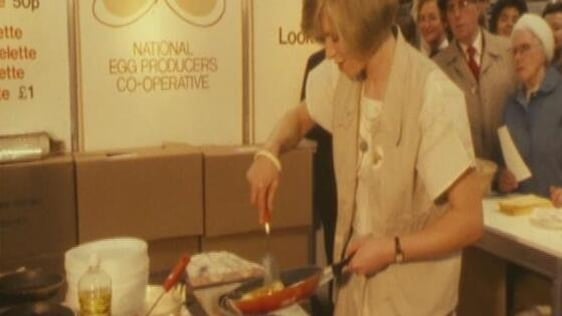
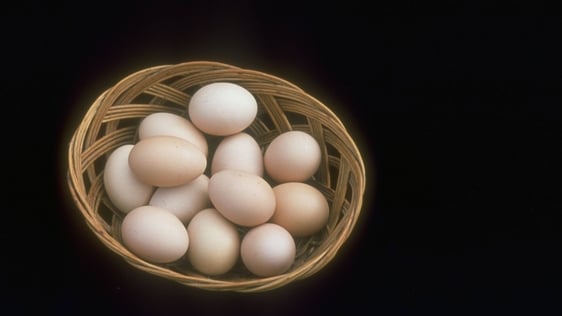
Customs and traditions linking eggs to the celebration of Easter vary with time and place.
Ian Lee explains customs surrounding eggs at Easter time in Ireland.
The archives of the Department of Folklore at University College Dublin (UCD) contain accounts and information about how our forebears marked the Christian feast of Easter.
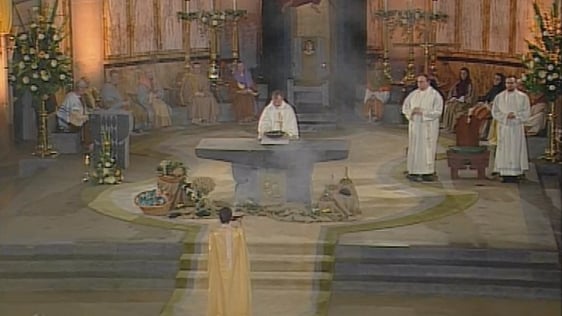
Easter is preceded by Lent (the period between Ash Wednesday and Holy Thursday), which is a time of fasting and abstinence for Roman Catholics.
In the era prior to the Second Vatican Council in 1962, Catholics were bound by strict rules relating to consumption of food, attendance at religious services, and social events.
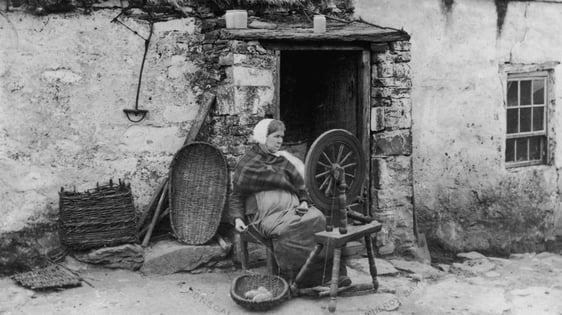
As Ireland was at that time was mainly an agrarian society, many people kept their own hens, and a surplus of eggs built up during Lent. These were cooked and enjoyed on Easter Sunday.
Plentiful supplies of eggs meant egg eating competitions often took place. One source recounts a man who consumed so many eggs that,
They put a súgán around his waist to prevent them causing pain.
All this was a great source of fun for the young people, who also ate large amounts of eggs.
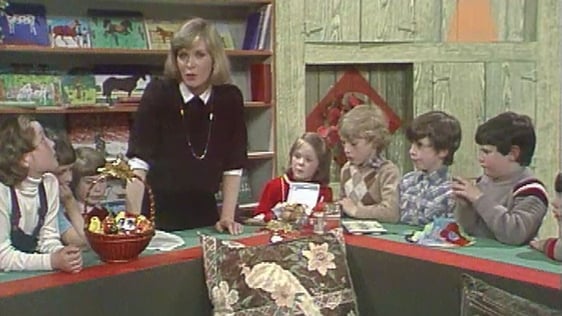
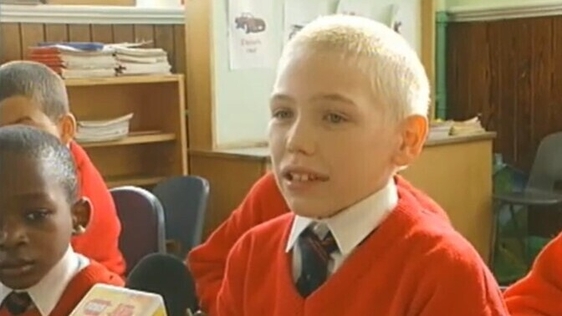
Depending on where they lived, children often dressed up and went around from house to house collecting eggs for Easter, which was known as looking for the clúdóg.
In parts of the country where mumming was practised, children dressed up in old clothes and played music as they went from one house to another. In County Wexford they were known as the 'Tobies'. Armed with a stick in one hand, and a basket in the other, they knocked at the door and called out
Gugs or money.
A similar tradition is found in northern England folk performances, where groups of local people called Pace-Eggers travel around towns and villages at Easter enacting plays similar to those staged by Mummers.
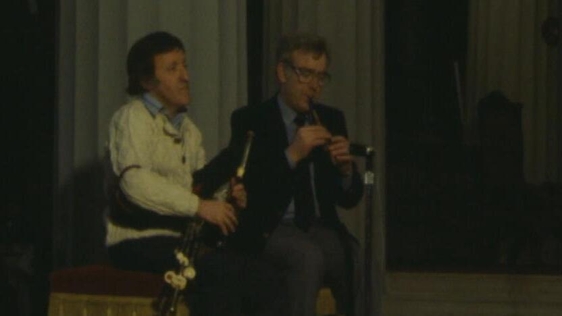
This episode of ‘An Droichead Beo’ was broadcast on RTÉ Radio One on 30 March 1980. The presenter is Philip King, and the reader is Brendan Cauldwell.
'An Droichead Beo' is described in the RTÉ Guide as programme which "Presents musicians and writers of today - a living bridge between past and future" (RTÉ Guide, March 28 1980, p.29). Musician Peadar Mercier presented the first series, broadcast in 1979, and Philip King presented the second series, broadcast in 1980. The producer is Harry Bradshaw.