
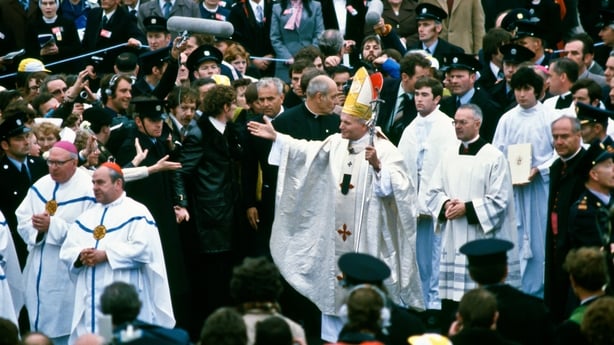
Pope John Paul II’s visit to Ireland in 1979 was a unifying moment of affirmation, even jubilation, for the Irish church.
Thirty-nine years on, Pope Francis’s visit is a kaleidoscope of troubled and contrasting emotions.
There is excitement, yes, but also controversy, anger, and cautious hope among some but not many that the Pontiff, who so inspired the faithful with his humility just five years ago, might somehow use the trip to dramatically restore the fortunes of a demoralised Irish church.
But the crisis now has a global reach.
The shocking revelations from Pennsylvania mean that the eyes of the world will be fixed on a 36-hour visit to Dublin and Knock.
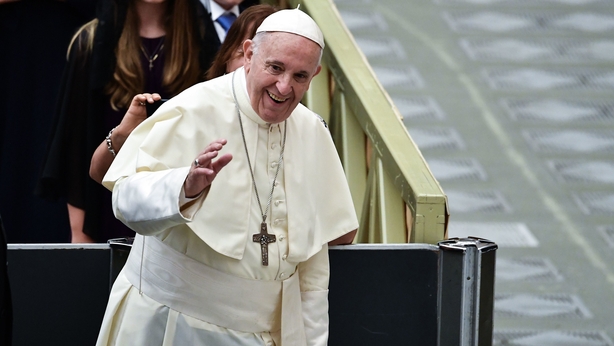
To many, Pope Francis should have been the white knight to rid the Catholic Church of the perception of hypocrisy, its callous handling of the abuse of minors across numerous countries and congregations.
Yet he has been hampered by his own failings in addressing the crisis, by conservative forces within the Curia, and by a rigid and ossified bureaucracy that has been accused of impervious change and compassion - or at least to be able to convert compassion into action.
He is travelling to a country which has undergone a more profound moral catharsis than any other on the planet.
The decline of the church has been ground out through a litany of well-known, and by now thoroughly exposed scandals; if the revelations of physical abuse have begun to lose their power to shock, the attempts by the Vatican to cover them up and limit its exposure have not.
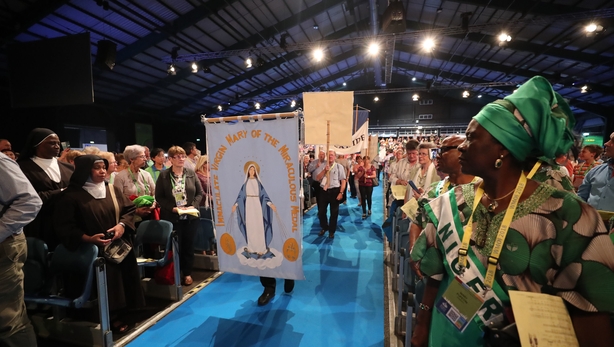
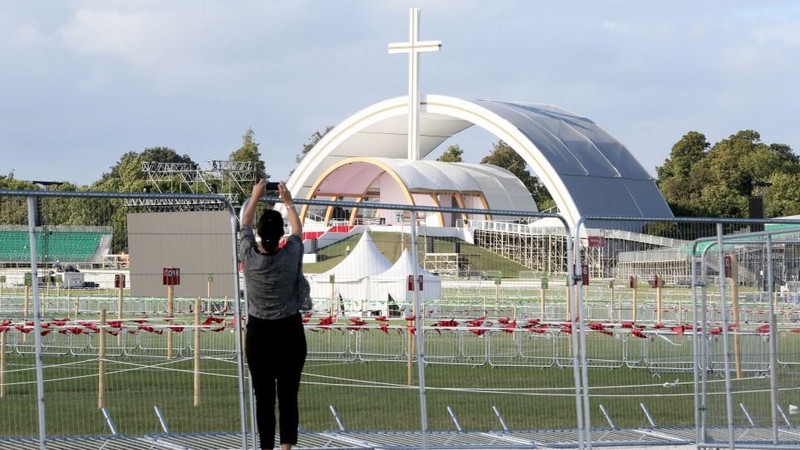
That Pope Francis should be coming to Ireland to attend the World Meeting of Families has added an element of irony to the moment.
Set up by John Paul II as a bulwark against the creeping tide of secularism, same-sex relationships, divorce, abortion and unwed cohabitation, the WMOF has tried to evolve its appeal.
But the meeting cannot help but be overshadowed by the fresh uproar over Pennsylvania.
Indeed two of its leading lights, Cardinal Donald Wuerl of Washington DC and Cardinal Seán O’Malley have had to pull out of the Dublin meeting, the former over his handling of abuse charges when he was bishop of Pittsburgh in the 1990s and 2000s, the latter over allegations of sexual impropriety at Boston’s St John’s Seminary.
If that weren’t enough, the WMOF, while undoubtedly a source of joy to committed Catholic families across Ireland, has been dogged by further controversy over the denial of access to Catholic LGBT groups and a group campaigning for equality and inclusivity within the church.
Meanwhile, as statistics coldly spell out the decline in church attendance and vocations, the Irish faithful despair over their inability to steer the hierarchy to what they see as a badly needed bottom-up revival, one which, ironically, Pope Francis seemed poised to lead when he became the 266th pontiff in 2013.
Writing in The Irish Times last week, Fr Brendan Hoban, a co-founder of the Association of Catholic Priests, declared:
"Irish Catholics want the open, adult, participatory church that Francis is proposing, a ‘synodal’ church that’s in tune with the world."
All of this conspires to lend a knife-edge, almost cinematic feel to Pope Francis’s journey to Ireland.
"The trip to Ireland could be the pivotal point, the make or break point of the rest of the Pontificate," says Robert Mickens, editor of La Croix International.
"I think that if he stumbles badly, if he is perceived to not be listening to what people have been saying this last several weeks in the run-up to his visit, then I think this could very much damage his Pontificate."
Close observers of his pontificate describe Pope Francis as a passionate advocate of social justice, yet one whose grasp of the scale of clerical sex abuse, and whose ability to get to grips with it, have been weakened by his own provenance and human failings.
"Francis is a Latin American male of 82 years of age," says Mickens. "He is of his generation in the church, and he is like many other Catholic bishops in Latin America. He has not been good on sexual abuse, they have not heeded the voice of victims."
"They say that when he was the Archbishop of Buenos Aires he did not respond to their letters complaining about abuse. He has been on a stiff, steep learning curve."
The curve was made steeper by the legacy of John Paul II, according to some critics.
"It’s important to take account of the situation he inherited," argues Philippa Hitchen, a long-standing Vatican analyst, "not so much from Pope Benedict but particularly from Pope John Paul II for the quarter of a century of his pontificate, when he flatly refused to tackle this problem. What Francis is trying to do now is clear up the mess."
But dealing with these issues has been extraordinarily difficult. Criticisms abound that the Vatican is locked in a defensive posture, jealously guarding archives and - especially in the United States - fighting against any attempts to extend the statutes of limitations, a move which would give victims time and space to come forward to report abuse which may have happened years before.
The most recent revelations from Pennsylvania give these criticism a vivid credibility.
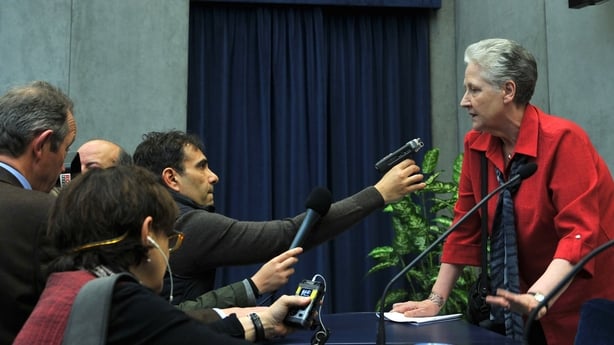
Marie Collins, the abuse survivor who was invited to take part in the Pontifical Commission for the Protection of Minors, resigned her position out of sheer frustration at the Commission’s work being hampered by Vatican officials.
"There is firefighting in specific cases when these become public," she wrote in The Irish Times, "but that is not a solution."
"As a member of the Pontifical Commission for the Protection of Minors I saw structures that might call a halt to all of this pushed aside by Vatican administrators, with no regard for the young or vulnerable."
Is this simply the product of a centuries-old institution that struggles to reform, or are there more ideological forces at work, aiming to frustrate change?
"There is an element within the Vatican at the highest levels of the Curia," argues Philippa Hitchen, "that are simply, if not actively, trying to hinder this process, or they are certainly trying to drag their feet over it.
"People who don’t want to see change are quite convinced that if they dig in hard enough and wait for the next pontificate, or the next one after that, there’s a sense that if you hang on to your position long enough that a Pope who thinks like you will be the next one in line."
But there is growing consensus that change will only come if clericalism - the phenomenon of unbridled power, aided and abetted historically by exaggerated deference on the part of the faithful - is addressed.
Pope Francis identified this himself in his 2,000-word Letter to the People of God," published on Monday in the wake of the Pennsylvania Grand Jury report and translated into seven languages.
"Clericalism," he wrote, "whether fostered by priests themselves or by lay persons, leads to an excision in the ecclesial body that supports and helps to perpetuate many of the evils that we are condemning today.
"To say ‘no’ to abuse is to say an emphatic ‘no’ to all forms of clericalism," he added.
While the letter was an anguished admission of the church’s failings and complicity, it did not spell out concrete change. This absence is now at the heart of expectations over the Ireland trip: all sides in this drama are looking for action from Pope Francis, not words.
"Those are very important words," says Robert Mickens. "But now people are waiting for him to do something. There is nothing in that letter that hints at any kind of specific action.
"People will be watching in Ireland to see how the Pope finesses the issue of sexual abuse by clergy and if he takes one further step and announces some concrete actions."
But what kind of actions?
Meeting survivors is seen as necessary but insufficient. "There needs to be accountability from church leaders, from bishops," argues Philippa Hitchen.
"The Pope himself has talked about some kind of tribunal, some kind of system, but that hasn’t come about yet. There’s talk of this happening. The Commission for the Protection of Minors has talked about taking steps in this direction but so far it hasn’t happened.
"People are beginning to lose patience, and are saying: ‘if not now, when?’"
The most acute pressure derives from the Pope’s recent misstep on clerical abuse in Chile.
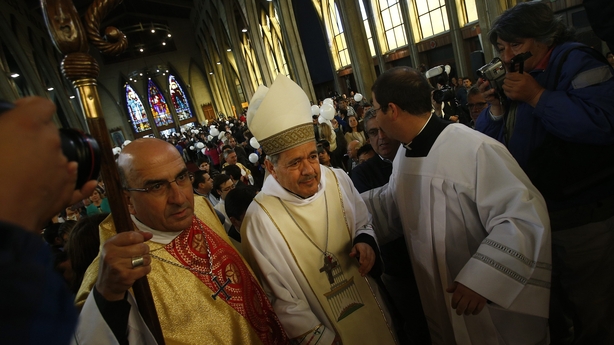
In January of this year Pope Francis defended Bishop Juan Barros Madrid, whom he had appointed in 2015, from suggestions that he had protected a priest who had faced serious allegations of abusing minors.
Such was the outcry against Francis’s suggestions that victims had lied, that Cardinal Seán O’Malley, head of the Pontifical Commission, was forced to intervene, prompting a reinvestigation and apology from the Pope (he later forced the country’s bishops to tender their resignation).
Robert Mickens believe the Pope is genuinely contrite, and is thus capable of meeting the challenge of the Irish trip.
"He has the ability and has shown great capacity to surprise us," says Mickens.
"He’s someone who has shown he can listen and admit when he’s wrong and change course, based on new knowledge and information."
"This has been a dramatic several months for the Pope and the church after what happened in Chile.
"This is all very much weighing heavy on the Pope. He has not been quick on sexual abuse. He was not quick in the beginning of his pontificate. He has shown in the last few months that he needs to do something.
"But these are still words. He has to act."