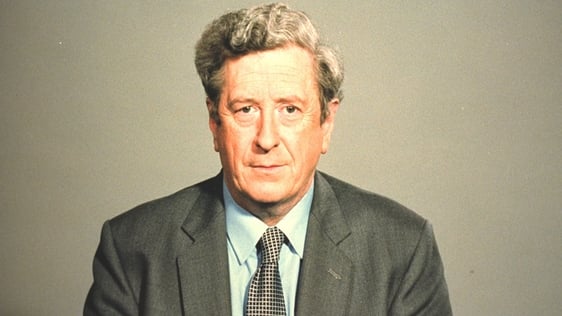
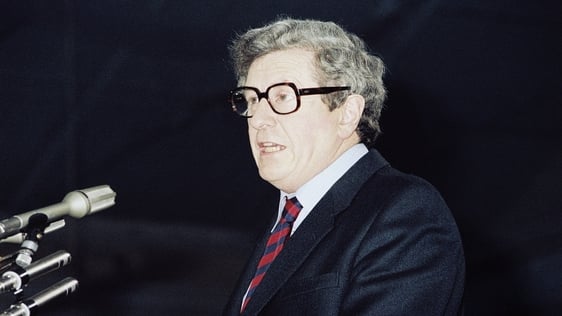
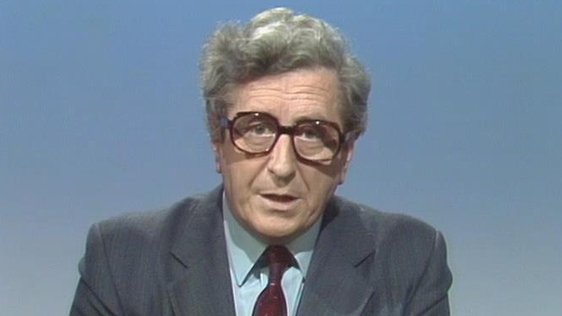
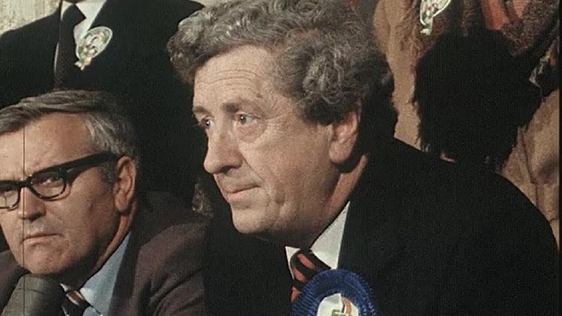
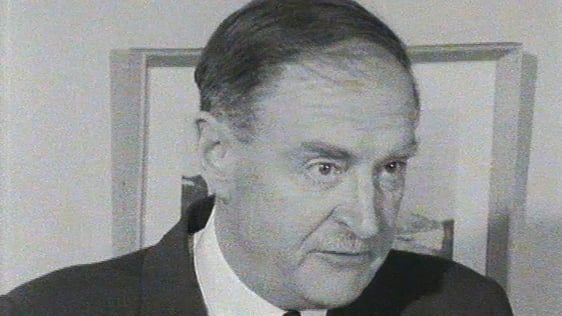
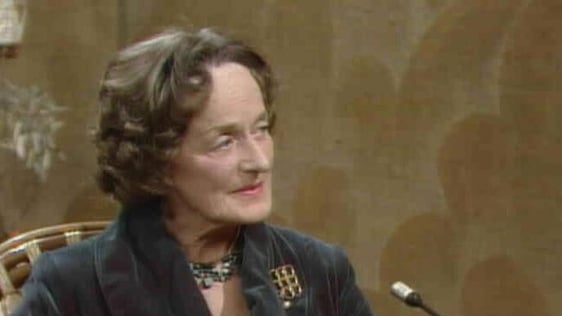
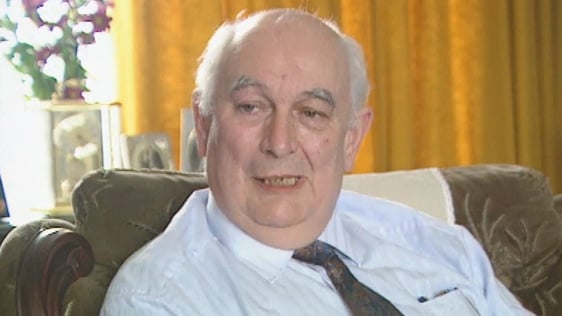
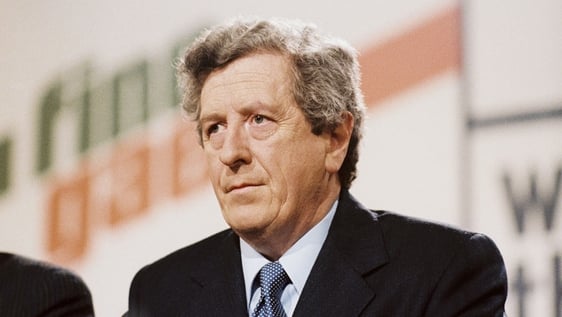
The life and political career of former Taoiseach and Fine Gael party leader, Garret FitzGerald.
Garret FitzGerald was born in Dublin in 1926 into a family immersed in Irish political life. His parents, Desmond FitzGerald and Mabel McConnell, were both active in Sinn Féin during the War of Independence. Desmond FitzGerald went on to become Minister for External Affairs in the first government of the Irish Free State.
Throughout his life, Garret FitzGerald frequently spoke of his aspiration to reconcile the southern Catholic nationalist tradition of his father with the northern Protestant unionist heritage of his mother, a theme that would shape much of his political outlook.
While studying history, Spanish and French at University College Dublin, Garret FitzGerald met Joan O'Farrell, whom he married in 1947. He began his professional career with Aer Lingus before moving into economic consultancy and academia, and ultimately into public life as a politician. In 1965, he was elected to Seanad Éireann, and four years later became a Fine Gael TD in Dáil Éireann. A committed Europeanist, he campaigned vigorously for Ireland’s membership of the EEC during the 1972 referendum.
When Fine Gael entered government in 1973, Garret FitzGerald was appointed Minister for Foreign Affairs. In this role, he played a prominent part during Ireland’s first presidency of the EEC in 1974 and was instrumental in the negotiations leading to the Sunningdale Agreement, which established a short‑lived power‑sharing executive in Northern Ireland. He became leader of Fine Gael in 1977, steering the party in a more socially liberal direction.
In 1981, Garret FitzGerald became Taoiseach, forming a minority coalition government with Labour. Declaring his ambition, he stated:
I want to lead a crusade, a republican crusade to make this a genuine republic.
The government, however, collapsed the following February amid controversy over proposed budget measures, including a tax on children’s shoes. Fianna Fáil, under Charles Haughey, returned briefly to power.
In November 1982, Garret FitzGerald returned as Taoiseach, with Fine Gael achieving its best electoral result in almost fifty years and once again forming a coalition with Labour. His second term was marked by divisive referendums on abortion and divorce, both of which were defeated.
In Northern Ireland, he established the New Ireland Forum in an effort to unite constitutional nationalist opinion, though its recommendations were famously rejected by British Prime Minister Margaret Thatcher in her 'Out, Out, Out’ speech. Undeterred, Garret FitzGerald pressed on and, in 1985, signed the Anglo‑Irish Agreement, granting the Irish government an advisory role in Northern Ireland—widely regarded as the high point of his political career.
Amid severe economic difficulties, Labour ministers withdrew from government in 1987. Charles Haughey again became Taoiseach, and Garret FitzGerald soon resigned as leader of Fine Gael. He remained a TD until 1992, and continued to play an active role in public life, campaigning during the Nice and Lisbon Treaty referendums. He later served for twelve years as Chancellor of the National University of Ireland, while also writing books and newspaper columns, lecturing widely, and contributing regularly to radio and television discussions.
Garret FitzGerald died on 19 May 2011.
An RTÉ News report broadcast on 19 May 2011. The reporter is David McCullagh.