A British Museum exhibition shows how the legacy of poet and playwright William Shakespeare endures.
William Shakespeare died on 23 April 1616. Four hundred years later, a major exhibition in London explores the enduring power of his work through ten landmark performances.
An exhibition at the British Museum, 'By Me: William Shakespeare' traces how the playwright's legacy has evolved over time. The exhibition features artefacts, including the only surviving manuscript in William Shakespeare’s own handwriting and rare printed editions of the First Folio.
April 23rd will mark the 400th anniversary of the death of William Shakespeare.
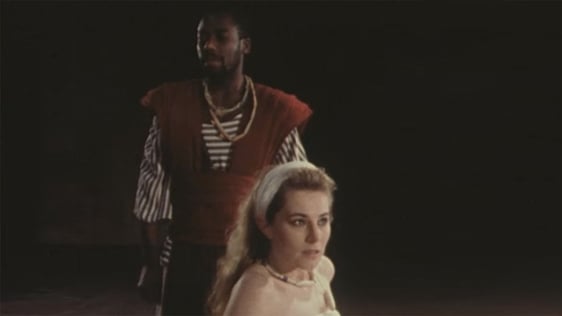
Focusing on ten pivotal productions, the exhibition spans more than half a century of theatrical history from the first staging of 'Hamlet' at the Globe Theatre in around 1600 to the 1660 performance of 'Othello', preceded by a warning to audiences ahead of the first appearance of a woman on the English stage. Andrew Dickson of the Shakespeare Centre at King’s College London says the exhibition reveals how the writer's work has continually changed and been reimagined in response to shifting cultural contexts.
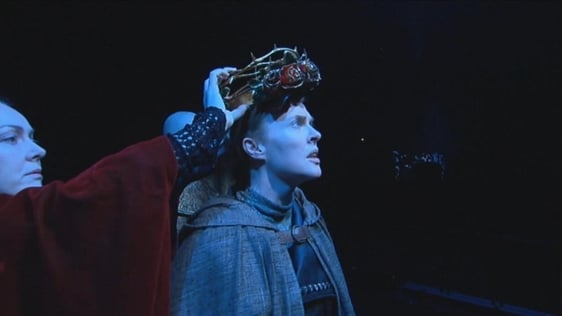
Objects on display come from a wide range of productions and include the dress worn by Vivien Leigh as Lady Macbeth. Curator Zoe Wilcox explains how the British Museum has drawn on video, costumes, props and paintings to evoke the experience of live performance and bring Shakespeare’s works to life.
An RTÉ News report broadcast on 17 April 2016. The reporter is Fiona Mitchell.