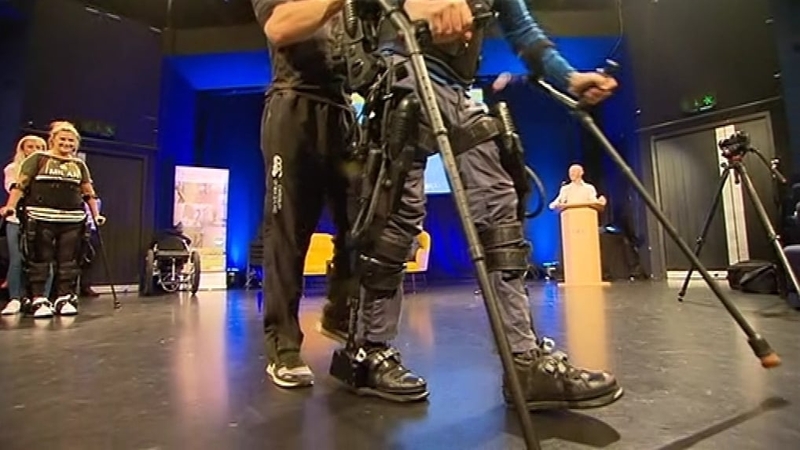

A robotic rehabilitation programme which allows people with paralysis to walk is being launched at Dublin City University in collaboration with explorer Mark Pollock.
Researchers claim the 'Exoskeleton' has a variety of health benefits and is the first step on the road to finding a cure for paralysis.
It will allow people with reduced mobility to complete sessions of supported walking helped by a trained handler.
Mark Pollock was a renowned ultra runner and explorer before he was paralysed in an accident in 2010.
He has pioneered the robotic suit and to date has taken one a half million steps in it.
Mr Pollock said: "Finding a cure for paralysis is a human crisis requiring people to work together across geographical, organisational and intellectual boundaries."
Neurorehabilitation Physiotherapist and the Clinical Lead of the DCU programme, Ronan Langan, said participants benefit mentally and physically from using the suit.
Jennifer Hess, who became paralysed after developing a tumor on her spine two and a half years ago, also said she believes the suit helped her regain some power in her legs.
The DCU programme is free to anyone living with paralysis and researchers hope that the more people take part, the more they will learn in helping them develop the technology.
The system was created by a US company, Ekso Bionics, who have worked with Mr Pollock to test components for the next-generation exoskeleton.
We need your consent to load this rte-player contentWe use rte-player to manage extra content that can set cookies on your device and collect data about your activity. Please review their details and accept them to load the content.Manage Preferences