
The Health Information and Quality Authority has begun a public consultation on whether the chickenpox vaccine should be added to the routine childhood immunisation schedule.
Chickenpox, or varicella, is an acute, infectious disease most commonly seen in children under 10 years of age.
The disease is usually mild, although it can lead to serious complications requiring hospitalisation.
Anyone who has had chickenpox may develop shingles.
The virus is highly contagious and one infected person can potentially infect 10 to 12 others. Here there are around 55,000 cases a year.
HIQA's Chief Scientist Dr Conor Teljeur said that vaccines against chickenpox have been available for over 30 years and that in Ireland, the vaccine is already recommended for non-immune individuals in certain risk groups.
He said that many countries include vaccination against chickenpox in their childhood immunisation schedules however, the type of vaccine given, the number of doses and the timing of the doses differ.
HIQA wants to hear the views of the Irish public on its draft Health Technology Assessment on adding the vaccine to the schedule before it is finalised and is inviting members of the public to provide feedback on the HTA until Monday, 29 May 2023.
Dr Teljeur explained that the options are a single dose or a two dose schedule with differing dates between the two.
"If you only give one dose, people's immunity due to the vaccination wanes over time, it reduces and you become susceptible to getting chickenpox ... what you're really trying to do is reduce the likelihood of severe disease."
He said that with a second dose it boosts the immunity and "actually looks to try and eradicate the disease completely".
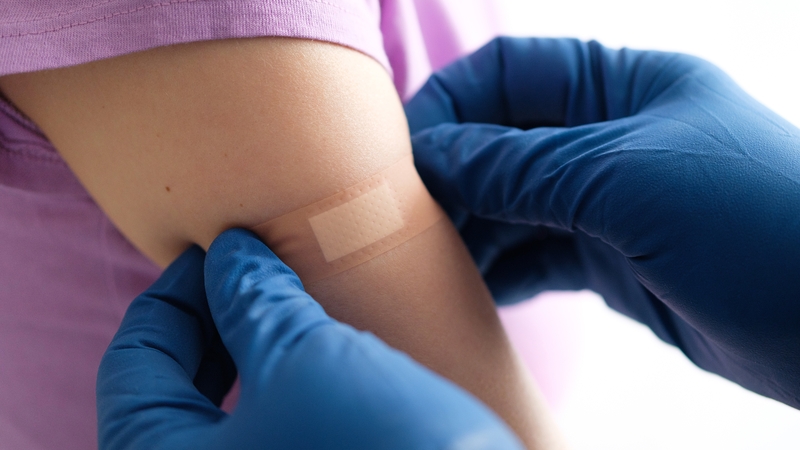
He added that "a lot of people will have a sore arm after the vaccination. They may have a fever for a day or a rash but the vast majority of people will not have anything more than that as a consequence of vaccination".