


A study published in the UK has found that international ranking tables for universities are flawed and have the potential to damage the performance of institutions.
The report by the UK's Higher Education Policy Institute urges governments and third level institutions to ignore the tables, which claim to identify the "best" universities in the world.
The publication of some of these global league tables has become a major event in the Irish education calendar.
When individual Irish universities see their position in the rankings rise they seize upon this as evidence of their excellence. When their rankings fall the widely acknowledged funding crisis in the sector is blamed.
But this report says reliance on these league tables can actually be damaging to institutions.
It says the tables measure research activity to the exclusion of almost everything else, including what this report says is, arguably, a university's most important function - the education of students.
The report says the only way for a university to improve its ranking is to focus on research at the expense of other vital activities.
The study was carried out by a UK third level expert who also sits on Ireland's Higher Education Authority.
Bahram Bekhradnia also criticises the fact that these tables are based on data supplied by the universities themselves, with no effective independent verification process.
He said there can be no confidence in the quality of data supplied in such a way.
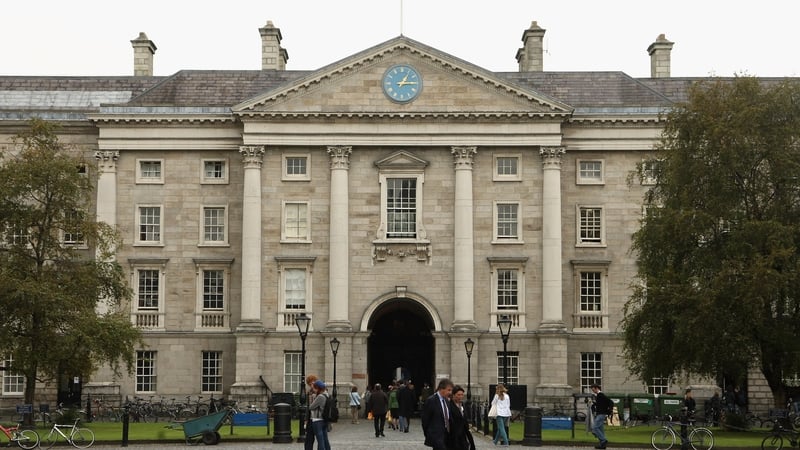
The report refers to the exclusion of Trinity College earlier this year from the Times Higher Education World University rankings. The college was excluded from the latest tables last September after it discovered that a misplaced decimal point had led to the submission of erroneous data for two years running.
TCD said its mistake was likely to have given it a ranking that was lower than it would otherwise have received.
In his report, Mr Bekhradnia said while TCD is a respectable institution there may be other universities that submit erroneous data, either deliberately or accidentally. He said automated checks employed by the ranking bodies fell far short of an audit of the data returns themselves.
This UK report concludes that rankings providers, and the sector, should acknowledge more widely the fact that they only measure research performance. It says that if governments, students, and the public recognised this then some of the negative impacts of such rankings would be reduced.
It says one of the most important functions of a university is to develop the human capital of a country, and a ranking scheme that takes no account of this focus on students cannot claim to identify the 'best' universities.
The report says universities and governments should not be influenced by rankings when deciding their priorities, policies, or actions.
However, it notes that France, Germany, Russia, and China are among a number of countries that have put in place policies aimed explicitly at improving the position of their universities in international rankings.
