


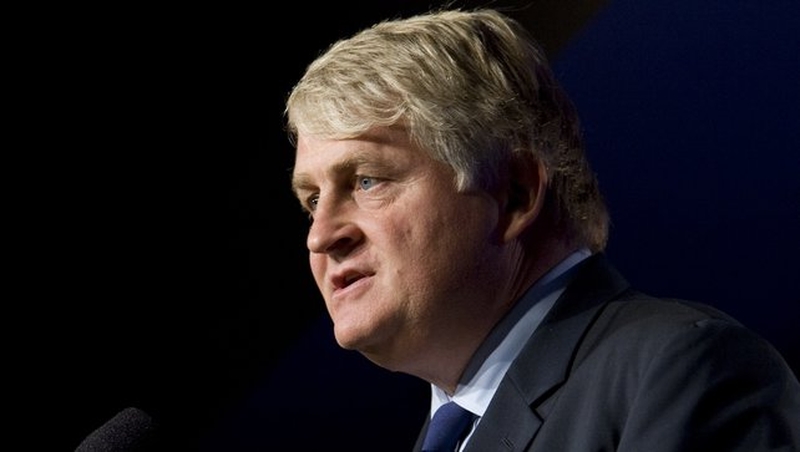
Businessman Denis O'Brien's legal action against a Dáil committee is "unique in the history of the State", his lawyers have told the High Court.
Mr O'Brien claims statements made by TDs Catherine Murphy and Pearse Doherty in the Dáil last year had the effect of "very substantially" determining the legal proceedings he was taking against RTÉ at the time, the court was told.
Mr O'Brien's action against the Dáil Committee on Procedure and Privileges and the State is expected to last six to seven days.
Mr O'Brien will be the only witness and is expected to appear on Thursday.
The court was told that his appearance will be "very short".
Senior Counsel Michael Cush, on behalf of Mr O'Brien, said his case was unique in the history of the State.
He said no one had ever complained before that deputies in the Dáil had determined the outcome of a case in court.
Mr Cush said it was also an unusual case as both sides were relying on the separation of powers.
He said his side was saying the only way to determine justiciable controversies was through the courts, not in the Oireachtas.
We need your consent to load this rte-player contentWe use rte-player to manage extra content that can set cookies on your device and collect data about your activity. Please review their details and accept them to load the content.Manage Preferences
He said the other side was saying that members of the houses of the Oireachtas had absolute privilege under Article 15 of the Constitution and even if Mr O'Brien was correct, there was nothing the court could do.
Mr Cush said you could not rely on the principle of the separation of powers to subvert the constitutional order and the separation of powers itself.
He said this was a "very rare" case where that had occurred and if the court agreed with him, it was entitled and obliged to intervene.
He said he was seeking only declarations from the court and was asking the court to make the least intrusive orders possible.
Mr Cush said he would be going through the proceedings Mr O'Brien was taking against RTÉ to show how they were affected by what happened in the Dáil.
In May and June 2015, Mr O'Brien was trying to stop the broadcast of a report by RTÉ's Business Editor David Murphy about Mr O'Brien's banking affairs with IBRC.
His lawyers were granted an injunction by the Court.
But he says the statements made by the TDs in the Dáil, forced him to concede that the information RTÉ proposed to broadcast had been put into the public domain and was no longer confidential.
Mr Cush said he would be showing that the courts had the power to intervene where the Constitution was being used to undermine the separation of powers.
He said he would also be arguing that given the facts of this case and the nature of the proceedings, Article 15.13 of the Constitution was not engaged at all.
That article states that members of the Oireachtas "shall not be amenable" to any other authority for utterances made in either house.
Mr Cush said at the time Social Democrats TD Catherine Murphy made her comments in the Dáil, she was aware his application for an injunction against RTÉ was pending in the High Court.
He said at the end of the exchanges in the Dáil, the entire script of the report Mr O'Brien had been trying to stop, had to be revealed.
He said everything Mr O'Brien had set out to achieve in court had been undone by Ms Murphy and Mr Doherty.
Mr Cush said the judgment given by High Court judge, Mr Justice Donald Binchy in the injunction proceedings against RTÉ in May 2015 was highly considered.
He said the court balanced the right to confidentiality with the right to freedom of expression in the public interest asserted by RTÉ.
The court found in favour of Mr O'Brien.
Mr Cush said TDs Murphy and Doherty would have been entirely within their rights to go into the Dáil and criticise the judgment but he said instead, they undid it and had trespassed on the judicial domain.
Mr Cush said a series of tweets by Ms Murphy showed she was fully aware of the injunction and of its terms and that she was clearly "dismayed" by the order.
He said her comments in the Dáil later in May when she spoke during a debate on Aer Lingus, which had nothing to do with Mr O'Brien, showed her determination to pursue him.
Mr Cush said Article 15.13 of the Constitution says deputies shall not be made amenable to the courts or any other authority in relation to utterances in the Dáil, but he said he was not seeking to make them amenable.
He said the committee and the State were claiming that even if Ms Justice Úna Ní Raifeartaigh concluded that the TDs had interfered with the administration of justice, the court was prevented in doing anything about it by that constitutional provision.
Mr Cush said that was using the principle of the separation of powers to undermine the separation of powers.
He said there was a separate debate to be had about what "amenable" meant.
He said Mr O'Brien was not seeking to make them amenable to this court or any court and was seeking only declarations from the court. There was no claim for damages.
He said the core issue was that there was legal action pending in the courts when the TDs made their comments in the Dáil.
The fact that in this case, the court had actually granted an injunction was a very significant added dimension in this case.
