

Victims of crime have been let down and the O'Higgins report detailed a "long litany" of policing failure, the Policing Authority has heard.
Dr Vicky Conway of Dublin City University's Department of Law and Government made the comments at a public meeting of the Authority and also described as "disconcerting" the number expressing dissatisfaction with the victim service offices.
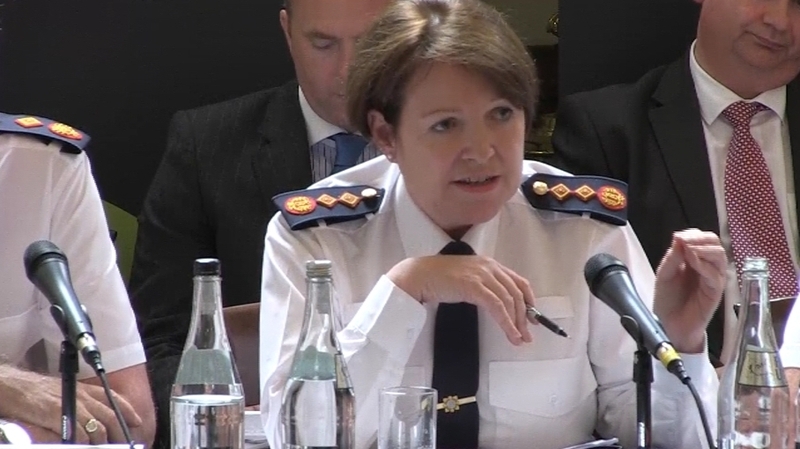
Garda Commissioner Nóirín O'Sullivan told the Authority that changes in administration and supervision have significantly reduced the possibility of the policing failures identified in the O'Higgins report happening again.
The Authority expressed its concern to Commissioner O'Sullivan over the number of crime victims who are dissatisfied with An Garda Síochána and the effectiveness of the Garda Victim Service Offices.
The Authority expressed concern over the effectiveness of the 28 victim services established, which are now being reviewed.
"In particular, victims of domestic violence felt we often failed to take their complaint seriously and that was not good enough.
"An Garda Síochána have prioritised a commitment to putting victims of crime at the heart of the garda service and a series of measures have been put in place to do just that.
"Twenty-eight dedicated victims services offices were established throughout country to ensure victims are kept informed of their cases as they progress through the justice system."
Commissioner O'Sullivan added that she is confident the force is applying the principles of the European Union victims' rights directive.
She said she is confident that there will be significant changes in how gardaí interact with victims of crime.
"When the EU victims' rights directive become law and is transposed into domestic legislation I'm confident to say that we will be ahead of it.
"We've already applied the principles in our policy.
"I'm determined that there will be a step-change in the relationship between An Garda Síochána and the victims of crime.
"Victims are central to how we will provide a professional policing service.
"We will be leaders within the justice system when it comes to dealing with victims. We are on a journey, we are at the beginning of that journey and we will learn every step of the way, one step at a time."
The Commissioner also said they are putting the structure and environment in place to ensure the protection of whistleblowers but they have not yet got that right.
The Commissioner was called before the Policing Authority today because of its serious concern about recurring failures and to outline what is different now particularly for crime victims and garda whistleblowers.
The Commissioner said all garda and civilian employees had today been informed of the new policy in relation to whistleblowers and how they can speak out without fear of being victimised.
Commissioner O'Sullivan said that when a protected disclosure is made it would be acted upon.
They key elements of the garda's disclosure policy, the Authority was told, include a clear mechanism for protected disclosures, a secure e-mail system, a dedicated phone line, and an e-mail to all 16,000 garda and civilian employees on how to make a disclosure.
Commissioner O'Sullivan said today that the number of garda whistleblowers are in the single figures.
Also speaking at the Policing Authority, the Assistant Garda Commissioner, Jack Nolan, said that while neither he nor the Garda Commissioner can guarantee cases will not fall through the cracks in the future, the system in place now will significantly reduce the chances of this happening.
The Authority will now review the garda policy and report to Tánaiste and Minister for Justice Frances Fitzgerald on the inadequacies of the garda's procedures to deal with whistleblowers.
