


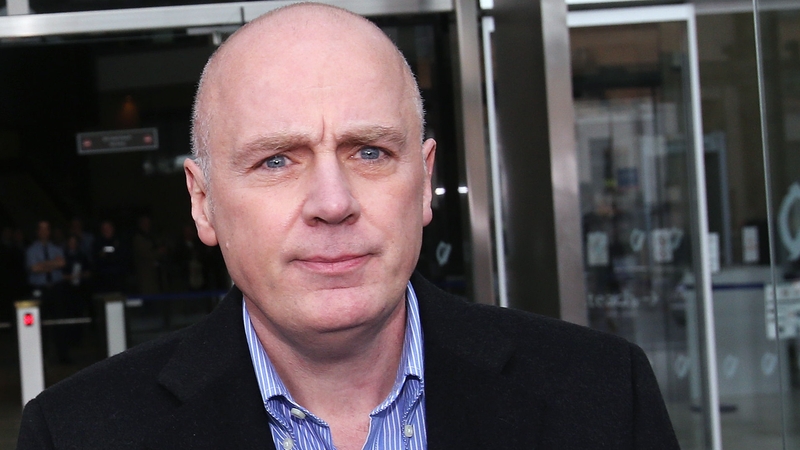
Former Anglo Irish Bank CEO David Drumm has said the decision to deny him bankruptcy in the US is based on court findings that are "illogical, implausible and without support".
In his latest attempt to be declared bankrupt, Mr Drumm said that it is "inherently unfair" to refuse to discharge him from his debts totalling over €10 million.
Although he is now in Ireland, Mr Drumm is continuing his fight to be declared bankrupt in the US.
Today he filed a 56-page document outlining the grounds for his second appeal against his original failed bid to be granted a discharge from his debts.
As with his first appeal, Mr Drumm is again saying that he and his advisers "made several mistakes" in omitting his asset transfers to his wife and that he was only acting on his advisers' instruction.
He blames his advisers for neglecting to tell the Bankruptcy Trustee about the transfers, saying it was not done with any fraudulent intent to defraud his creditors.
He also accused the former bank - now IBRC - of having "highly political motivations", and of being "wholly unconcerned with commercial matters" but of being "focused" on defeating him "at any cost".
Mr Drumm has dismissed his US lawyers and is representing himself in this action.
He asked the court to "extend a degree of tolerance" as a result.
In the legal paper, Mr Drumm argues that Judge Jeffrey Howard has "ample evidence and testimony" to reverse the decision and grant him the bankruptcy protection.
Mr Drumm has asked the appeals court to consider 18 points of appeal, including whether the previous judges erred in concluding that he was not entitled to a discharge, had made a false oath, concealed property and transferred various cash and other assets, totalling over €1m, to his wife to put them beyond the reach of his creditors.
Mr Drumm says that he does not dispute that he made these transfers nor does he dispute that he failed to include details of them when he originally filed the paperwork seeking bankruptcy, however he says he did not omit them because of some fraudulent intent to defraud his creditors.
Again he blames his advisers, saying he had provided all relevant information "in good faith and expected that his highly regarded attorneys would disclose this information in the correct format and in a timely manner".
Mr Drumm first filed for bankruptcy protection in 2010; his case was then heard before the US Bankruptcy Court in Boston almost two years ago.
Judge Frank Bailey issued his decision to reject Mr Drumm's request in a strongly-worded document in January 2015.
Mr Drumm then appealed that to the US District Court where Judge Leo Sorokin upheld the refusal in December, and he is now appealing again to the US First Circuit Court of Appeals.
He is also claiming that the court erred in determining that he was a "sophisticated debtor" and so was fully capable of completing the application correctly because of how deeply involved he was in "every aspect of the bankruptcy proceeding".
He says it is "inherently unfair" to deny him a discharge "by erroneous and unsupported findings of fraudulent intent", and by "blaming him solely for the mistakes made in his original bankruptcy filings, while at the same time finding no fault with his highly experienced advisers".
He says it is "equally unfair" to hold him to a higher standard than that of his advisers, saying that while he is a "trained accountant and an experienced real estate lender", he is not a "bankruptcy expert".
Mr Drumm also refers to the "endured extensive and unprecedented negative media coverage in his home country of Ireland, some of which was picked up by the Massachusetts press".
He explains to the court that the reason he owes the former Anglo Irish Bank - now the IBRC - $12 million is because he had borrowed money from Anglo to buy shares in the bank in 2008.
He points out that "several of the directors of the bank purchased shares in order to support the ailing bank".
But when the bank was nationalised these shares became worthless. He was assured, he says, by the bank's then chairman that an agreement would be reached to repay the loans fairly.
Such an agreement was reached and sanctioned by the bank's board, writes Mr Drumm, but the Irish government "vetoed" the deal and litigation began…
A decision, he says, that could only have "been based on political grounds".
It was at this point, now living in the US, that Mr Drumm filed for bankruptcy there.
Mr Drumm says the original Bankruptcy Court's 122-page decision made "virtually every finding and inference possible" against him.
The findings, he claims, centre on "an unsupportable theory" that he "concocted what can only be described as an impossible scheme" to hamper the progress of his case.
The only way he claims that this theory is "plausible" is if Mr Drumm's advisers "either knowingly permitted" him to commit fraud "or were complicit in this fraud".
Mr Drumm is claiming that "many of the key findings" used to deny him the protection of the courts were "inconsistent with and contrary to the evidence and are therefore clearly erroneous".
Having agreed to an extradition request from the US - where he had lived for almost seven years, Mr Drumm is living in Ireland where he is on bail awaiting trails for 33 charges relating to his time in charge at Anglo Irish Bank.
