


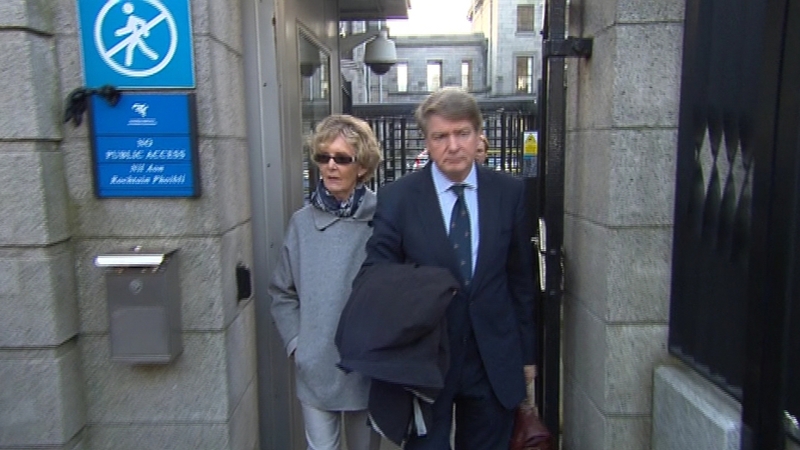
Retired solicitor Brian O'Donnell and his wife Mary Patricia cannot, arising from their bankruptcy, defend a bank's action aimed at preventing them from trespassing on their former family home at Gorse Hill, Killiney, Dublin, a High Court judge has ruled.
Among various defences and a counterclaim to Bank of Ireland's action, the couple alleged they have a "right of residence" permitting them to live in Gorse Hill after their four children were obliged, by court orders and after a long legal battle, to vacate the luxury property last March.
In their counterclaim, the couple also alleged the €71m judgment obtained by Bank of Ireland against them in December 2011 should be set aside on grounds including alleged fraud.
The couple moved into Gorse Hill after their children left but the bank got an injunction last April requiring them to leave and not return until the full proceedings were determined.
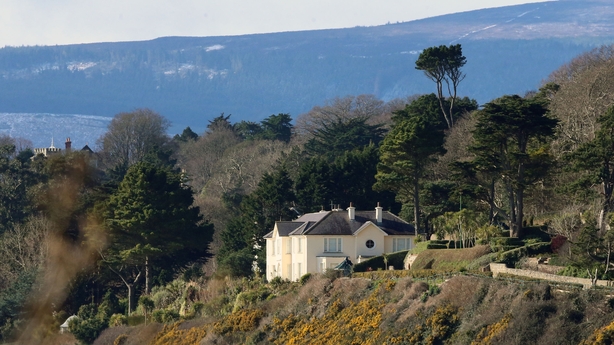
The bank wants to sell Gorse Hill, valued at more than €5m, as part of its efforts to execute the €71m judgment, obtained under a March 2011 settlement agreement which provided, if the settlement broke down, as it later did, the O'Donnells would yield vacant possession of Gorse Hill.
In a pre-trial application, Chris Lehane, the trustee administering the couple's bankruptcy, argued they, as bankrupts, were not entitled to defend and counterclaim because Gorse Hill forms part of their estate in bankruptcy.
That estate is vested in him, they no longer have any interest in it and he does not intend to defend the case, he argued.
Ms Justice Caroline Costello in a judgment today granted Mr Lehane an injunction restraining the couple advancing their defence and counterclaim.
The law in Ireland, and in England and Wales, is that bankrupts cannot defend proceedings which relate to "things in action", such as properties which form part of their estates and which are not "personal" to bankrupts, she said.
The O'Donnells' defences and counterclaim all relate to the estate vested in Mr Lehane, she said.
The defences included a claim of a right to residence but it was "incontestable" a right to residence is an interest in property, she held.
The couple were also not entitled to advance a defence related to the Family Home Protection Act because the act has no application to the disputed transactions concerning Gorse Hill, she said. It was clear Gorse Hill was owned by a company, Vico, and Mr O'Donnell had arranged the relevant loans which were guaranteed by Vico.
The couple assert they have an interest in Gorse Hill while the bank insists they have no such interest, the judge also noted.
Because the couple claim an interest in Gorse Hill, they cannot as bankrupts defend or counterclaim because their claimed interest relates to property vested in the trustee, she said.
The couple were not entitled to defend the case on any of the grounds they had advanced, she ruled.
Separately, the Supreme Court is to hear Mr O'Donnell's application for an extension of time to appeal against the 2011 judgment.
The Court of Appeal will also deal at a later stage with an appeal by Vico against a High Court order preventing it bringing proceedings against the bank related to Gorse Hill. Vico is also suing other individuals and companies based outside Ireland.
