


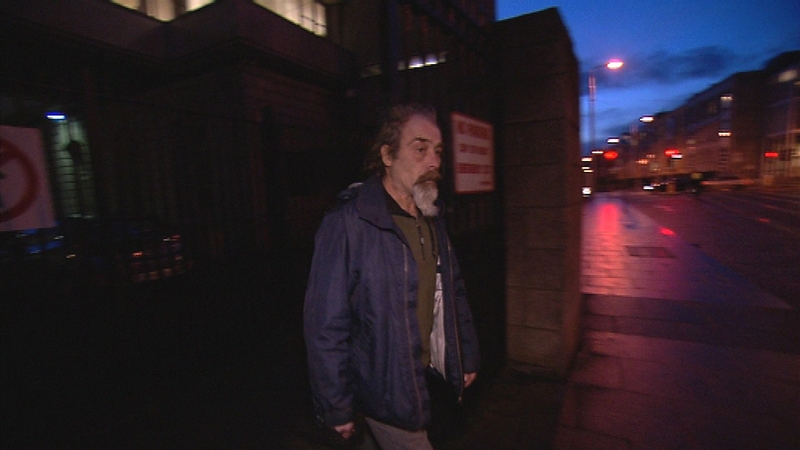
A witness has told the High Court that gardaí gave him cash, cannabis and clothes and asked him to befriend Ian Bailey in an attempt to get information linking him to the murder of Sophie Toscan Du Plantier.
Martin Graham said gardaí Jim Fitzgerald and Liam Leahy drove him to Mr Bailey's house and had offered to buy him clothes and mentioned "other sweeteners" such as suggesting that the victim's family would be very grateful for a favourable statement if he could find anything linking him to the killing.
Mr Graham said it was ridiculous proposal because he had only met Mr Bailey once before, but he agreed to do it.
Mr Graham said Mr Bailey turned him away from his home. He told gardaí Mr Bailey was very stressed and sent him away.
"I told them he needed to chill out that he needed a good spliff. They asked if I could get any and I said no. Then detective Garda Fitzgerald said what if we could get it Martin?"
He said Detective Garda Jim Fitzgerald offered to get cannabis for him to entice Ian Bailey and perhaps "loosen his tongue".
He said the second time he was asked to approach Mr Bailey he was not at home. He said Mr Bailey was at the Kilcrohane Festival and gardaí then took him there and supplied him with cannabis.
He said it was about seven ounces of "high quality Lebanese flat press" but the garda had not even bothered to take it out of an official evidence bag before giving it to him.
Mr Graham said it was a significant amount of the drug.
He said there was no way he could get near Mr Bailey at the festival because he was socialising at a poetry event.
He said it was another ridiculous proposal that he was expected to simply start talking to Mr Bailey about a murder when everyone was out socialising.
He said the most he did was make eye contact and wave at Mr Bailey.
He and his friends shared the cannabis at the festival. He reported back to gardaí and they decided to have "another crack at it".
He said gardaí bought him clothes and cosseted him to keep him happy and also paid him cash and paid for all his drinks.
He said he accepted the money and drinks.
Mr Graham said they again dropped him around to Mr Bailey's house "but this time I had a load of blow on me".
His evidence continues tomorrow.
Court hears Bailey 'not under surveillance'
Earlier, a senior garda told the court that Mr Bailey has not been under formal surveillance by gardaí in recent years.
However, the court was told that Mr Bailey remains a person of interest in the case because the facts have not changed.
Chief Superintendent Tom Hayes resumed giving evidence in Mr Bailey's case against gardaí and the State for wrongful arrest.
Earlier in the case, retired garda John Wilson said he believed the garda PULSE recording system showed an unacceptable level of surveillance of Mr Bailey, which was normally reserved for active criminals.
However, Chief Supt Tom Hayes told the court today that he could "state categorically that Mr Bailey was not under any surveillance or formal surveillance".
He said any intelligence created on the PULSE system was merely a recording of an incident or a sighting of Mr Bailey by gardaí.
Chief Supt Hayes said it would not amount to formal surveillance, which would be a formal process overseen by an inspector or superintendent.
In many instances, he said, the PULSE system was simply recording Mr Bailey signing on as part of his bail conditions when a European Arrest Warrant was in place.
The witness also said the investigation into the murder of Ms Toscan Du Plantier remains open and that no one on the current team was part of the original team.
Chief Supt Hayes said inquiries are continuing and information is continuing to emerge, which gardaí are examining in relation to other suspects and other information.
He said there were originally 54 suspects in the murder case.
In cross-examination, he agreed that the nomination of someone as a suspect or "person of interest" did not require a very high threshold.
He said Mr Bailey remains a person of interest in the case because the facts have not changed, apart from witness Marie Farrell's withdrawal of statements.
Suspicion of Mr Bailey had in fact been "amplified somewhat because of the fact that he says he was missing from his house for some hours on the night of the murder" but his explanation, although confirmed by his partner, cannot be corroborated.
Earlier, Chief Supt Hayes confirmed that a number of fines for motoring offences against Ms Farrell's husband Chris had not been paid.
He said that on inspection of the files, he could identify five summonses for fines relating to convictions for offence, such as driving without insurance and non-display of tax, which had been returned to the district court for reissuing had not in fact been reissued.
Ms Farrell has previously told the case that she continued to cooperate with gardaí investigating the murder in return for favours.
Chief Superintendent Hayes said the fines not re-issued totalled €698.
He said the reason stated by the district court for not re-issuing the summonses was because the requests to re-issue were out of date.
He said 25 other summonses for fines totalling €15,000 were executed for both civil and criminal matters.
Mr Bailey, 57, from the Prairie, Schull in west Cork, is suing the Garda Commissioner, Minister for Justice and the Attorney General for damages in relation to his treatment as a suspect for the murder of Ms Toscan Du Plantier in west Cork in December 1996. The defendants deny the claims.
