

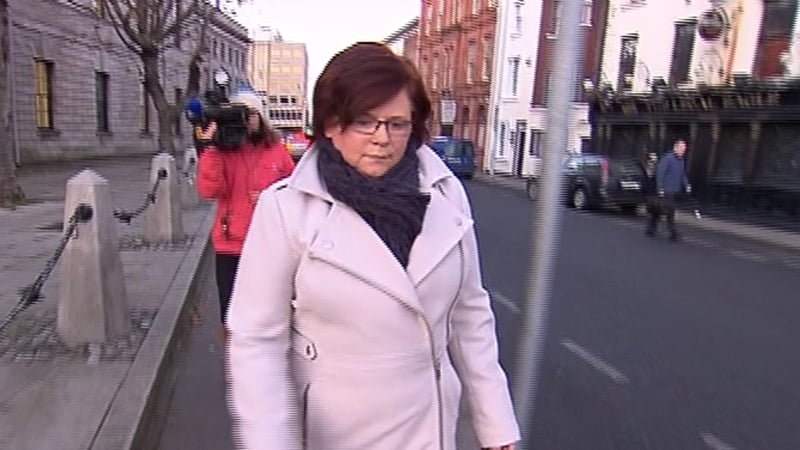
Witness Marie Farrell has told the High Court that gardaí told her they knew Ian Bailey had killed Sophie Toscan Du Plantier and they needed her to identify him as a man she had seen on key dates around the murder.
Ms Farrell said she was shown a video of Mr Bailey and told gardaí he was not the man.
But gardaí said they needed her to place him near the scene because they knew he had done it and that he would kill again.
Ms Farrell said she was assured there would never be a court case and she would only have to give a two-line statement.
She had told gardaí about the first two sightings of the man but had reported the third sighting anonymously, as she did not want her husband to know where she was that night.
She said gardaí told her they knew she was the anonymous caller but that her husband would never find out.
She agreed to give the statement because she had been worried about her husband finding out and she believed that would be the end of it, she said.
Ms Farrell said she felt relieved and decided to just give the gardaí what they wanted.
She said a garda also promised her that a prosecution against her husband over car insurance would be "sorted out".
Ms Farrell was giving evidence in the action for damages taken by Mr Bailey against the Garda and the State, arising out of his treatment as a suspect in the murder of Ms Toscan Du Plantier in west Cork in December 1996.
The State denies the claims.
Ms Farrell told the High Court she signed her name on up to eight blank pieces of paper at a Cork garda station in February 1997.
She said she was contacted by gardaí in the middle of February and asked if she would now make a statement. She agreed.
She said she went to Ballydehob Garda Station on 14 February after work.
She had originally been told gardaí would need only a two-line statement but at the garda station she said they told her they would need more detail.
She said she told them she was in a hurry. They asked her to sign a few pages and said they would work it out.
She said she thought they were just writing out that the man she had seen at a local bridge was Mr Bailey and said she did not give it a lot of thought.
She said she signed four or six or eight blank pages.
The statement identifies Mr Bailey as the man Ms Farrell saw.
She said she had not made it and the man was not Mr Bailey.
She also said she had not made other statements also identifying Mr Bailey and the first time she saw them and other memos and questionnaires purporting to be a record of what she said was during an internal garda inquiry into the handling of the case in 2006.
Witness signed blank pages, court told
Asked how her signature came to be on the statements, Ms Farrell said she presumed it came about because she had signed blank pages in Ballydehob Garda Station.
Asked what her understanding of the situation between herself and gardaí was, she said they said they would just fill in a couple of lines saying the man she saw at Ceal Fada bridge was the same man she had seen in Schull and that it was Mr Bailey.
"I thought they knew it was Ian Bailey and that they could not be wrong. It took the pressure off me because they said that is all they needed because as soon as he was charged he would admit it and there would be no court case."
When news of Mr Bailey's arrest reached her, she said she thought: "I hope it's not because I said it was him I saw at Ceal Fada bridge. I hope it was because of something else because people were convinced he was going to kill again, because the guards were telling everyone he was going to kill again.
"The gardaí said it would be a great help because they were putting away a very dangerous person and a very weird person.
"They were telling me he was into all sorts of weird things; that he would howl at the moon and that he would sit on a rocking chair on the beach during the full moon and ten lesbians would dance around him.
"They were really strange things they said about him and I believed them," Ms Farrell added.
She said Detective Garda Jim Fitzgerald became her best friend and was phoning her every day to see if she was ok.
He had also been told that her husband should appeal a conviction for no car insurance and that gardaí would not contest it, and this had happened.
Ms Farrell said Det Gda Fitzgerald began phoning her several times a day and they would talk about "personal life, the investigation and everything".
She said he told her the best time to ring him was after 9pm when his work partner would not be with him.
She said he told her his work partner did not approve of some of the things he got up to and would not take the same risks as he would.
He would phone her at a public telephone box because he was concerned about calls being traced and suspicion about how much time he was spending on the phone to her.
He later gave her a mobile phone and said they would not have to worry any more as it was a State phone and if calls were traced it would look like he was talking to another garda.
A tape of a phone call between the two was played to the court during which Det Gda Fitzgerald talks about her having to be careful while drunk.
Ms Farrell said this was a reference to her husband not knowing at that time that she had signed blank pages for the gardaí and that they were making false statements.
"He was warning me that if I got drunk I might say something to Chris, who did not know at this stage that it was not Ian Bailey."
Ms Farrell said Det Gda Fitzgerald told her in May 1997 that gardaí had been in contact with a man called Graham, who used to smoke a bit of hash with Mr Bailey.
She said Det Gda Fitzgerald told her they were sending this man out to Mr Bailey's house with some hash to try to get Mr Bailey high and get him to confess to the murder of Ms Toscan Du Plantier.
She said poitín was also mentioned and they were going to get him drunk.
She said this was "like something out of Miami Vice".
She said at the end of May, she got a phone call from Det Gda Fitzgerald, who was crying on the phone.
She said Det Gda Fitzgerald said he had been double crossed by the man and his career was finished because there was going to be a story in a newspaper.
However, she said the garda later told her things had settled down and that he thought someone from the press office had contacted the newspaper.
She said he told her gardaí had put the frighteners on Graham and he had left the country.
She said he said they were hoping he would never come back but Det Gda Fitzgerald said if he did come back he would be found dead in a ditch.
She said he said he wanted to pay back Mr Bailey for his part in the double cross.
She said she made a statement in June about a conversation she had had with Jules Thomas in her shop. However she said today, she had never spoken to Ms Thomas ever.
Ms Farrell said she had two lives - one with the gardaí and what she would do for them, and her other normal life. Her life with the gardaí was starting to impact on her normal life.
She said her life with the gardaí was mad, surreal and was not normal.
She said Det Gda Fitzgerald would ask for just one more thing or one more line.
In July 1997, she said gardaí told her to try to get Mr Bailey into her shop and to get him to confess to the murder.
She was frightened at this stage because she believed he was a killer.
She said Mr Bailey did visit her shop but did not threaten or intimidate her.
However Ms Farrell later made a long statement alleging intimidation by Mr Bailey.
She said she had given the statement to a Detective Sergeant Walsh but she had discussed it with Det Gda Fitzgerald beforehand and he told her exactly what to say.
Ms Farrell said some parts of the statement were true but most of it was made up.
It described an encounter with Mr Bailey in her shop during which Mr Bailey said he knew gardaí were trying to fit him up.
He asked her to go on tape but she declined.
She said she was afraid of him because she believed he had killed Ms Toscan Du Plantier.
She said gardaí had wired the shop in advance of the visit and had given her a tape recorder.
Ms Farrell said she had signed a statement alleging intimidation by Mr Bailey which was not true. "I know I shouldn't have", she said.
She said she received daily calls and visits from Det Gda Fitzgerald who told her they needed to build-up a profile of Mr Bailey as a threatening and dangerous person and they needed her help.
She said he told her they needed to build-up this profile so the DPP would decide to charge Mr Bailey.
"I felt I had to go along with it because he had done us a lot of favours, but at other times I said this is madness and at times I wanted to withdraw statements.
"I said I would never go to court and tell lies and he told me I would never have to go to court."
