


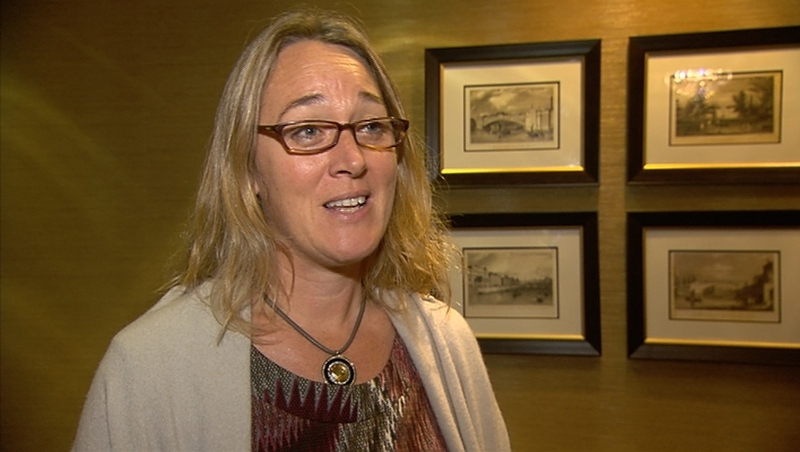
A woman who was born as a result of assisted reproductive technology has warned that draft legislation in Ireland fails to adequately protect the best interests of the child.
Dr Joanna Rose told a meeting in Dublin that the Government's Child and Family Relationships Bill would permit genetic parents to wriggle out of providing identifying information to their offspring.
They could invoke an exemption in Clause 4 that cites "exceptional circumstances" that threaten a party's well-being.
Speaking to RTÉ News, Dr Rose predicted that if a sperm "donor" father was pressed for information by his genetic child, he could claim that revealing such data risked alerting his wife to his sperm donation and thereby ruining his family life.
She predicted that these and other similar "exceptional circumstances" would be used to deny many children of assisted reproductive technology information they're entitled to.
She was addressing a meeting in Dublin organised by the lobby group Mothers and Fathers Matter which is pressing for amendments to the Bill.
She said the word "donor" was misleading because most sperm was paid for making "vendor" a more accurate description.
In 2002 Dr Rose won a human rights test case in the English High Court, which forced the British government to acknowledge the significance of the genetic, as well as the legal identity of donor offspring.
The action resulted in what she calls "minimal" legal reforms in 2005.
She said that in the course of the action, the British authorities claimed that sperm bank records relating to her conception had been destroyed by a fire and a flood and that they had been dumped in a tip.
She said that all such records must immediately be centralised and stored securely.
Dr Rose, who has earned a doctorate for her research on the subject, said that she tracked down her genetic father and discovered that, coincidentally, he had been in England and Australia at the same time that she had lived in those countries.
She said that following repeated efforts to arrange a meeting with him, his solicitor wrote warning her to stop writing to him.
She said she had been deprived of important information about her genetic make-up which left gaps in her family's medical history.
She said that when she was born, her facial characteristics led her doctor father and nurse mother to believe she had Down Syndrome.
The same had happened when her own son was born and he had to undergo genetic tests.
"It's an example. I carry genes and a medical history I don't have access to," she said.
"The fact that doctors intentionally created a situation where I don't have access to my medical history is clearly wrong. My best interests were not protected....And that's why people need to think about and protect the best interests of the child in reproductive technologies a lot more," Dr Rose concluded.
