


The Economic and Social Research Institute says the Government should aim for a more rapid reduction of the budget deficit, eliminating it entirely by 2014, through more spending cuts and increased taxes.
It also says a European solution is needed to relieve Ireland of much of the costs of the banking crisis.
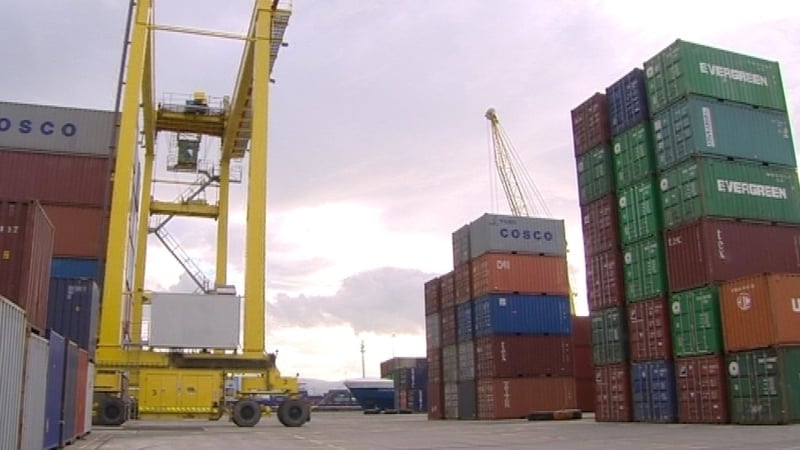
The ESRI says national income will grow by 0.5% this year, led by exports, with particularly strong export growth now showing in Irish-owned companies.
In a more upbeat view of the economy, the ESRI says Irish-owned firms in the traditional sectors, such as food and drink, are now seeing very strong export growth, as the pickup extends beyond the multinational sector.
Service exports are also forecast to enjoy another year of strong growth.
It says the best way for the Government to help support this export growth is to reduce the cost burden on firms.
'It would be important not to increase the cost of labour by tax changes which might translate back into wage demands. This suggests that further tax increases need to be broadly based,' the ESRI said.
It argues for a comprehensive property tax - a long-time demand of the ESRI - which would apply to all property and be introduced at a relatively low rate, with a declared time profile so households could adjust.
This it says would provide additional funds without many of the disincentive effects associated with other taxes.
Introduction of water charges
It also calls for the introduction of water charges, which would cover not only the cost of providing and upgrading water services, but which would also raise money for local authorities.
This income could be used to reduce commercial rates on businesses, which it says are a significant burden on firms.
The ESRI says local authorities have increased rates markedly to try to make up for the fall-off in income from levies and charges on construction.
It also suggests increasing motor tax rates. It says the move to taxes based on CO2 emissions was correct, but led to static motor tax receipts, while the overall number of vehicles increased.
This is because people switched to low emission vehicles, which had the side effect of greatly reducing the re-sale value of cars with bigger engines.
It says the incentive effect can be maintained at higher rates of motor tax.
The ESRI says the budget deficit should be cut more rapidly, urging the Government to go for a zero deficit by 2014, rather than the 4.7% deficit the Government is planning.
This would give it more credibility in the markets, where the Government must return by then to fund a very large rollover of debt due that year.
It says Ireland should get a cut in the bailout interest rate from the EU without any conditions, such as a rise in corporation tax, because Ireland has already contributed to Europe by confining the banking crisis to within the State and limiting damage to other people's banks.
The ESRI's quarterly economic commentary says 'It is difficult to justify the scale of the differences between market rates and the rates charged unless some risk of default is built in.
'Nor is it obvious why other governments should be seeking a trade off for lower interest rates with a higher corporate tax rate. The trade off is already there as the potential spillover effects of the banking collapse are contained within Ireland.'
The ESRI argues in favour of a European solution to relieve Ireland of much of the burden of recapitalising the banks, thereby reducing the overall debt burden.
'What is needed is an EU or Eurozone solution that does not place the whole of the burden of recapitalising banks onto national budgets already stretched by recession,' it says.
The commentary contrasts the approach of the eurozone - where the costs of the banking sector are being borne by individual states within the currency union - with the situation in the US and UK - where a central government authority put in capital and the central banks provide liquidity.
Solutions
However, the EU does not have a central government, so something else has to be invented as a solution.
The ESRI has three suggestions:
1) An interest free loan from the ECB to the Irish Government to overcapitalise the banks.
2) A direct recapitalisation of the banks by the ECB, which would get the entire equity in the banks, to be repaid from a future sale.
3) Using money raised by the European Financial Stability Facility to lend to the banks, which could use the money to repay ECB and CBI lending, with the EFSF money converting into bank equity.
Co-author of the commentary, Joe Durkan of UCD, estimates a contribution of around €50bn would super capitalise the Irish banks, allowing them to go back to financial markets to seek liquidity funding.
This would replace the estimated €130bn that the ECB and Irish Central Bank has lent short term to the Irish-owned commercial banks in emergency liquidity.
