


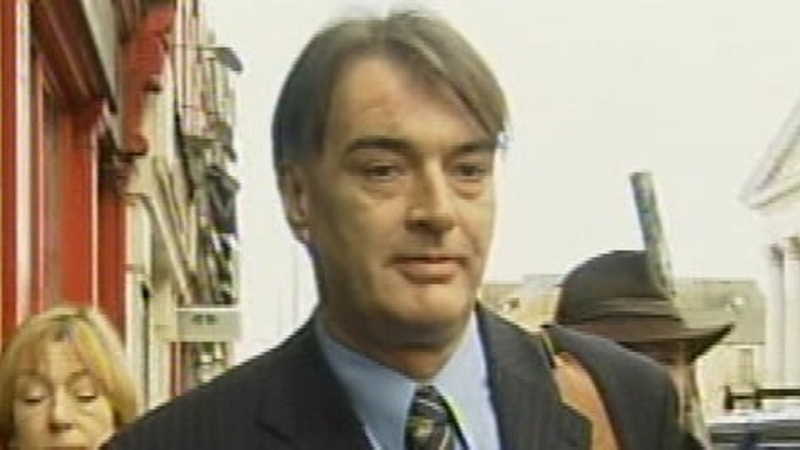
The High Court will decide next month on the extradition of journalist Ian Bailey to France in connection with the killing of French filmmaker Sophie Toscan du Plantier in Co Cork 14 years ago.
The 53-year-old from The Prairie, Schull, Co Cork, was in court today when Mr Justice Michael Peart heard final legal submissions on the extradition proceedings.
Mr Bailey has always denied any involvement in the killing of Ms Toscan du Plantier, whose body was discovered near her holiday home in Schull on 23 December, 1996.
He was arrested during the investigation into the killing but no charges were ever brought against him.
French authorities are seeking his extradition.
Mr Justice Peart heard submissions related to a recent judgment of the Supreme Court ordering the extradition of a Swedish man, Thomas Olsson.
He was arrested here in 2008 under a 2006 European Arrest Warrant (EAW) in relation to four offences of organised or armed robbery and arson in Sweden.
Mr Olsson's appeal against extradition centred on two issues - (1) the nature of the legal assistance available to him and (2) his claim a 'decision' to charge him with, and try him for, the offences as stated in the EAW was not made as required by the EAW Act 2003.
The Supreme Court dismissed his argument that legal assistance under the Attorney General's scheme falls short of that required for a person whose return is sought under an EAW.
On the second argument that no 'decision' was made by the Swedish authorities to prosecute Mr Olsson, the Supreme Court said there was a clear intention by the Swedish authorities to bring proceedings against Mr Olsson.
It was clear Mr Olsson was sought for the purposes of conducting a criminal prosecution and Sweden intended to bring proceedings against him, the court said.
Ronan Munro, for Mr Bailey, said a decision to charge and try his client was required under the EAW Act 2003 but there was no such decision here.
There could be no surrender of a person for the purposes of investigation and it was not permissible to send Mr Bailey back to France 'just to ask him some questions.'
The Olsson case was 'clearly distinguishable' as there was sworn evidence to contradict claims there was no 'decision' to try Mr Olsson but no such evidence here, counsel said.
This case should also be assessed on its exceptional facts as it was known and accepted, after an exhaustive investigation here, there was no evidence on which Mr Bailey could be charged, counsel said.
Robert Barron SC, for the State, argued the Olsson case does not support Mr Bailey's arguments against extradition.
The EAW in this case was made for the purposes of prosecution and Mr Bailey had failed to show no decision had been made by the French authorities not to prosecute him for the offence for which his surrender was sought.
A decision to prosecute at the date of issue of an EAW need not be a final decision, it was also submitted.
Mr Justice Peart reserved judgment to 18 March.
