


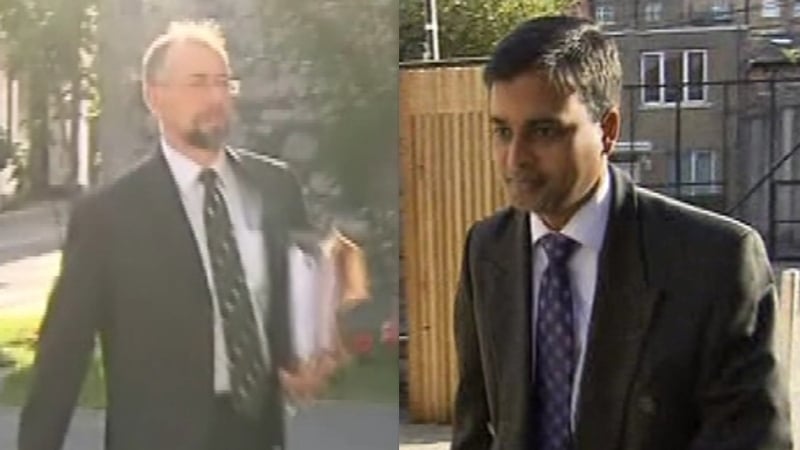
The Fitness to Practise Committee of the Irish Medical Council has halted its inquiry into allegations of professional misconduct against two doctors over the removal of the wrong kidney from a young boy.
The committee chairman, John Monaghan said that 'a series of catastrophic errors' had been made but it did not amount to serious professional misconduct.
After four days of hearings, the committee decided to accept undertakings from Professor Martin Corbally and Mr Sri Paran on their future medical performance.
Lawyers for the Medical Council said its chief executive objected to the course proposed by the Fitness to Practise Committee.
Patrick Leonard insisted the case of professional misconduct had been proven beyond reasonable doubt and it was hard to envisage more serious issues before an inquiry.
He said it was unusual for the Fitness to Practise Committee to invoke Section 67 of the Medical Practitioners Act and accept undertakings from doctors, when the inquiry was nearly completed.
The two doctors, Professor Martin Corbally, a consultant surgeon, and specialist registrar Mr Sri Paran have undertaken 'not to repeat the conduct complained of' and never operate without reviewing all imaging.
In a statement read out on behalf of the boy's parents, they said lessons must be learned and the mistakes must never be repeated, given that doctors hold the lives of children in their hands.
The two doctors owed Master Conroy the promise to employ the best practises in their future work.
Earlier, the paediatric surgeon told the inquiry he was 'taken aback' to be asked by a consultant to perform the surgery on the child, with less than five minutes' notice.
Mr Paran said that as a junior doctor, he could not say no to Professor Corbally, the senior consultant surgeon at Our Lady's Children's Hospital in Crumlin
On the day of the operation, he was working in theatre doing minor day case procedures.
Mr Paran said he had previously performed 11 nephrectomies, but just two or three on his own.
During the operation he was baffled to find that the left kidney to be removed appeared healthy.
Mr Paran said he paused and re-checked the notes made by the consultant, which said the procedure was a left-sided nephrectomy and this was confirmed by the consent form.
During emotional evidence today, Mr Paran said he had trusted what he had been told about the operation but admitted that he had seriously failed the patient.
