


Scientists are rejoicing after the Phoenix Mars lander confirmed their long-held belief that ice is hiding under the surface in the Red Planet's northern region.
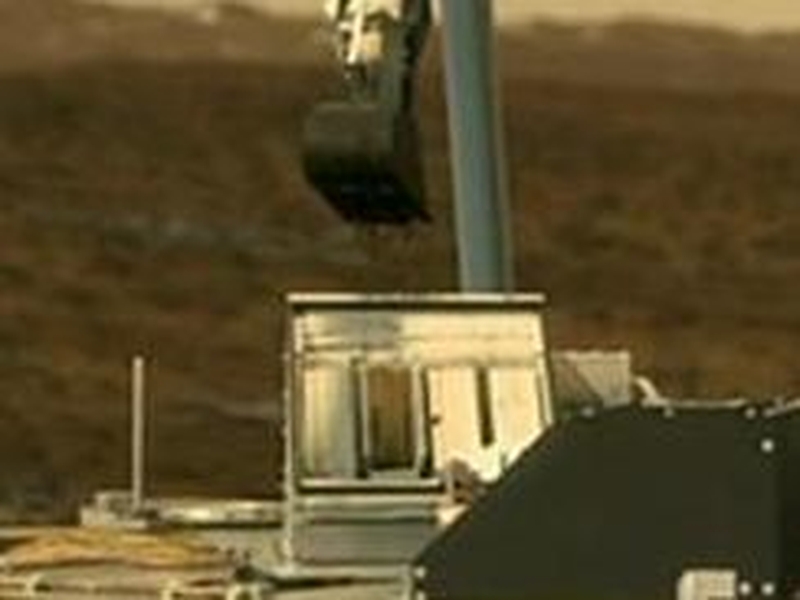
The lander's robotic arm started digging trenches into Martian soil after touching down near the planet's north pole on 25 May, revealing a white substance that scientists had said could be either salt or ice.
Phoenix flexed its arm again to enlarge a trench on 15 June. It then took pictures of eight bright bits of material the size of dice inside the hole, which scientists dubbed Dodo-Goldilocks.
When the lander took new photographs of the trench four days later, the material had vanished, settling the debate about whether it was salt or ice.
Scientists at the Jet Propulsion Laboratory in Pasadena, California concluded that the material was frozen water that evaporated when exposed to the sun. Salt would not have reacted that way, scientists said.
Scientists believed that a vast sheet of ice was hiding in the planet's north pole after NASA's Mars Odyssey surveyed it in 2002.
Besides evidence of water, the three-month Phoenix mission is also hoping to find life-supporting organic minerals in the polar region.
The probe is equipped with oven-like instruments that can melt any ice collected by the robotic arm and analyze the water.
The trick is for Phoenix to move ice samples fast enough from the ground into one of the lander's eight ovens within 30 minutes before it evaporates in the atmosphere.
Water filtered down on Mars may have left its mark on surrounding minerals, and impurities in the ice could tell a great deal about the climactic history of this region of the planet.
Mars is currently too cold for liquid water but it is possible that in some distant past the polar regions were warmer, scientists say.
Water is a main ingredient for life and the polar region at some point may have been habitable: that is a puzzle Phoenix is exploring.
Phoenix's robotic arm made contact in another trench last Thursday with a hard surface scientists believe could be an icy layer.
After trying to crack further into it, the arm became immobilized, which is the expected programmed reaction for when it hits a hard surface.
