

Minister for Health Mary Harney has said she is deeply concerned that so many hospitals have failed to reach agreement on cutting the working week for nurses and midwives.
The Government promised to cut the week to 37.5 hours by the beginning of next month, under last year's strike settlement.
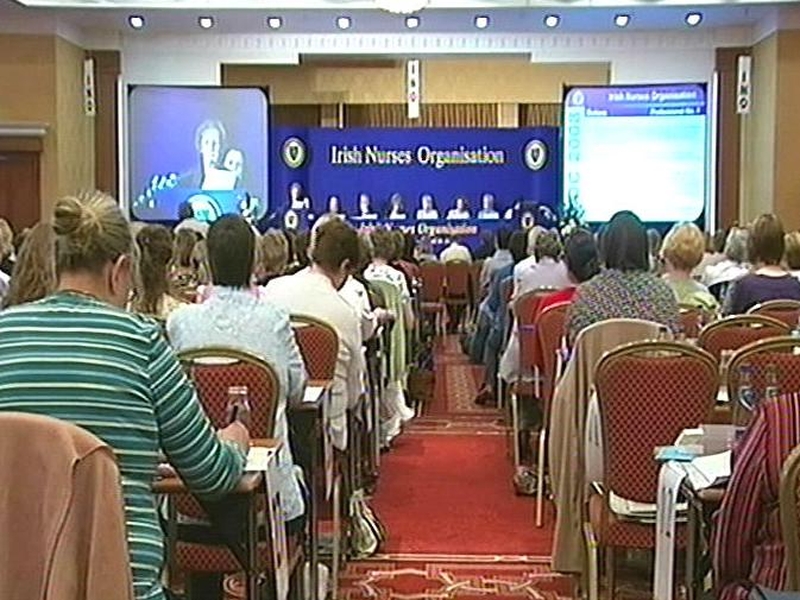
In a letter to the Irish Nurses Organisation, ahead of her address to the organisation's annual conference in Cavan later today, Ms Harney said she is convening a special meeting next week of health employers and unions from the hospitals involved.
Agreement to cut hours has been reached for around 10,000 nurses and midwives, out of over 40,000 working in the health service.
The INO has warned that overtime will have to be paid from 1 June for all nurses who are required to work beyond the new 37.5-hour working week.
The minister has said that the reduction in hours has to be achieved at no extra cost to the taxpayer and with no diminishing of services to patients.
Psychiatric nurses' unions in talks
Separately, psychiatric nursing representatives and Health Service Executive officials are at the Labour Relations Commission for exploratory talks aimed at resolving the ongoing industrial action affecting mental health facilities.
Around 8,000 psychiatric nurses are currently involved in the action, which includes a ban on overtime.
The row centres on a proposed new compensation scheme for psychiatric nurses assaulted at work.
The industrial action began last Wednesday week, and last Tuesday the unions voted in favour of escalating their action from this coming Monday, unless progress is made.
The action is causing significant disruption to mental health services around the country, including at the Central Mental Hospital in Dundrum, and Tallaght and Naas General Hospitals.
The various sides are attending today's talks at the invitation of the LRC, which is examining whether a basis can be found for further discussions.
Speaking on his way in to the talks, Des Kavanagh, General Secretary of the Psychiatric Nurses Association, said his union was entering the talks with an open mind. He added the employers know what the unions want, and the question now is, are they willing to do business? He said the union recognised it has been a difficult time for patients, and their families.
Louise O'Reilly of SIPTU said unions had been campaigning for 15 years for a compensation package for nurses assaulted at work. All they are asking for, she said, is a fair scheme. She said her union was attending the talks to hear what management has to say. She said it had not been their intention to impact patients.
Brendan Mulligan, Assistant Chief Executive of the Health Service Executive - Employers Agency, said employers welcomed the intervention of the LRC.
He said they are coming to the talks solution-focused, and with the hope that enough progress could be made to get the nurses to withdraw their industrial action. He added that employers had tabled their proposals, and if nurses wanted to do the same, employers would look at them. He argued the action was having a serious impact on services.
