Twenty years later the full extent of the worst nuclear accident the world has seen is still unknown.
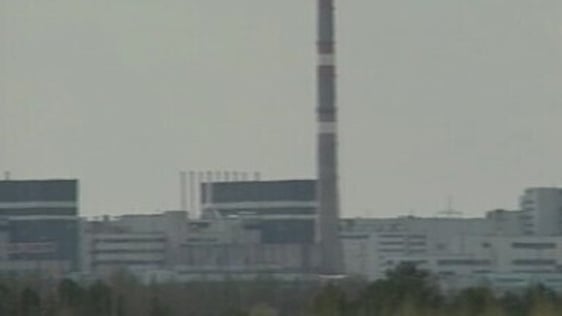
On 26 April 1986, reactor number four at the Chernobyl nuclear power plant exploded, contaminating vast areas of Ukraine, Belarus and Russia. Twenty years later, a commemorative ceremony was held at Chernobyl to remember those who lost their lives and the many others who have suffered as a result of radiation exposure.
The Chernobyl explosion cast a shadow over the world and changed humanity's attitude to nuclear power.
Twenty-eight workers were killed in the initial explosion, while a further nineteen later died from their injuries. However, the true number of people who have developed cancer as a result of radioactive fallout remains unknown.
The memorial ceremony took place beside the destroyed reactor, where Ukrainian President Viktor Yushchenko spoke about the immense suffering caused by the disaster. Survivors were awarded medals, and the president appealed for international support to help Ukraine move forward.
Survivor Vira Veselovskay also addressed the gathering, speaking of an enduring connection to the area and her hope of one day returning to Chernobyl.
Nikolai Fydosevich was working in reactor number three when the explosion occurred and immediately went to the aid of his colleagues. He later spent six months in a Moscow hospital being treated for radiation burns. He believes the disaster was caused by poor construction of the power plant.
Two decades on, radiation levels at reactor number four remain eighty times higher than normal.
The legacy of this disaster could last hundreds if not thousands of years.
An RTÉ News report broadcast on 26 April 2006. The reporter is Tony Connelly.