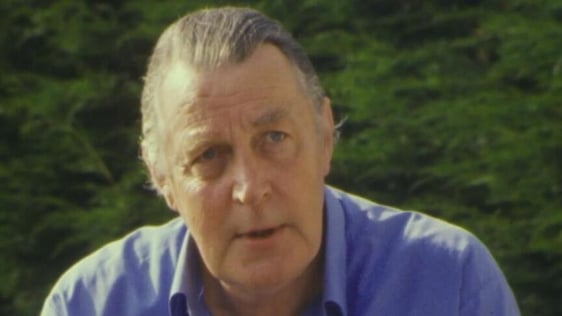
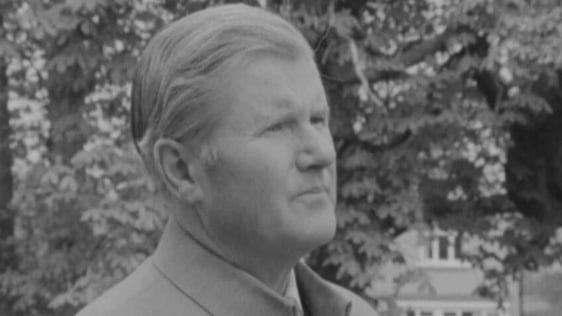
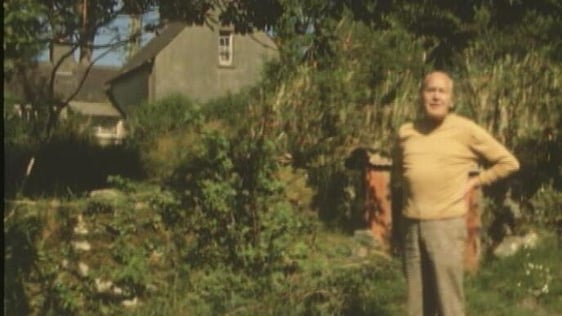
German architect Frei Otto explains his revolutionary approach to architectural design.
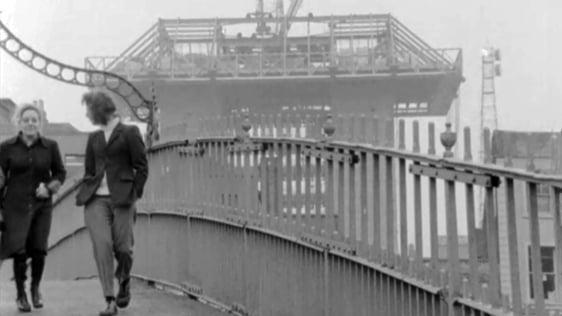
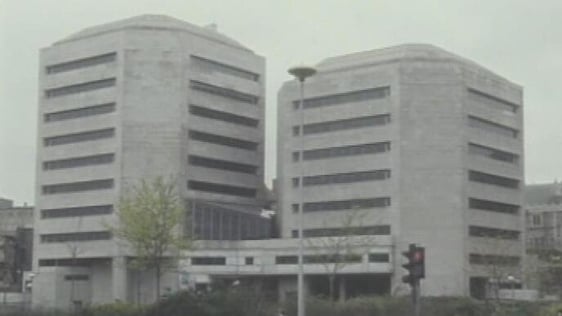
An exhibition showing the work of Frei Otto work is part of the Dublin Arts Festival at the Bank of Ireland on Lower Baggot Street.
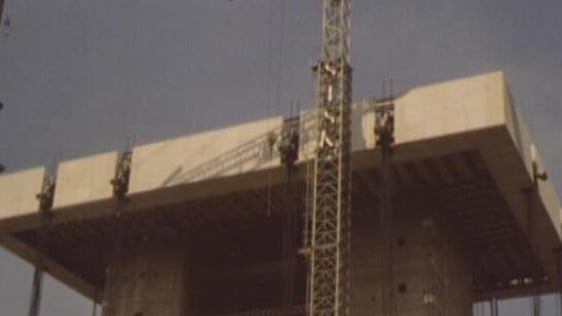
The strucutres created by Frei Otto are based on minimalism which rely on tension rather than the compression used in most conventional buildings. The structures are lightweight, strong, adaptable and moveable. His projects rely heavily on the expertise of a team of technicians and engineers.
I love buildings but only the few and these are those buildings which them people call really good architecture.
Some of his most famous works include his designs for Expo '67 Montreal, the 1972 Olympic Stadium in Munich, and his futuristic pneumatic membrane designs.
Frei Otto believes many buildings today are too serious. He would like to see buildings that are more helpful to people and display a sense of humour. Having made a statement that is quite unusual for an architect Frei Otto has declared he hates buildings. He stands by that statement as he prefers to be outside in nature and there are very few buildings that he likes.
Irish architect Michael Scott says that most architects would agree with Frei Otto and says it is refreshing to see Frei Otto's work.
98 % of the buildings built in the world are awful.
Although heavily influenced by modern technology Frie Otto acknowledges that most of his work could have been built in the Greek or Roman period. He started out as a stone mason and he is not an enemy of conventional approaches to construction. He was also a pilot during World War II, an experience which he says gave him an appreciation of how to move in space and presented him with an alternative approach to architecture. Michael Scott agrees that most architects should be trying to achieve more using less.
Frei Otto has also collaborated with biologists to study structures in nature. While biology is complicated, biologists are interested in Frei Otto's approach to simplicity in structure.
You can not explain what a spider web is without knowing about these structures.
This episode of 'Eureka' was broadcast on 18 March 1976. The presenter is Caroline Erskine.
'Eureka' was a science series broadcast on RTÉ during 1975 and 1976. 'Eureka' set out to show the many facets of science and related technologies. Programmes included studio demonstrations and film reports from around the country.
'Eureka' was presented by Jim Sherwin and Caroline Erskine with reporters Jim Fahy and Pat Casey.