Dougal Robertson and his family were shipwrecked in the Pacific Ocean and survived in a dinghy for over a month.
On 27 January 1971, Dougal Robertson, his wife Lyn, their 18 year old son Douglas and daughter Anne, 17, and twin sons Neil and Sandy age 9, set sail from Cornwall on board a 43 foot wooden schooner 'Lucette'. Over the next year and five months, the family sailed across the Atlantic stopping at various Caribbean islands.
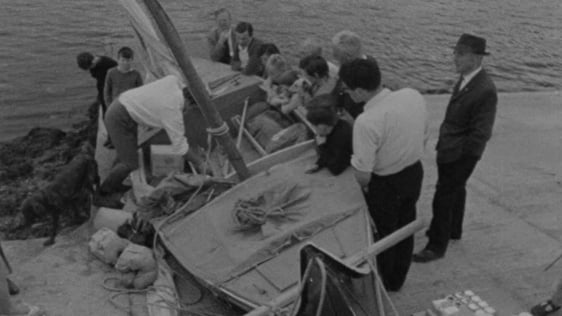
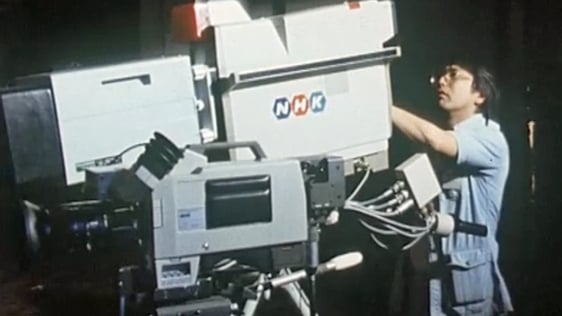
Seventeen months into the trip, while in the Pacific Ocean, the boat was struck by a pod of killer whales. The family, along with a student, Robin Williams, who had joined them on their journey, jumped on board a dinghy and inflatable raft. The group survived on containers of water and basic food supplies until they ran out. At that stage, they collected rainwater and caught fish and turtles to eat. After 16 days, they abandoned the inflatable raft and crowded onto the 10 foot dinghy called 'Ednamair'. On 23 July 1972, they were finally picked up by a Japanese fishing trawler, the Toka Maru II.
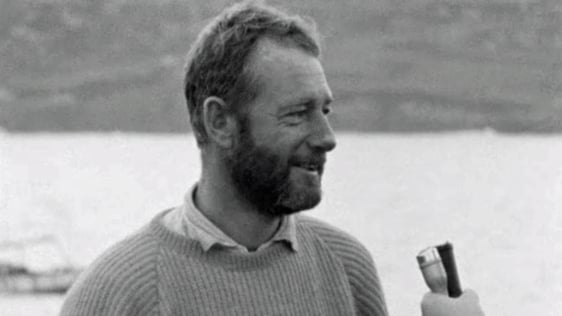
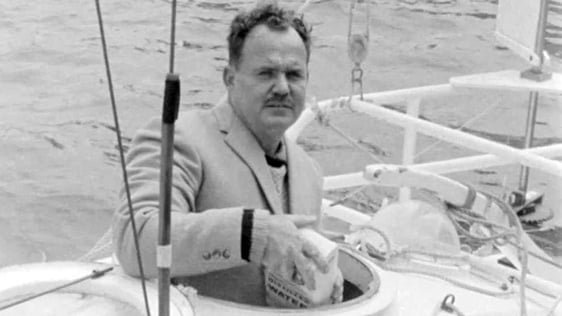
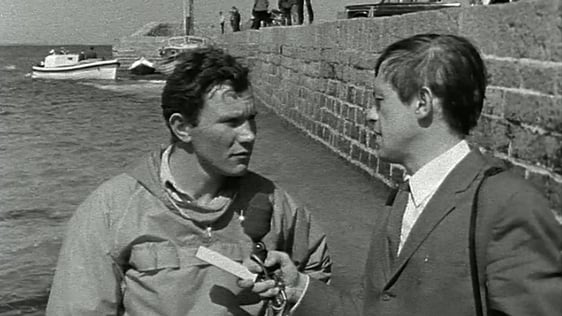
Dougal Robertson tells Larry Masterson and Peter McNiff his story of adventure and survival. A former member of the British Merchant Navy, Dougal Robertson had experience of sailing and the dangers of the sea. While acknowledging the level of risk involved in attempting to sail around the world with your family, he believes that there is a greater risk of having an accident on a motorway than there is at sea.
One doesn't demonstrate one's ego by taking off around the world on your own. You demonstrate your ego by coming back and talking about it to other people.
British adventurer Sir Francis Chichester completed an around the world solo trip in 1967 setting a new record for circumnavigation in 274 days. Dougal Robertson refutes any claims that Chichester embarked on his journey for fame or ego.
If you set foot in a boat, you've got to know what you're doing. Otherwise, you will die.
Dougal Robertson gave up farming after 17 years of hard work. His family had been living in relative seclusion in the countryside. He and his wife Lyn wanted to experience something else with their children before they completed their education.
We thought it would be a good idea to buy a schooner and take them around the world and show them how other populations lived.
As the children grew up on a farm, they had a lot of practical skills and quite a poor academic background. He felt that the quickest way to help his children put their skills to use was to take them to sea to visit other countries where they could observe how other people lived. He believed that this experience would provide a strong basis for them to improve their academic education. Their initial plan was to spend around three years at sea.
It was the Roberson's son Douglas who spotted the fins of the whales on the horizon coming across the sea. Dougal was below deck with his wife, one of the twins and the student when they heard banging and the boat began to sink.
We sank in one minute.
Grabbing a knife off the galley stove Dougal Robertson cut the lashings on the dinghy and pulled the chord to inflate the raft. By that time, the yacht had sunk and they were all in the water swimming towards the raft.
Our fear of being drowned was not probably as great as the fear of being eaten by the whales.
Initially there was a feeling of guilt that he had put his family in such jeopardy. On the seventh day in the raft, a ship passed without noticing them despite the fact that they fired rockets and flares.
Dougal Robertson wrote the book 'Survive the Savage Sea' telling the story of the family's survival at sea. While he enjoys meeting people, he does not enjoy the grind of promoting the book.
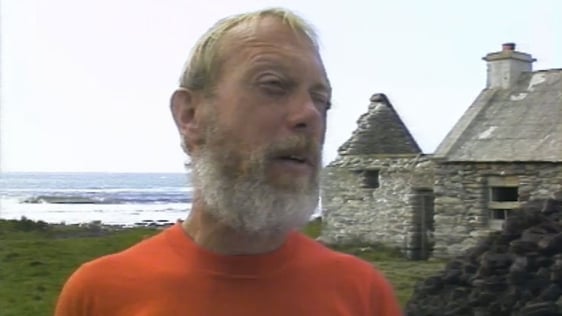
This episode of 'Hindsight' was broadcast on 31 August 1973. The reporters are Larry Masterson and Peter McNiff.