


We were told that levels of gender based violence and domestic abuse within the camps were quite high. Frustration, anger, loss and boredom can be a dangerous mix, writes Laura Fletcher.
 Watch Laura's TV report here
Ciara O'Malley is Oxfam's Field Coordinator in the camps at UN House in Juba. She described to me how some men cut holes in the plastic sheeting of the women's showers so they could spy on them.
Private personal space is hard to come by in these camps.
It is hardly what you could describe as a 'safe space' but most women I spoke to were more afraid of what was outside the compound perimeter. They felt 'safer' inside if not completely safe.
Women here are the care-takers, the child rearers, the fuel and food getters, and largely the ones who are holding what is left of families together.
They have lost children and husbands in this conflict. Women have also been targeted. Some have been killed, more have been raped.
A report by the UN Mission here published in May confirmed what many knew to be true, that "all parties to this conflict have committed acts of rape and other forms of sexual violence against different ethnic groups".
The worst violence witnessed in Juba took place at the start of the conflict in mid-December.
The UN mission's report describes how "in the days following 15 December, Nuer women were stopped in the street in Juba by SPLA (the South Sudanese army) soldiers and taken to unknown places. They were then assigned to soldiers who repeatedly raped them."
It is quieter now, but for the Nuer population living within the UN House compound in Juba, the city and land that surrounds it remains a hostile environment.
Yet some women venture outside. Need is a powerful motivator, and the need for fuel, supplies and essential services can leave them with little choice.
Mary told us that she used to go out in search of firewood. She returned each day, but she said some women did not. She believes they were killed. Others, she told us, were raped.
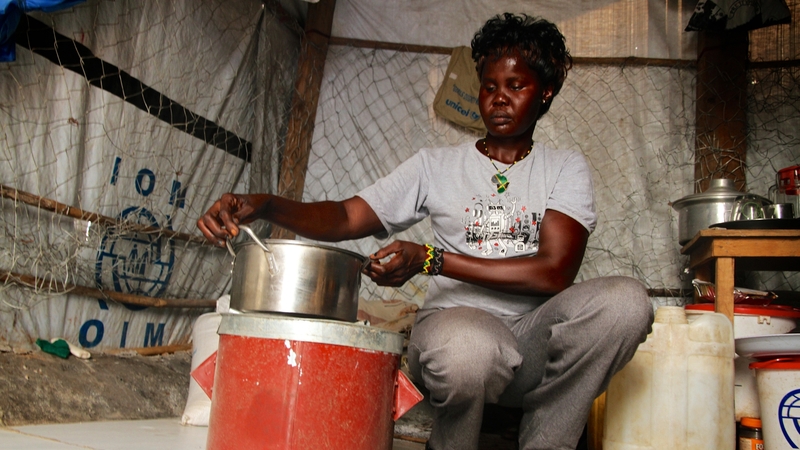
She doesn't go outside anymore, as she says she doesn't need to. Each month Mary gets a supply of charcoal, and she was collecting her fuel for July when we spoke to her.
It was in response to the steady stream of reports of violence, intimidation and rape experienced by those women who ventured out of the camps that Oxfam moved to provide fuel to all the households here.
Ciara O'Malley told us that Oxfam was attempting to identify the demands that draw women out into unprotected terrain, and to find ways of meeting them.
Of course some things are harder to address than others, including the layout of the camps for example.
There are three camps within UN House, and we know of two women who were raped as they traveled between two of the camps to visit relatives.
Ciara explained to us that part of the route between two of the camps is a road that runs outside of the compound, and that is where the women were attacked.
Read Laura's reports on South Sudan's long struggle for peace and the deteriorating humanitarian situation.
