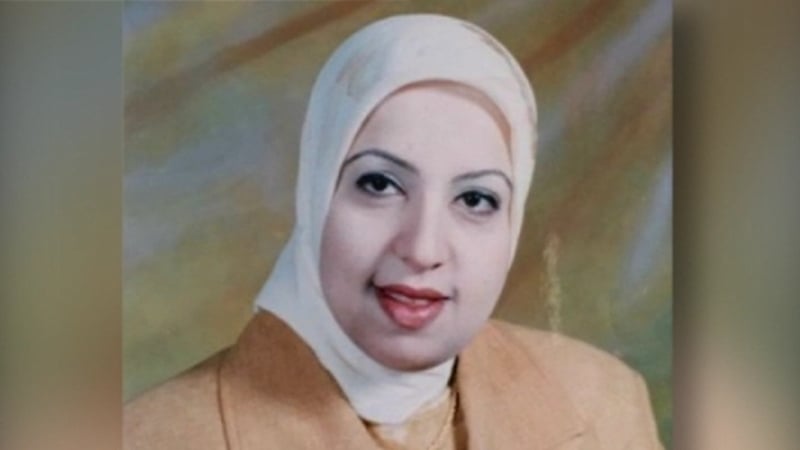

A 43-year-old woman has gone on trial accused of murdering her three-year-old son at their home in Dublin over a year ago.
Maha Al Adheem, with an address at Riverside, Poddle Park, Kimmage, Dublin 12 has pleaded not guilty by reason of insanity to the charge of murdering Omar Omran on 10 July, 2017.
The court heard the boy died from multiple stab wounds.
In his opening address to the jury, prosecuting counsel Michael Delaney told the jury it would have to consider the defence of insanity.
He said this defence applied where an accused person was suffering from a mental disorder and could not be held legally responsible for their actions.
In such cases a special verdict of not guilty by reason of insanity was open to the jury.
He said the jury would hear expert evidence from psychiatrists for the prosecution and the defence and significantly both are in agreement that she fulfills the criteria for a special verdict.
He described the case as "profoundly sad" but said there was no place for emotion or sympathy in the course of their deliberations.
It was fair to say that the facts of this case were particularly distressing, he said, adding "so there is a particular challenge for you as a jury to leave matters of emotions and sympathy out of the equation."
Mr Delaney said the facts of the case were largely not in dispute and essentially it would "boil down" to what the jury makes of expert evidence about the state of mind of the accused at the time.
The jury was also told that Ms Al Adheem had been diagnosed with depression and schizophrenia in 1996 while studying medicine in Iraq, and had been admitted to a psychiatric unit in Ireland in March 2017 a month after her son was diagnosed with autism.
The court heard that she had trained and practised as a doctor in Iraq and Syria having lived in Kuwait until she was 15.
She came to Ireland in 2010 as part of an arranged marriage which ended shortly after the birth of her only son.
Mr Delaney said Ms Adheem had been admitted to a psychiatric unit with suicidal thoughts just four months before her son was stabbed to death.
She had been diagnosed as suffering from an adjustment reaction - an opinion that she was under a considerable amount of stress associated with trying to cope as a single mother having difficulty accessing services for her special needs son.
In the weeks before the killing, she had been telling neighbours she was concerned about the presence of a black cat in the apartment complex which she associated with an evil spirit and the presence of a male.
Warning: Readers may find the following details distressing
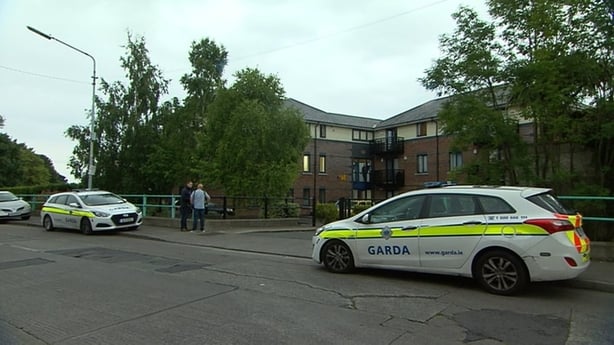
On the evening of 10 July 2017, she phoned 999 and told emergency services "my baby is dead".
When gardaí and paramedics arrived at the scene they had to break down the front door with a sledgehammer after failing to get an answer.
Inside the apartment they found Ms Adheem, who had blood on her hands and clothes, and was holding her side.
Her son was in a bedroom lying on a bed and appeared to have multiple stab wounds. It appeared he had died some time earlier.
A kitchen knife was found at the scene.
She told gardaí she had stabbed her son and then herself and that she wanted to die.
Ms Adheem was taken to hospital and later transferred to a psychiatric unit. Two days later she was deemed fit for interview and was arrested.
In her garda interviews she told gardaí about the black cat and repeatedly said it was "a power" that made her go to the drawer and take out a knife and stab her son.
The boy's body was removed from the apartment the day after his death.
A post-mortem found he had 20 stab wounds mainly to his trunk. Four were significant wounds which had penetrated the lungs, heart and severed and artery.
There were also defensive wounds to his right hand. The court was told he would not have survived even if he had received immediate medical attention.
Mr Delaney told the jury the defence of insanity was being raised in the case and if accepted by the jury it could return a special verdict of not guilty by reason of insanity.
He told the jury it was "technically an acquittal but not the equivalent of an outright acquittal".
However he told the jury it was not there to simply rubber stamp the evidence of two psychiatrists but would have to assess that evidence before deciding on a verdict.
The case continues tomorrow.