


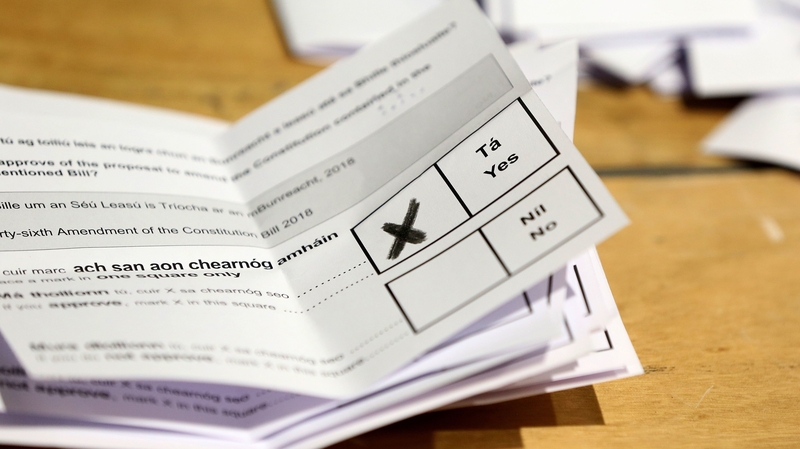
An appeal by a Dublin woman against the High Court's refusal to permit her bring a petition aimed at overturning the Yes result of the referendum on the Eighth Amendment will be heard on 17 August.
A stay preventing the result being formally certified by the Referendum Returning Officer continues pending the appeal hearing.
The matter was briefly mentioned before Ms Justice Mary Irvine in the appeal court this afternoon when Ms Jordan, a homemaker from Dún Laoghaire, represented herself. Frank Callanan SC represented the State.
Ms Justice Irvine said a notice of appeal has been filed by Ms Jordan and told her, because this was a matter of "significant public importance", there would be an early hearing date.
The judge fixed that date for 17 August and told Ms Jordan she would have to file her written submissions by 7 August and the State and Referendum Commission would have to respond by 10 August.
Ms Jordan, who had legal representation for her High Court case, said she is endeavouring to get solicitors and barristers and hoped she would not have to present the appeal herself.
Separately, the appeal court will hear an appeal by Diarmaid McConville, from Dromahair, Co Leitrim, on Monday against the High Court's refusal to allow him be substituted for Ciarán Tracey, a retired public servant from Leitrim village, who had initiated an application for permission to bring a petition challenging the result but later withdrew it.
The president of the High Court, Mr Justice Peter Kelly, said there was no procedure for permitting such a substitution and refused it.
Last week, Mr Justice Kelly refused separate applications by Ms Jordan and by Charles Byrne, a musician from College Rise, Drogheda, Co Louth, for leave to bring petitions to challenge the 25 May referendum result. He found neither met the criteria set out by the Referendum Act for such petitions.
The Act required the applicants to put prima facie evidence before the court of matters described in the Act but they had not, he found. They both failed to produce evidence of various matters complained about, including alleged electoral irregularities and alleged unlawful Government interference in the campaign.
He also found neither applicant had shown any of the matters they complained about would, as the Referendum Act required, "materially" affect the outcome. The referendum was carried by more than 700,000 votes, he noted.
Earlier this week, the judge made orders that the State and Referendum Commission were entitled to their legal costs, estimated at more than €200,000, of successfully opposing both applications.
Ms Jordan has appealed the High Court decision but Mr Byrne is not appealing.
