


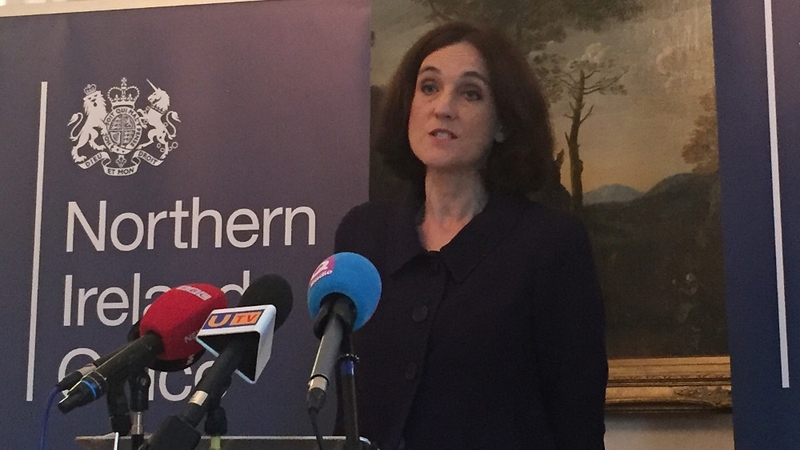
Scotland and Northern Ireland will not be able to attain special EU status in the wake of Brexit, Theresa Villiers has insisted.
The Northern Ireland Secretary dismissed the suggestion that regions that backed a Remain vote could have a relationship with the EU distinct from England and Wales, where majorities favoured a UK exit.
Ms Villiers, who campaigned for a Leave vote, said the UK would be treated as one nation in negotiations with the EU.
The Secretary of State was in Belfast for a day of talks on Brexit and other Northern Ireland-specific issues with the region's political leaders and Minister for Foreign Affairs Charlie Flanagan.
"EU rules are very clear, membership is at member state level," she said.
"It's a national question, it's not possible within EU rules to have a part of a country being part of the European Union.
"So this decision has been made, the people of the United Kingdom have voted to leave the European Union - that decision is going to be respected, that's what the government will take forward."
Mr Flanagan said there are a number of issues that need to be addressed concerning the relationship with Ireland and Britain outside of the European Union.
He said he believed maintaining the common travel area will be top of everyone's agenda.
Speaking on RTÉ's Morning Ireland, Mr Flanagan said he has spoken to the foreign ministers of the Netherlands, UK, Germany and France and they were all conscious of the border issue, the peace process and the fact that peace and stability needs to be maintained and enforced.
He said Ireland's agenda and priorities were clear and they now needed to be met in the "final shake up".
Mr Flanagan said he believed it was essential to acknowledge that there was no change to the Good Friday Agreement and he did not believe there would be any alteration to it.
He added that he thought that the timing for a border poll as proposed by Sinn Féin "couldn't be worse".
"We're dealing with the turbulence and with the huge significance of last week's events in the form of a referendum and to toss in at this stage a border poll on Irish unity, to my mind, would not only be unhelpful, it would be divisive."
He said he believed it was essential that the full body of European legislation in respect of human rights continues to apply "across the island of Ireland".
And, he said, Ireland remained committed to the European Union and the freedom of movement of goods, services and people.
The result of Britain's referendum to leave the EU was discussed at length at the Fine Gael Parliamentary Party meeting this evening, with contributions from the Taoiseach and senior ministers.
Minister for Foreign Affairs Charlie Flanagan briefed the meeting on his visit to Belfast today, and planned for cross border meetings. Party chairman Martin Heydon is due to meet Alasdir McDonnell of the SDLP tomorrow.
Earlier, Fianna Fáil leader Micheál Martin has said it is extremely important to stress the special relationship between Ireland and Britain and to maintain the common travel area.
Mr Martin said that a border poll on Northern Ireland may happen in time but if we have learnt anything from Brexit it is not to have polls without a plan to follow them.
