


The Inspector of Mental Health Services has said that "nearly half" of the twenty community residences inspected last year "were found to be in poor condition, which is unacceptable”.
The commission has said that about 1,300 people with mental health problems are living in community residences that are not subjected to the same rigorous inspection and enforcement regime as psychiatric hospitals.
In its annual report, the Mental Health Commission has called on the Government to implement last year’s expert group report recommendations.
These include legal reforms to ensure that the estimated 100-plus community settings undergo mandatory inspections at least once a year.
A principal function of the independent statutory MHC is the fostering and promotion of high standards of care in the delivery of mental health services.
The commission, which carried out mandatory inspections of the State’s 61 psychiatric hospitals, expresses concern about the continuing high rate of admission of children to adult units – amounting to almost one-fifth of all child admissions.
However, it underlines that two-thirds of the State’s residential psychiatric patients live in community residences, sometimes called high support hostels, which the commission’s inspectorate may visit but is not legally bound to monitor.
It has no legal powers to enforce recommendations following the optional inspections.
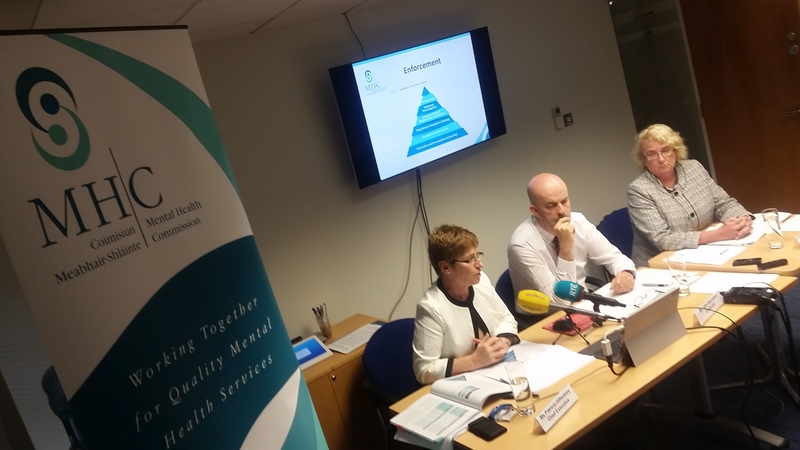
MHC Chairperson John Saunders told journalists in Dublin at the launch of the annual report that almost half the community residences accommodate over ten people which is contrary to the recommendations of a HSE-sponsored review of congregated settings.
He said many of the residents are under-stimulated in the round-the-clock staffed residences, 20 of which the commission inspected last year.
One closed voluntarily after the inspectorate reported the premises was unsuitable. Another is still being monitored on an ongoing basis because of concerns about residents' safety and welfare.
Mr Saunders said the watchdog continues to be concerned that others have poor physical infrastructure, and that more again lack individualised care plans and any community care. He added: "They are institutional in nature."
In an overview of mental health services, Mr Saunders said recovery is not put at the centre of their work and that there is still a significant absence of psychology, social work, occupational therapy and other multidisciplinary team members.
"We will not have a recovery-orientated service unless staff make-up reflects the move from a purely medical model to a more holistic biopsychosocial one," he warned.
The commission says that the State’s mental health services were operating last year at just 75% of the staffing level recommended in the sector’s ten-year-old official policy, 'Vision for Change'.
This was despite what the watchdog called this month's welcome allocation by Government of €35m for additional services, particularly on specialist community mental health teams.
However, it also underlined that funding was available in 2015 for an additional 700 staff, but difficulties in recruiting specific professional staff continued throughout the year.
MHR concerned by living standards
The Mental Health Reform coalition has expressed serious concern that unacceptable living conditions are being endured by people with long-term mental health difficulties in what it termed mini-institutions.
It echoed the concerns expressed by the MHC that some 24-hour nurse-staffed community residences are too large, in poor condition and institutional.
MHR Director Dr Shari McDaid said it is imperative that the remit of the MHC is extended at the earliest opportunity to empower it to regulate community-based services.
She urged the immediate implementation of the recommendations of last December's report of the expert review of the 2001 Mental Health Act.
"Another concern is that we have no idea exactly how many of these residences are in operation around the country and therefore how many people might be living in these institutionalised settings," Dr McDaid added.
