

Turkey has demanded that the European Union start easing restrictions next year on Turks travelling to the EU if it wants full cooperation to stem the flow of Syrian refugees and other migrants from its territory to Europe.
As EU leaders held a summit in Brussels dominated by talk of concessions to Turkey in return for Turkish help on themigration crisis, Prime Minister Ahmet Davutoglu said Ankara would not finalise a previously drafted agreement to take back migrants rejected by the EU without progress on the visa issue.
"We will not sign the readmission agreement before steps are taken on the Schengen visa and thus a visa liberalisation is secured for Turkish citizens," he told a television interviewer, saying he wanted a deal by the first half of next year.
Parallel, linked agreements on readmission and visa-free travel were made in late 2013, laying out conditions to be met, and expectations, that would take some three to four years.
As the summit got under way in Brussels, where EU leaders are considering offers to make visas easier for some Turks, French President Francois Hollande said of the Turkish demand:
"Just because we want Turkey to help us by keeping back refugees, we mustn't ease restrictions unconditionally ... So there will be a proposal that will set many conditions."
European Commission President Jean-Claude Juncker said EU negotiators made progress in new talks in Turkey.
"It's moving in the right direction," the EU chief executive, who last week in Brussels presented Turkish President Tayyip Erdogan with a draft joint "action plan" for cooperation on migration, said.
Before leaving for the summit, German Chancellor Angela Merkel told her parliament that Europe needed to offer better support to help Turkey deal with the influx of refugees from war-torn neighbours. Over two million Syrians are in Turkey.
"Without a doubt Turkey plays a key role," said Ms Merkel, who will visit Ankara on Sunday. "Most war refugees that come to Europe travel via Turkey. We won't be able to order and stem the refugee movement without working together with Turkey."
Embracing Turkey and especially Mr Erdogan presents EU leaders with dilemmas.
In years of talks on Turkey joining the bloc, the EU has constantly said Ankara fails to respect human rights and many accuse Mr Erdogan of further undermining them.
"In our neighbourhood, we are not asking any more for fundamental rights after the Arab Spring," said a senior EU political leader. "We are asking for stability."
Many, notably in Berlin and Paris, doubt the wisdom of ever letting such a populous, poorer and Muslim country into the Union.
Yet the EU is desperate now for Turkey's help and ready to meet some of Mr Erdogan's demands, notably for easier travel for Turks to the EU, economic cooperation and diplomatic goodwill.
Efforts to end the division of Cyprus between the Greek-speaking state that is an EU member and the Turkish-backed one in the north of the eastern Mediterranean island are also a factor in relations.
EU diplomats worry that Mr Erdogan may use the migration crisis as added leverage.
"We understand the added value of Turkey," one said. "But we cannot give it carte blanche."
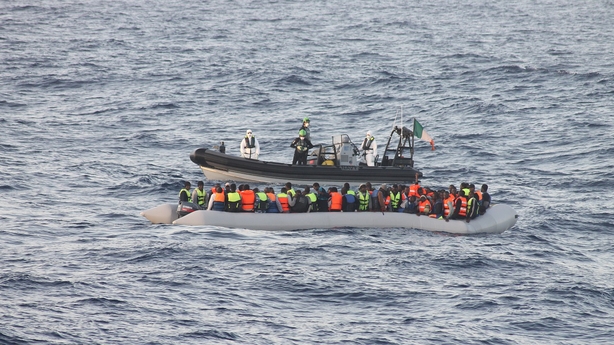
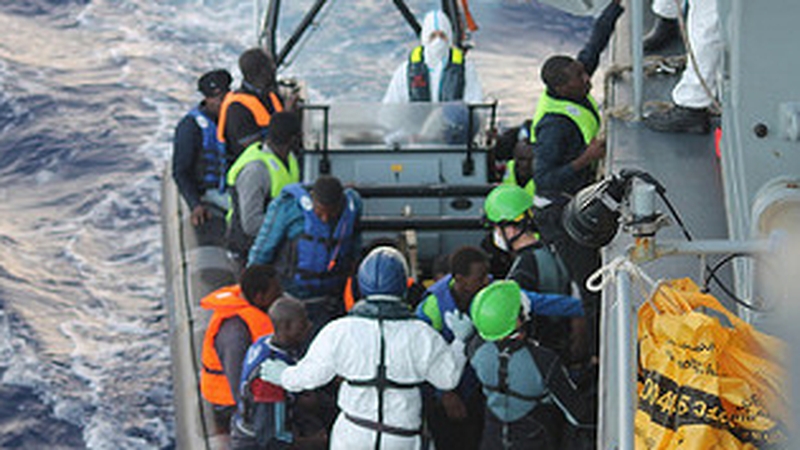
Meanwhile, the Irish Navy has rescued 102 people from an inflatable craft off the coast of Libya this morning.
At 6am LÉ Samuel Beckett was tasked by the Italian Marine Rescue Co-ordination Centre to investigate an inflatable craft 50km northwest of Tripoli.
The vessel began a rescue operation soon after, taking approximately 102 people, including two minors, on board.
All of the rescued people are receiving food, water and medical attention.
