


A mother who suffocated her three disabled children before trying to kill herself because she saw no "way out of their joint suffering" will not face trial for their murder.
Tania Clarence, 42, pleaded guilty to the manslaughter of Olivia, four, and three-year-old twins Ben and Max by diminished responsibility, but denied murder.
At a hearing at the Old Bailey in London, Mr Justice Sweeney accepted her plea so she will no longer face trial in the New Year.
Prosecutor Zoe Johnson QC told the court that in the light of medical reports, the Crown Prosecution Service accepted that Clarence was suffering from a "major depressive episode" at the time of the killings that amounted to an "abnormality of mind".
She said: "It is clear on the evidence Mrs Clarence killed her three children because she wanted to end their suffering and at the time she committed the act she could not see any alternative or any other way out of their joint suffering."
But Clarence previously held the firm belief that the quality of her children's lives was more important than their longevity, which was "entirely understandable", she said.
Clarence, who was not in court, will be sentenced on 14 November when she is likely to face a hospital order.
Jim Sturman QC, defending, said a hospital order would be a "just and compassionate" sentence.
He said: "This is a truly tragic case. Anybody who reads the evidence cannot fail to be moved.
"This offending did occur whilst Mrs Clarence was suffering from an abnormality of the mind.
"She was manifesting stress throughout the life of the children by their suffering and caring for three children with this condition was exhausting, distressing, debilitating and turned out to be overwhelming."
He said as a result of her illness Clarence had "no hope for the future" and her suicide attempt was genuine.
Mr Sturman said that, at the time, Clarence "bitterly regretted" that she had survived but now bitterly regrets the death of her children.
Clarence's husband Gary was in court for the brief hearing before Mr Justice Sweeney.
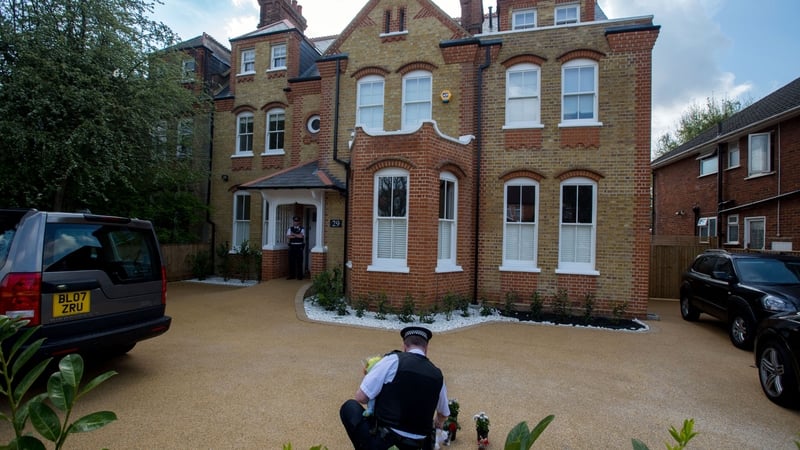
At a previous hearing, the court heard that Clarence confessed to killing three of her children at her home in the wealthy south west London suburb of New Malden on 22 April.
Clarence left three notes before allegedly smothering the children, who all had type-2 spinal muscular atrophy, a condition that affects muscle strength.
She then tried to take her own life.
The mother of four was discovered bleeding and crying by the nanny and a neighbour, who had gone to the home after becoming concerned for her safety.
The prosecutor said the nanny and neighbour arrived at 9pm to find the home in darkness.
At the bottom of the stairs they found a note written in Afrikaans to Clarence's husband Gary.
They put on the torch on a mobile phone and went upstairs, calling out to Clarence as they went.
Ms Johnson said: "She got to the first floor and found Mrs Clarence in a bedroom.
"She was telling them to go away, saying that it was too late, and clearly seemed disturbed and devastated."
Asked if she had taken anything, the court heard that Clarence replied: "I took something yesterday, but it didn't work."
Even from the light from the torch, Ms Johnson said it was obvious she had tried to take her own life as there was blood coming from her wrist.
Police were called and the neighbour checked if anyone else was in the house.
He opened the door into the children's bedroom and saw the twin boys dead, but was too shocked to continue his search of the house.
The nanny told police that as she searched the house she was calling out to Mrs Clarence, but she shouted back: "Just go, it is too late, just go, just go."
The police arrived at around 9.30pm and the three children were pronounced dead at the scene at 9.41pm.
Clarence confessed to the triple killing to a female police officer at the scene, saying: "I'm sorry. I'm sorry."
Asked why she was sorry, the tearful mother said: "I killed them. I suffocated them."
Clarence was taken to St George's Hospital where she was treated for a self-inflicted 2cm cut on her left wrist.
At the hospital she was told she was going to be taken to the police station, and cried out "Why do I have to do this? I'm guilty", the court heard.
Two other notes were found in the house. One discovered on top of a pile of clothes in the master bedroom read: "Gary, I don't want to be saved please. I can't live with the horror of what I have done. I thought the pills would work, they didn't."
A third note was addressed to the nanny, described in court as "a significant member of the family". Its contents were not divulged.
The court heard that her husband Gary was away in South Africa and was not due to fly home until 24 April.
At the police station, Clarence was assessed by a forensic psychologist who ruled she could not be sectioned, but she was found to be at severe risk of suicide.
She replied "No comment" in her police interviews and she was charged on 24 April and held in a secure hospital.
Children with SMA Type 2 have weakness in their muscles, which means they cannot stand unaided, may have difficulty with other movements and are vulnerable to respiratory infections.
But although it remains a life-limiting condition, improvements in care mean that most of those affected now live long lives.
