


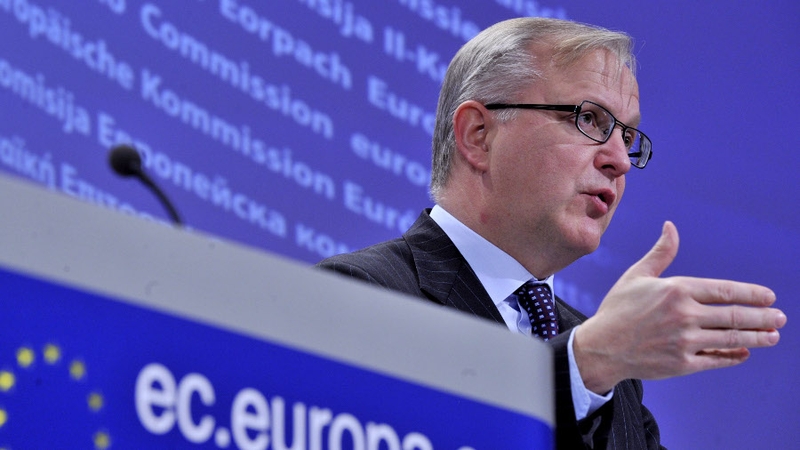
EU Economic and Monetary Affairs Commissioner Olli Rehn has said that Ireland's economy is continuing to recover.
Mr Rehn said that the EU-IMF bailout has contributed to the recovery through financial assistance and the restructuring and recapitalisation of the banking sector.
This is despite figures showing an expected slowdown in exports and an increase in unemployment in 2012.
He was speaking at the launch of a European Commission interim economic forecast, which showed that the eurozone had entered a "mild recession".
The report found that Irish export growth is expected to slow down in 2012 due to a weaker outlook for the eurozone, although an unchanged outlook for the US and UK should provide "some support".
The Irish economy grew in 2011 by 0.9%, almost entirely due to exports, but domestic demand continued to fall due to fiscal consolidation, falling employment and households paying down debts.
Overall, the Irish economy is expected to grow by 0.5% in 2012, while domestic demand will continue to fall, as will investment in the construction sector.
Unemployment is also expected to rise again in 2012 because of cuts to the public sector and the financial services sector, while the unemployment level may be offset by emigration.
Irish inflation is due to rise to 1.6% in 2012 due in part to the depreciation of the euro against sterling.
Household consumption could be lower than projected because householders continue to pay down debts.
Meanwhile, official figures from the Central Statistics Office show that the annual rate of inflation fell back to 2.2% in January, from 2.5% in December.
The inflation rate has now fallen for two months in a row, having hit 2.9% in November.
The Central Statistics Office said prices fell by 0.5% during January, mainly due to lower mortgage costs and the effect of winter sales.
Clothing and footwear prices fell by 10.7% during January, while prices of furniture and other household equipment dropped by 2.5%.
