


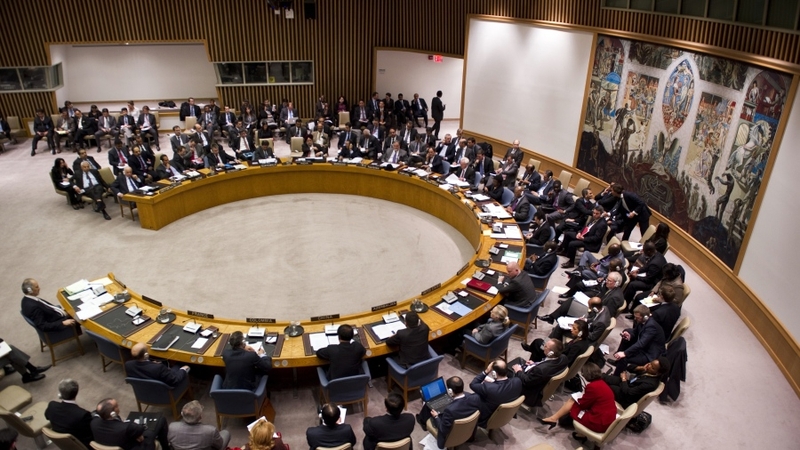
The Arab League and Qatar, with backing from the US, have urged the United Nations Security Council to take swift action to stop the escalating violence in Syria.
They also want to UN to endorse an Arab plan for Syrian President Bashar al-Assad to step aside.
US Secretary of State Hillary Clinton told the 15-nation council: "We all have a choice: stand with the people of Syria and the region or become complicit in the continuing violence there."
Arab League Secretary-General Nabil Elaraby called on the council to take "rapid and decisive action".
Qatari Prime Minister Sheikh Hamad bin Jassim al-Thani warned that Syria's "killing machine is still at work".
Mr Elaraby said Arab nations were trying to avoid foreign military intervention in the ten-month-old Syrian crisis that has killed thousands of civilians, a point Sheikh Hamad also emphasised.
The Qatari prime minister suggested the council should use economic leverage instead.
Syrian UN Ambassador Bashar Ja'afari rejected the suggestion that his government was responsible for the crisis, accusing the US and its European allies of wanting to conquer new territory in the Middle East.
He said Western powers yearned for "the return of colonialism and hegemony".
Mrs Clinton said that by pitting ethnic and religious groups against each other, Syrian leaders were bringing their country closer to the brink of civil war.
"The evidence is clear that Assad's forces are initiating nearly all the attacks that kill civilians, but as more citizens take up arms to resist the regime's brutality, violence is increasingly likely to spiral out of control," she said.
Meanwhile, the Syrian Observatory for Human Rights said a surge of violence in Syria yesterday, mostly in the flashpoint Homs region, killed 96 people, 55 of whom were civilians.
The violence, which also saw 25 soldiers killed, marks one of the bloodiest days of the revolt against President Bashar al-Assad's regime since it erupted in March.
On Sunday, 80 people were reportedly killed, equally divided between military and civilian deaths, in the most intense clashes of the uprising began, the group reported.
