


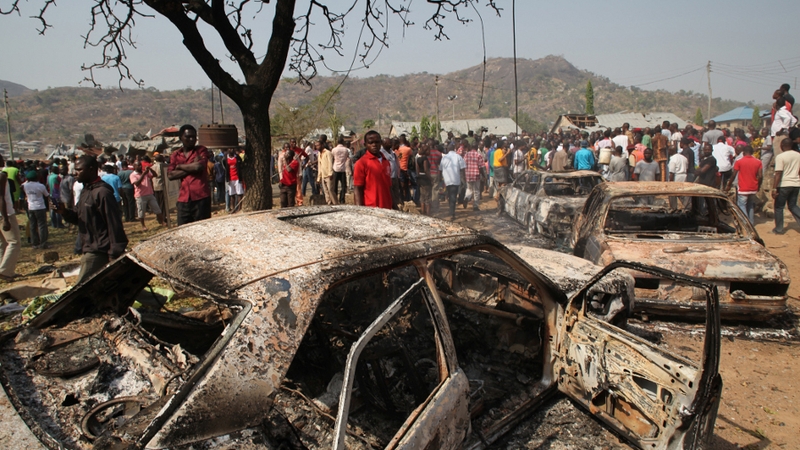
The group's increasingly violent northern-based insurgency has strained relations between Nigeria's largely Christian south and its mostly Muslim north.
Here are some facts about Boko Haram:
The group:
Boko Haram became active in about 2003 and is concentrated mainly in the northern Nigerian states of Yobe, Kano, Bauchi, Borno and Kaduna.
Boko Haram, which in the Hausa language of northern Nigeria means "Western education is sinful", is loosely modelled on the Taliban in Afghanistan.
The group considers all who do not follow its strict ideology as infidels, whether they be Christian or Muslim. It demands the adoption of Sharia law across Nigeria.
Recent messages from its leaders have said it is attacking anyone who opposes it, at present mainly police, the government and Christian groups.
Boko Haram followers have prayed in their own mosques in cities including Maiduguri, Kano and Sokoto, and wear long beards and red or black headscarves.
The group published an ultimatum this month giving Christians three days to leave northern Nigeria.
Since then, attacks in northeastern Nigeria have killed many and hundreds of Christians have fled to the south.
President Goodluck Jonathan declared a state of emergency on 31 December in an effort to contain the violence.
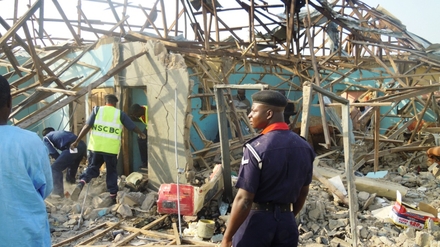
Mr Jonathan said the group had supporters within his own government and the insecurity it had created was worse than during the civil war that broke out in 1967 and killed more than 1m people.
Some attacks by Boko Haram:
In its first attack in January 2004, it attacked a town in Yobe State before being forced to withdraw by security forces.
In July 2009, Boko Haram staged attacks in the northeastern city of Bauchi after the arrest of some of its members, and clashed with police and the army in the northern city of Maiduguri. About 800 people were killed in five days of fighting in the two cities.
Later that month, leader Mohammed Yusuf was captured by Nigerian security forces and shot dead in police detention hours later.
In early July 2010, Abubakar Shekau, a former deputy leader of the group who was thought to have been killed by police in 2009, appeared in a video and claimed leadership of the group.
On 26 August, 2011 a suicide bomber struck the UN building in Abuja. At least 23 people were killed and 76 wounded.
Boko Haram claimed responsibility on 29 August, demanding the release of prisoners and an end to a security crackdown aimed at preventing more bombings.
It was the first known suicide bombing in Nigeria, marked an escalation in the group's tactics and revealed an increase in the sophistication of explosives it uses.
On 20 January 2012, coordinated bomb and gun attacks on security forces in the northern city of Kano killed at least 186 people - the group's most deadly attack.
