


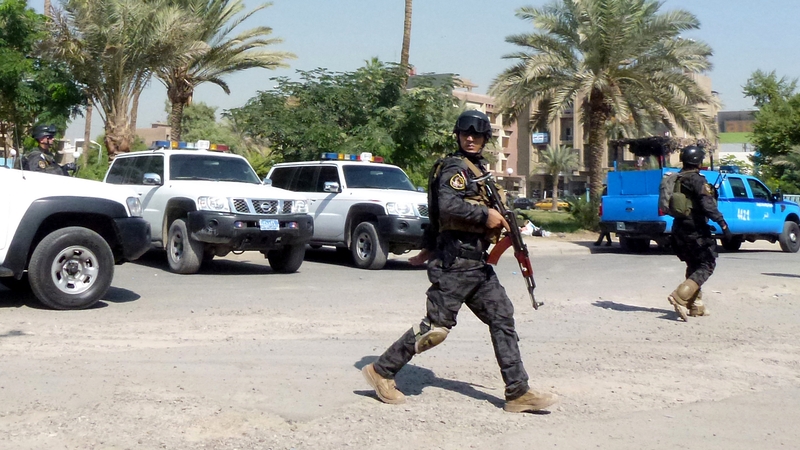
Two bomb blasts have killed at least 18 people in a mainly Shia Baghdad district in the latest in a series of large attacks to hit Iraq's capital in less than a week.
Bombings across Baghdad since Monday are highlighting security risks in Iraq as US troops prepare to leave by a year-end deadline more than eight years after the US invasion.
In yesterday's attacks, a roadside bomb exploded near a coffee shop in the mainly Shia district of Sadr City followed by a car bomb nearby, witnesses and police said.
"I heard a blast... I went to the scene to see what happened with some people. Soon after, 100 metres away, a taxi exploded," Mohammed Khadim, a witness said at a local hospital. "There were casualties lying in the street."
At least 18 people were killed in the two blasts and about 40 more were wounded, police and hospital sources said.
Sadr City, an impoverished neighbourhood in northeastern Baghdad, is the stronghold of radical Shia, anti-US cleric Moqtada al-Sadr, whose Mehdi militia once fought US and Iraqi troops. He is now a key ally of Prime Minister Nouri al-Maliki.
Violence in Iraq has fallen sharply since the heights of sectarian fighting in 2006-2007, but attacks still occur daily.
Suicide bombers and roadside blasts killed at least 28 people on Wednesday across Baghdad. The attacks mostly targeted police stations and patrols.
At least ten people were killed on Monday, in three blasts in the mainly Shia Washash district of the capital. The first blast was followed by two more explosions when emergency services arrived on the scene.
The last 41,000 US troops are scheduled to withdraw when a bilateral security pact ends, but Baghdad and Washington are in talks to decide whether troops stay on as trainers after that.
