

The National Employment Rights Authority prosecuted 143 employers last year for breaching workers rights and secured convictions in 32 cases.
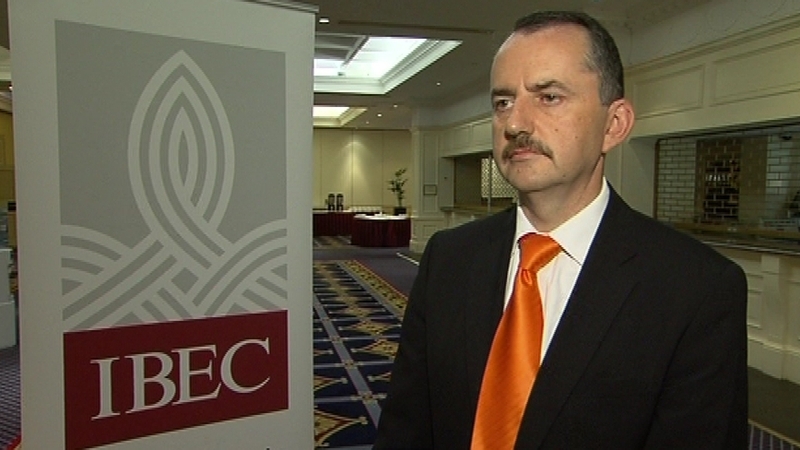
NERA's Director Ger Deering told IBEC's employment law conference it had carried out inspections of over 5,000 workplaces during that period. He said that €48,000 had been secured in fines from non-compliant employers.
He pointed out that some of the prosecutions taken last year have not yet been completed, so further convictions may follow.
He said the authority did not take a gung ho or heavy-handed approach and only took prosecutions as a last resort, where an employer had refused all opportunities to rectify their breaches or to co-operate with NERA.
He said inspectors targeted issues including incomplete records and breaches of rules on the national minimum wage, working hours, premium payments, or employment of young people.
Mr Deering said that while 85% of employers were compliant with legislation on payslips, 15% were not giving employees proper payslips showing their gross pay, deductions, and net take home pay.
He voiced concern about payslips which failed to record deductions for board and lodgings, particularly in the hotels and catering sectors.
He also said that if NERA inspectors found people working outside the law, they would report such incidents to the Revenue Commissioners and to the Department of Social protection.
He said previously, non compliant employers had been an irritant to decent employers - but said they now constituted a threat to their competitors.
IBEC criticises minimum wage cut reversal
IBEC has strongly criticised the Government for reversing the cut in the national minimum wage.
Addressing the IBEC employment law conference in Dublin earlier, IBEC's Director of Industrial Relations Brendan McGinty said the move would leave the minimum wage rate in Ireland 28% above the UK rate.
He said the differential between wage rates in the two countries was even more significant - almost 37% - in sectors governed by legally binding pay agreements known as Joint Labour Committees.
He described that differential as unsustainable and a barrier to job creation.
He called on the Government to abolish Joint Labour Committees, rather than merely reforming their structure.
He said he was disappointed that the Government's jobs initiative did not contain proposals to abolish the JLCs but instead had vague references to reforms in the area.
Mr McGinty also warned against any Government move to introduce mandatory trade union recognition or collective bargaining.
He said that for industry, this was a red line issue on a par with defence of the 12.5% corporation tax rate.
He told delegates that while IBEC welcomed the Government’s jobs initiative, it feared that the pension levy to fund it would be a tipping point that could force the closure of a number of schemes, or leave employers and employees facing higher contributions or lower benefits.
