


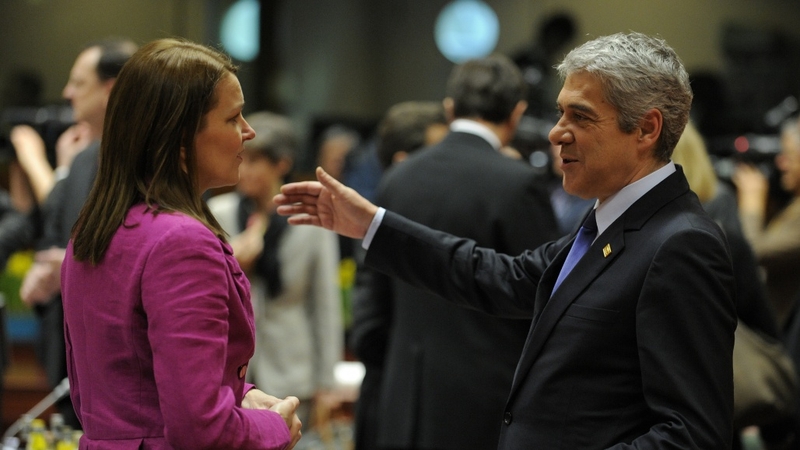
EU leaders meeting for a two-day summit in Brussels are facing a political crisis in Portugal that threatens fresh troubles for the euro.
The summit was supposed to focus on strengthening economic governance, but many issues have been postponed, including a decision on reducing the interest rate on Ireland's EU/IMF rescue deal.
However, it is taking place against the backdrop of the collapse of the Portuguese government and resignation of its Prime Minister Jose Socrates.
The Portuguese parliament rejected fresh austerity in Lisbon last night.
Speaking on RTÉ's Morning Ireland, European Policy Studies Director Daniel Gros said he believes talks over the next two days will focus on ensuring the euro remains competitive.
The outgoing Portuguese prime minister had warned of grave consequences if parliament rejected his government's latest austerity measures. But that is how the politicians voted.
Investor concerns could rise over Portugal's ability to reduce its public finances.
Indeed, many observers believe Portugal will inevitably follow Greece and Ireland into a bailout fund.
It also appears the question of Ireland reducing its EU/IMF rescue deal interest rate is off the table until stress tests on its banks have been completed.
Taoiseach Enda Kenny said the decision not to seek to conclude a deal on Ireland's bailout interest rate at the two-day summit was reached after a phone call with the President of the European Council Herman Van Rompuy yesterday.
Speaking to reporters as he arrived at the summit, Mr Kenny said it was better to know the full extent of the liabilities facing the Irish banking sector before continuing with negotiations.
He rejected what he called 'extreme figures' being 'bandied about' regarding the scale of the recapitalisation needs in the sector, without specifying what they were.
