


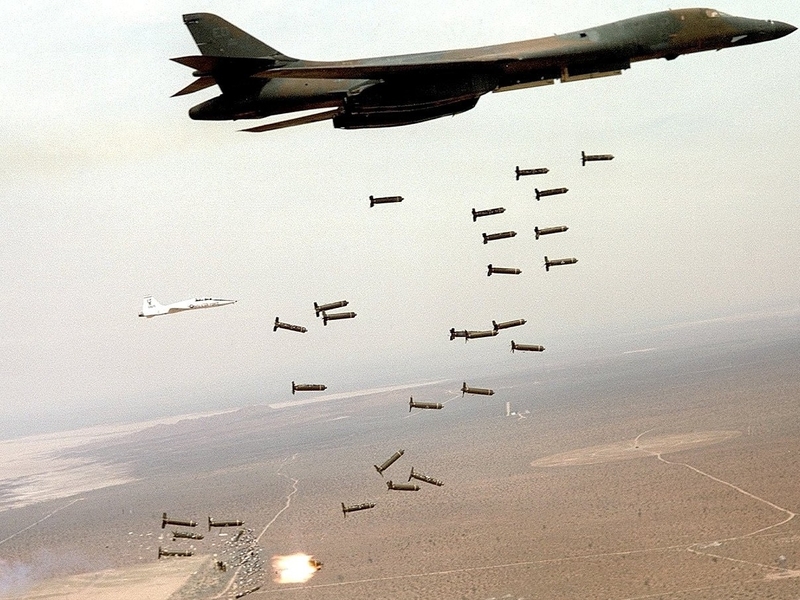
Campaigners against cluster bombs say the main manufacturers and stockpilers of the munitions will be forced to accept a ban if one is agreed at a two-week conference which opened at Croke Park in Dublin today.
130 countries are working to agree a treaty that would be widely supported.
However, the weapons' main producers and stockpilers - including the United States, Russia and China - are against any such treaty move and are not represented at the conference.
Speaking on RTÉ Radio's Drivetime, Simon Conway of the campaigning group, Landmine Action, said he believed such countries would have to accept a ban.
The Minister for Foreign Affairs Michaél Martin opened the conference this morning.
Mr Martin said he is hoping for an ambitious outcome to the conference that would be widely supported and would set the international standard.
The Secretary General of the UN, Ban Ki-moon, delivered a video message at the start of the conference, which is being attended by representatives from over 100 countries.
It is the largest international conference of its kind ever hosted by Ireland.
Efforts to ban the use, manufacture and trade of cluster munitions have gained momentum over the past year.
It follows widespread revulsion about the impact of these weapons that open in mid air, and randomly scatter dozens of individual bomblets over a large area. They can kill people years after a conflict ends.
Some countries will lobby to exempt certain weapons or for a long transition period. Other countries that use cluster bombs such as the US, China, Russia and Israel will not be in attendance.
Grethe Ostern, joint head of the Cluster Munitions Coalition (CMC) umbrella group, said: 'Governments have been talking about the dangers of cluster bombs for years.
'More delays mean more injuries and death for ordinary people. We have a unique opportunity to ban cluster bombs in Dublin. It is now or never.'
