

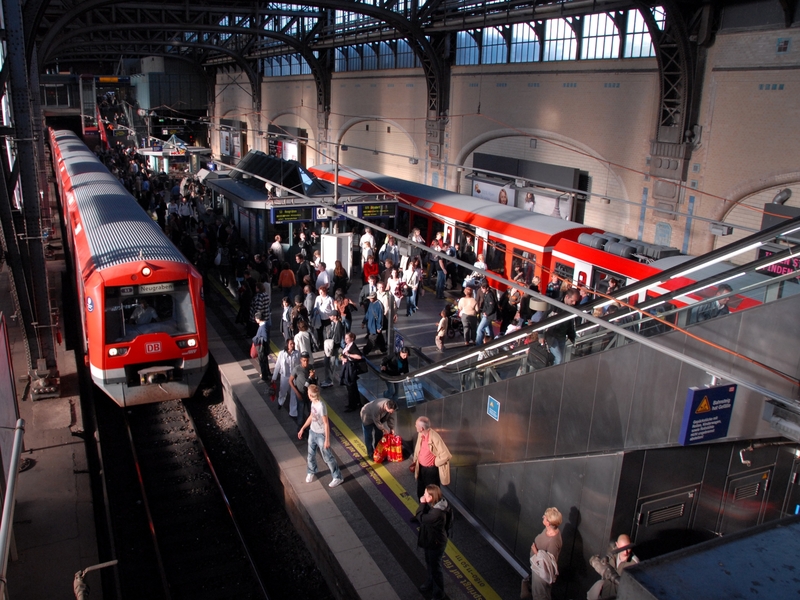
The biggest strike in the history of the German railways is causing chaos as passenger and freight train drivers stop work.
On main line tracks, only two-thirds of trains are running, most of them high-speed trains.
In the west of the country, half of the regional trains were operating, and in the east about 10%, according to operator Deutsche Bahn.
The government said it feared the strike could have a dramatic economic impact and appeal to the train drivers' GDL union and Deutsche Bahn to return to the negotiating table.
If Deutsche Bahn does not offer a new pay deal by Monday, the union is ready to stage walkouts 'until Christmas,' Hans-Joachim Kernchen of GDL warned.
But the rail company said it would not be brought to its knees, amid growing public frustration with the industrial action.
Services are not expected to resume until early on Saturday.
Commuters in the cities of Frankfurt and Stuttgart took to their cars today and faced traffic jams as only a third of the suburban trains were running.
In Berlin, Hamburg and Munich, there were 20- to 60-minute delays on commuter trains.
Long-distance trains between Germany and Austria were also affected.
