

The commander of US forces in Iraq says his generals will need a large contingent of troops in that country until the middle of 2009, well beyond the desired timetable by Democrats in Congress.
 Six weeks before he is due to report back to Washington politicians on the results of his 'surge', General David Petraeus (left) says he and his deputy are working on a plan that extends well into 2009.
That means President George W Bush's successor would be in charge of bringing home US troops from Iraq - six years after their invasion.
'Sustainable security is, in fact, what we hope to achieve,' Gen Petraeus said.
He added: 'It's in our campaign plan. We do think it will take about that amount of time, as you discussed, to establish the conditions for it.'
Most Democratic members of Congress want the nearly 157,000 US troops in Iraq to leave sooner than the General's proposed timeline.
Six people killed in Baghdad bomb blast
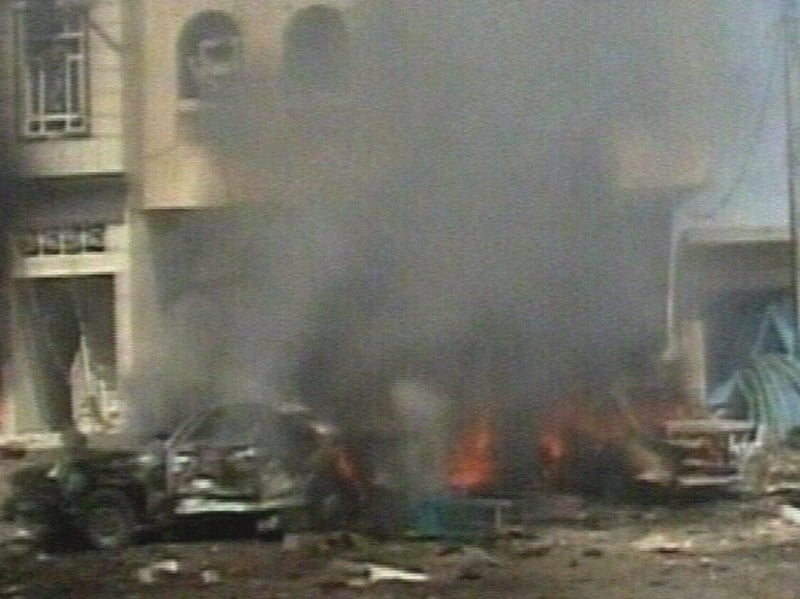
Six people have been killed and 31 wounded in a bomb blast in central Baghdad.
The explosion occurred in the mainly Shia Bab al-Shorji district.
The target appeared to be a bus stop near Tayran Square, a transport hub in the centre of the city.
At least four minibuses and two cars were engulfed in flames.
The explosion came hours after the authorities lifted an overnight curfew intended to prevent attacks on residents celebrating the national football team's victory over Saudi Arabia in yesterday's Asia Cup final.
Eight million Iraqis need aid: Oxfam
Meanwhile, a new NGO report finds almost eight million Iraqis are in need of immediate emergency aid, including four million who are described as in dire need.
The figures are contained in a report released this morning by Oxfam and the NGO Co-ordination Committee in Iraq.
The report warns that ongoing violence is masking a humanitarian crisis that has worsened since the US-led invasion in 2003.
It says 28% of Iraqi children are malnourished, 15% of Iraqis regularly cannot afford enough to eat and 70% lack clean drinking water, all sharp increases since 2003.
Oxfam, which pulled out of Iraq along with most other aid agencies because of deteriorating security in 2003, said there are local charities within Iraq that are working to help the poorest Iraqis. But most are under-funded.
Some are afraid to accept aid from countries with troops in Iraq for security reasons, and Oxfam called on countries that have not sent troops to send more money for aid.
