
The month of April 2026 saw the second-highest sea surface temperatures on record for oceans outside the polar regions.
Record high temperatures were registered across large parts of the tropical Pacific, associated with strong marine heatwaves.
The global average surface air temperature was 14.89°C. This was 1.43°C above pre-industrial levels for April.
This made April the joint third-warmest April on record globally, according to the EU Copernicus Climate Change Service.
In Europe, where the average temperature over land was 8.88°C, strong regional differences in temperature anomalies were recorded.
Much of southwestern Europe experienced significantly warmer than average conditions. This includes Spain, which had its warmest April on record.
Conditions in eastern Europe, however, were colder than average, and for the overall European continent it was the tenth warmest April on record.
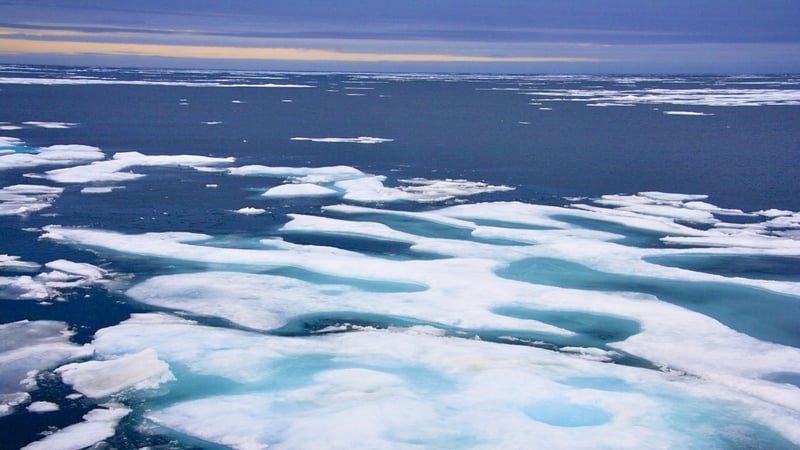
In the Arctic, the sea ice extent was the second lowest for April.
The month was also marked by extreme weather events, including tropical cyclones in the Pacific, floods in the Middle East and south-central Asia, and droughts impacting southern Africa.
Flash flooding hit much of the Arabian Peninsula, while parts of Iran, Afghanistan, Saudi Arabia and Syria experienced widespread flooding and landslides, claiming lives.
The Strategic Lead for Climate at European Centre for Medium-Range Weather Forecasts, Samantha Burgess, said the data adds to the clear signal of global warmth.
"Sea surface temperatures were near record levels with widespread marine heatwaves, Arctic sea ice remained well below average, and Europe saw sharp contrasts in temperature and rainfall; all hallmarks of a climate increasingly shaped by extremes."
April 2026 was also predominantly drier than average in western and central Europe, due to a persistent high-pressure area over the region.
April was warmer and wetter than average, says Met Éireann
Conversely, much of easternmost and southeastern Europe, along with Ireland, the UK, and Iceland, parts of Spain and Italy, the Maghreb coast, and the Caucasus, saw above average precipitation and soil moisture.
Outside Europe, wetter-than-average regions included the northeastern and central United States, Canada, northern Mexico, the Arabian Peninsula and Afghanistan, southern China, Japan, parts of Brazil, southern Africa, and New Zealand.
In contrast, drier than average conditions prevailed in the southeastern United States, Central Asia, Madagascar, Australia, and parts of South America.