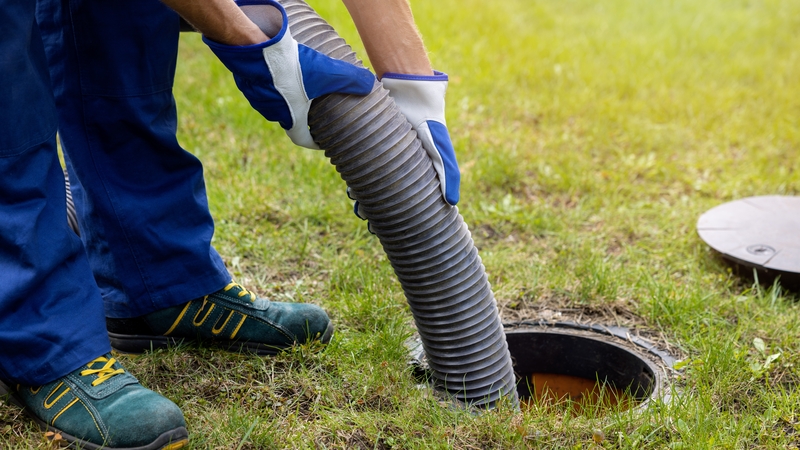

The Environmental Protection Agency has reported that almost six out of every ten domestic septic tanks failed inspection last year, putting drinking water, wells and rivers at risk.
There are nearly half a million domestic wastewater treatment systems, or septic tanks, in Ireland.
They are used to treat wastewater where homes are not connected the public sewage system.
Local Authorities are required to inspect a minimum 1,200 septic tank inspections per year.
These inspections are generally targeted at areas where septic tanks present a pollution risk.
The majority are near rivers known to be at risk and in areas where domestic septic tanks are co-located with household drinking water wells.
Reasons for failure include operational issues such as inadequate desludging and maintenance, as well as structural defects including illegal discharges to ditches or streams, leaks, ponding, and rainwater ingress.
Faulty septic tanks can contaminate drinking water wells with harmful bacteria and viruses.
Also, people may be exposed to wastewater if it surfaces in gardens or runs off into ditches and streams.
There are also risks to the environment because excessive releases of nitrogen and phosphorus from faulty septic tanks can cause pollution in receiving waters.
This has been identified as a problem in 148 water bodies around the country.
Inspections of Domestic Wastewater Treatment Systems are carried out by Local Authorities.
Last year they conducted 1,466 of these inspections. The number that failed was 863, or 59%, with a significant number identified as a risk to human health and the environment.
Today's report says three local authorities, Fingal, Donegal and Wexford did not carry out their full quota of inspections last year and need to double up inspections to make up for those shortfalls this year.
It also says that 84% of septic tanks that failed inspection last year were fixed by the end of 2025, while the number of advisory notices unresolved for longer than two years fell noticeably to 442, down from 252 in 2024.
This improvement was aided significantly by the availability of the enhanced government grant for the remediation of septic tanks which was increased from €5,000 to €12,000 in 2024.
However, the Director of the EPA’s Office of Radiation Protection and Environmental Monitoring, Pat Byrne, said more consistent and sustained enforcement is needed across all local authorities to ensure that faulty septic tanks are fixed as soon as possible and that public health and the environment is protected.
EPA Programme Manager Noel Byrne, said: "Regular checks and routine maintenance of septic tanks by homeowners can prevent minor issues becoming major problems, helping to protect their family’s health and the environment."