


The Irish preoccupation with the family home runs deep, writes RTÉ Religious and Social Affairs Correspondent Joe Little.
During the Land War of the 19th Century the nationalist leader, Charles Stewart Parnell, urged rural tenants to “keep a firm grip on their homesteads”.
And during the 1913 Lockout, Dublin’s tenements were even more crowded than Calcutta’s.
So it’s no surprise that the contemporary plight of the escalating number of homeless people has gripped the electorate’s imagination in the lead-in to this General Election.
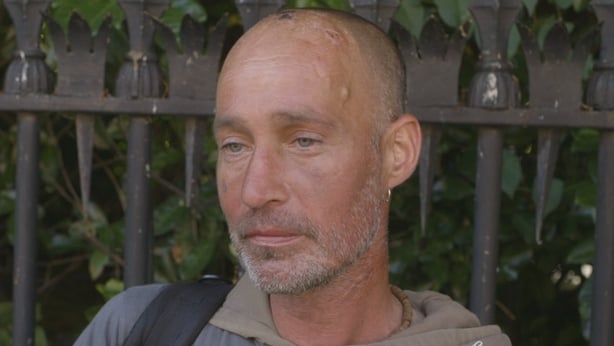
The December 2014 death of 43-year-old Jonathan Corrie in a doorway outside Leinster House threw into sharp relief the Government’s policy failures on housing.
Last autumn Minister for the Environment Alan Kelly claimed the Coalition was caught in a “perfect storm” of (spiralling) rents and (scarce) mortgages and, after a very public budget week scrap, agreed a package with Finance Minister Michael Noonan that included a two-year rent freeze.
But in anticipation, many landlords had already hiked their prices. Underlining the tensions inside Government, East Cork Fine Gael TD Tom Barry, announced he’d sell his portfolio of rental homes.
But simultaneously, the official count of homeless children was doubling.
By last October, 1,638 children were living in emergency accommodation, marking a year-on-year increase of 90%.
The overall count of homeless people has exceeded 5,000 for the first time.
The recent RTÉ television documentary “My Homeless Family” elicited more calls from the political Opposition and lobby groups to increase Rent Supplement ceilings and for the Taoiseach to instruct NAMA to build 10,000 social housing units, five times the current target.
The Anti-Austerity Alliance highlighted that local authorities had built only 20 council dwellings in the first half of last year.
But the Taoiseach rejected the calls, underlining the Government’s plan to increase the supply of housing.

The Government says 13,000 new social housing units were delivered last year, many of them rehabilitated council homes which had become derelict.
And it reports that 2,000 people exited homelessness in the same period and that the number of rough sleepers had fallen.
But the Government’s strategy is viewed in many quarters as being too cautious.
For example, it does not extend to backing the call form the industry body, the National Competitiveness Council, for the levying of a punitive tax on developers hoarding building land in anticipation of growing windfall profits.
The builders’ lobby, the Construction Industry Federation, opposes such a move arguing that a levy is already in place and that planning rules need to be streamlined instead.
Minister Noonan has emphasised that the housing crisis is a sign of economic recovery.
More people have jobs, increasing the demand for houses. But the credit squeeze has created a quandary: last September it was twice as expensive to rent a two-bedroom apartment in his Limerick City constituency as it would be to pay a mortgage on it.
However, the flurry of pre-election activity by ministers has yielded some results.
The Minister of State with responsibility for Mental Health, Kathleen Lynch, has announced an additional €2m allocation to the HSE’s current budget to address the health needs of homeless people in the Dublin region who manifest chronic mental ill health and/or substance misuse and addiction problems.
Not surprisingly, living costs are contributing to a sharp increase in child poverty.
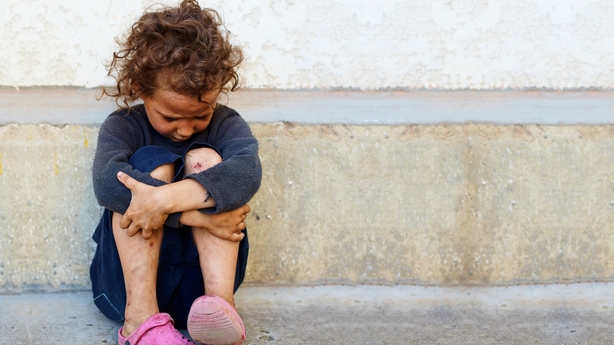
In 2014, 11.2% of children in Ireland were living in consistent poverty, almost twice the 2008 figure of 6.3%.
The St Vincent de Paul Society says it has never been busier helping the casualties of the crash.
Along with Catholic development agency Trócaire and think-tank Social Justice Ireland, it has called on the incoming government to child-proof its policies and to prioritise investment in housing, education, health and social protection.
According to the Society’s John-Mark McCafferty, “the recent and continued economic gains” have to be matched with better access to steady jobs, particularly for families.
“Ireland is not close to its policy goal of ‘making work pay’ for people whose earning potential is relatively low while rents and childcare costs remain extremely high,” he says.
For middle class and working class voters alike, childcare costs will continue to be a bugbear despite the Government’s success in extending universal free pre-school provision to two years while including toddlers with disabilities in the scheme.
But the women’s lobby and employers protest that the Republic remains far behind its European competitors where easing mothers’ pathway back to work is concerned.
Nevertheless, the Social Protection Minister and Labour leader, Joan Burton, has taken much of the credit for undoing the Coalition’s cuts to Child Benefit since 2011 and she points to a New Year breakthrough: the granting of a fortnight’s paid paternity leave.
Apparently she detects an appetite among voters for much more of the same.
Earlier this month she jump-started her party’s re-election campaign by promising to cut the cost of childcare by more than 50% to €2 an hour.
In less turbulent times a series of recent damming watchdog’s reports on residential care settings for old and disabled citizens would be guaranteed to feature at the hustings.
True, Carrick-on Shannon, Co Leitrim is up in arms over the downgrading of day care in the local St Patrick’s Community Hospital.
Last year Health Information and Quality Authority inspectors reported that the hospital’s 83 residents were being offered a shower or bath once a fortnight if staff were available and once a month otherwise.
Now locals fear the converted Victorian workhouse will be closed and that the next government won’t replace it.
Their fears may be intensified by the late January announcement that the hospital is on the “B” list in a national five-year programme for the replacement of 33 state-run nursing homes and the refurbishment of 57 others.
It is one of the few centres listed whose replacement will depend, according to Ms Lynch’s statement, on funding from public-private partnerships or other “alternative funding arrangements” from outside the HSE’s capital budget.
Leitrim has one of the “greyest” populations in the Republic so it’s no surprise that the issue has gained traction there.
But nationally, anger about the scandal of institutional neglect of many public nursing home residents seems to dissipate within days of each troubling HIQA report.
And the watchdog’s findings of neglect in some of our much newer private nursing homes have been greeted with a near-deafening silence by politicians.
Recently, a national precedent was set in Youghal District Court in East Cork when Judge Terence Finn ordered the HSE to re-accommodate more than 30 intellectually disabled residents of the local St Raphael’s Centre after HIQA raised concerns about their safely.
It’s the tip of an iceberg of what many have warned will become the next institutional abuse scandal to rock the Republic.
Unfortunately, this is not the first time that the courts and regulators have been forced to drive change in this jurisdiction in the absence of political leadership on issues which are not regarded as "box office".
