


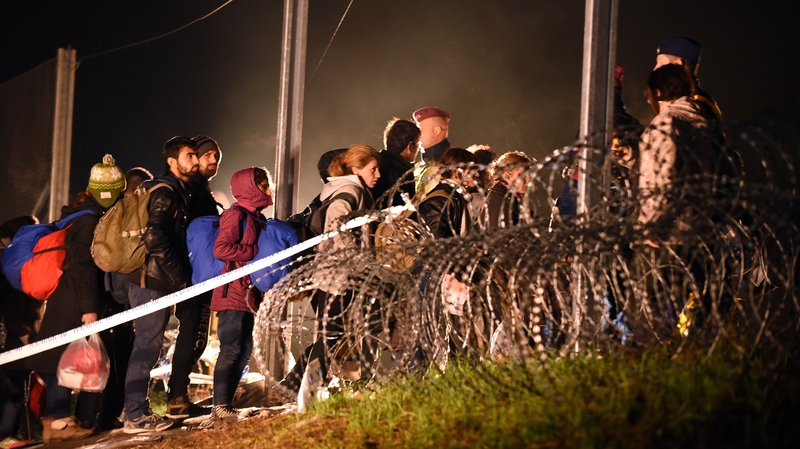
Nearly 3,000 migrants trying to reach northern Europe have crossed into Slovenia from Croatia, having been forced to change their route after Hungary closed off another border with razor wire.
Slovenia's government said 2,700 men, women and children had crossed from Croatia into its territory, where Ljubljana deployed soldiers at the border to help police with "logistics and equipment".
The first arrivals, about 600 of them, went by bus to the border crossings of Gruskovje and Petisovci. Many had already spent weeks trekking up through Greece and Macedonia before crossing Serbia to reach the Croatian border.
After registering them at border checkpoints, Slovenian authorities were to transport them to the Austrian frontier from where they could continue to Germany, the preferred destination for many.
A majority of the migrants were from Syria, Iraq and Afghanistan, UNHCR spokeswoman Caroline van Buren told AFP at the Petisovci checkpoint.
"They are fleeing from war... They are literally running for their lives," Ms van Buren said, adding that the procedure for now was running smoothly.
"Unlike other countries, Slovenia had time to prepare... It's not perfect, but things are moving."
The Croatian government has said it will continue to ferry migrants across the country by bus and train as long as Slovenia and Germany kept their borders open.
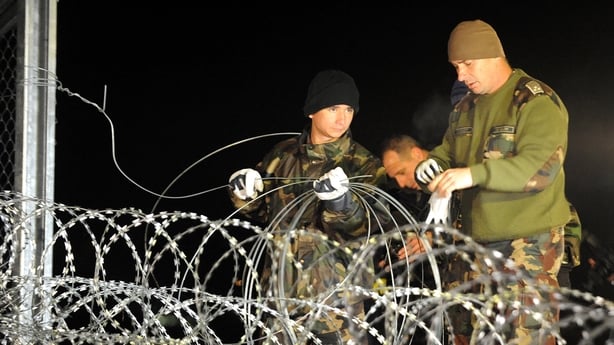
Hungary closed its frontier with Croatia to migrants early Saturday in a bid to block the path of streams of refugees, a month after it sealed its border with non-EU neighbour Serbia - until then the main entry point into the EU for migrants fleeing conflict and poverty.
Later on Saturday, a special train with about 1,200 migrants on board arrived at the Sredisce ob Dravi crossing, guarded by more than 100 policemen, said an AFP correspondent at the scene.
More than 300,000 people have entered Hungary this year and it said it has taken unilateral action because of the failure of the EU to create a common border force.
The UN refugee agency said people were being denied their right to protection under international conventions by Hungary's actions.
Hungary has erected a steel fence almost the length of its southern frontier, declaring it is duty-bound to secure the borders of the European Union from mainly Muslim migrants threatening, it said, the prosperity, security and "Christian values" of Europe.
A month ago, the right-wing government of Hungary's fiercely anti-immigration prime minister, Viktor Orban, shut down the migrant route across its frontier with Serbia.
They were diverted into Croatia, from where they entered Hungary, crossing in recent weeks at a rate of 5,000 to 8,000 per day en route to Austria and Germany, the preferred destinations of most.
With that route now sealed, too, Croatia said it had a plan in place to send them to Slovenia from midnight, in agreement with its fellow former Yugoslav republic.
Both Croatia and Slovenia indicated they would not restrict the flow so long as Austria and Germany kept their doors open.
But the scale threatens to test the resources of Slovenia, an Alpine state of two million people, and of Croatia and Serbia if a backlog builds, with weather conditions deteriorating fast.
Confirming "operational talks" with Croatia, Slovenia said it would convene its national security council on Saturday.
"If Germany closes its border or restricts border crossings, then Slovenia will act accordingly," Slovenian Foreign Minister Karl Erjavec told a news conference.
"But so far there are no indications or information that Germany is to change its policy."
The EU has agreed a deal - resisted by some of its members in eastern Europe, including Hungary - to accommodate 120,000 refugees among its members, only a small proportion of the 700,000 or so people expected to reach Europe this year.
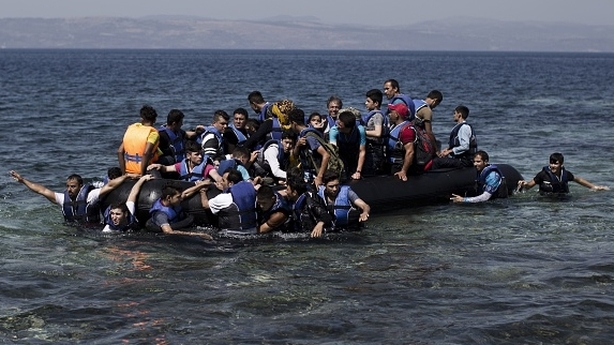
16 migrants drown off Turkish and Greek coasts
Twelve migrants drowned today when their boat sank off the Turkish coast as they were seeking to reach Greece, while around 25 others were rescued, the Anatolia news agency reported.
The Turkish coastguard recovered the bodies from the wooden boat, which had sailed from northwest Turkey's seaside town of Ayvalik headed for the Greek island of Lesbos, the Turkish news agency said.
The rescuers managed to save about two dozen others on board the sinking boat who had called for help on their cellphones, Turkish media reported.
Anatolia did not indicate the migrants' nationalities.
Meanwhile four people, a woman and three children, drowned and one child was missing after their rubber boat capsized off a Greek island late last night, the Greek coastguard said.
The coast guard said it has rescued 13 people and was searching for the missing child after the boat capsized off the Aegean island of Kalymnos.
Thousands of refugees - mostly fleeing war-torn Syria, Afghanistan and Iraq - attempt daily to cross the Aegean Sea from nearby Turkey, a short but perilous trip by inflatable boats, often in rough seas.
Almost 400,000 people have arrived in Greece this year, according to the UN refugee agency UNHCR, overwhelming the cash-strapped nation's ability to cope.
On Thursday, seven people, among them a baby and three children drowned after their wooden boat and a coast guard vessel crashed during a migrant rescue operation off Lesbos.
