


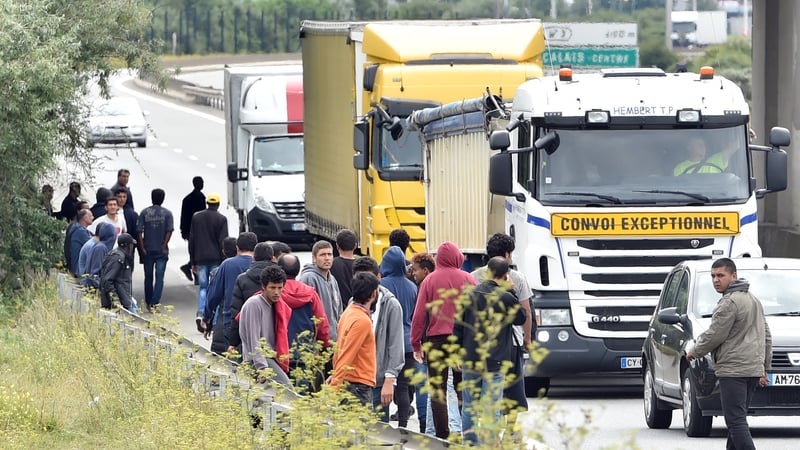
Britain and France have announced new measures to prevent undocumented migrants entering the Channel Tunnel, while stepping up joint police operations against the people-smugglers who profit from their desperation to reach the UK.
Both countries will contribute police resources to a shared "command and control" centre in the northern French port city of Calais, Britain's Home Office said in a statement.
The new joint command will "find and disrupt organised criminals who attempt to smuggle migrants into northern France and across the Channel", it said.
For Britain and France, Calais is the focus of a wider migration crisis fuelled by conflict, persecution and poverty that has sent hundreds of thousands out of Syria, Libya and other Middle Eastern and African states.
Tens of thousands of migrants are arriving in Italy and Greece each week, while Germany expects the number of asylum applications to quadruple to a record 800,000 this year, its government said yesterday.
Thousands of migrants are holed up in make shift encampments in Calais, with many trying each night to jump onto trucks or trains, or even walk the 50km undersea tunnel to Britain.
Some have been killed in the attempt.
Led by senior French and British police commanders, the new centre will report to both interior ministers.
British Home Secretary Theresa May and her French counterpart Bernard Cazeneuve are to outline the plans at a news conference in Calais today.
New measures include increased French police numbers and British-funded fencing, CCTV and other security equipment to protect the tunnel entrance in Calais, the Home Office said.
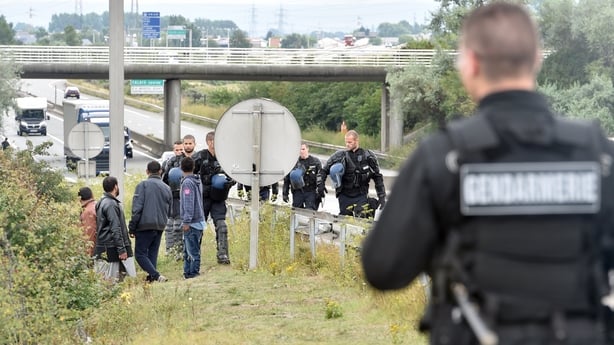
Operator Eurotunnel will receive unspecified "support" to deploy more security guards at the site, it added.
The growing refugee crisis will also feature in talks between French President Francois Hollande and German Chancellor Angela Merkel on Monday, as southern European states bearing the brunt of the influx press for a concerted EU-wide response.
"This is an absolute human tragedy, with people who are dying and people who are in terrible situations," French Foreign Minister Laurent Fabius said yesterday.
France wants to set up processing centres for speedier treatment of asylum applications at Europe's main entry points and use development policy to enlist better co-operation from transit countries, Mr Fabius said.
Meanwhile, a United Nations worker has warned that shelter must be found for the thousands of refugees reaching the small Greek holiday island of Kos before trouble breaks out.
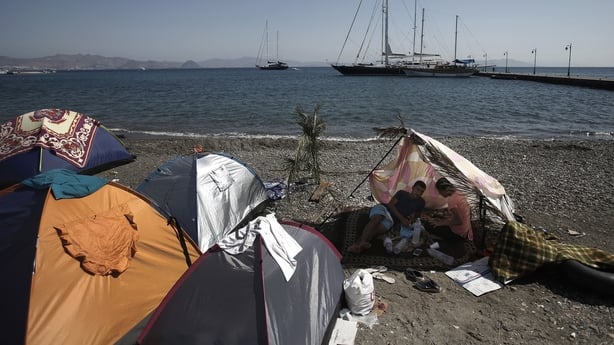
Many are sleeping rough on the streets or in make-shift tents with little access to food or water and suffering heat exhaustion while they wait, sometimes weeks, to be registered by police.
The vast majority intend only to pass through tourism-dependent Kos on their way to wealthier countries in Europe but under-pressure officers are struggling to deal with the paperwork creating a bottleneck effect.
Roberto Mignone, the UN Refugee Agency's emergency coordinator in Kos, described it as a "fragile situation".
He said: "What's unique about here is that there is no accommodation centre here so they are sleeping on the streets with very little support while they wait for their papers."
Stephen Ryan from the Irish Red Cross has said that while the number of people on Kos that are migrating to Europe has decreased in recent days, there are still thousands on the island requiring humanitarian aid.
Speaking on RTÉ's Morning Ireland he said the Irish Red Cross is providing help to those people who are on the move, but that they do not have enough resources to cope with this unprecedented emergency.
"A significant portion of people who arrive in Kos are solo travellers and families, including infants. It is particularly difficult for those who arrive without resources as they have no choice but to sleep rough."
He said there are tents lining the beaches that are filled with migrants sleeping outdoors.
"They have an awareness that it is not simple to seek asylum but ... when people have travelled so far from places where there has been conflict or lack of security, when they arrive in Europe nothing is going to convince them to return to their home countries."
Around 34,000 migrants have arrived in the small island of Kos alone since January - accounting for around a tenth of all migrants who have reached EU borders in that period, he added.
The majority of the migrants are refugees fleeing war-torn Syria who have already travelled through southern Turkey and into western Turkey before being smuggled on dinghy boats overnight to Kos and other islands in the Aegean Sea.
Those who reach Kos hope to continue on to mainland Greece before travelling north through Macedonia, Serbia, Hungary and beyond, aid agency the International Rescue Committee explained.
A ship chartered by the Greek authorities to act as a make-shift registration centre set sail for Athens today with 2,500 migrants on board, but up to 3,000 are still remain on the island with more arriving every day.
