


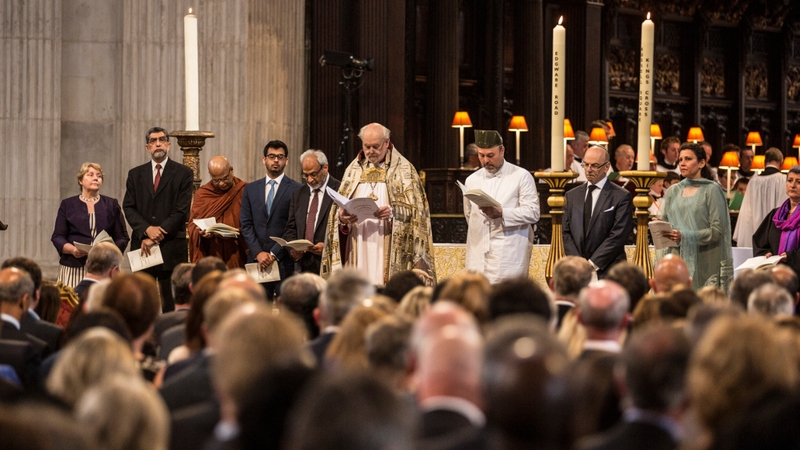
Remembrance services to commemorate the 10th anniversary of attacks targeting London public transport, which killed 52 people, have been held.
It was the first suicide bombings by Islamist militants in western Europe.
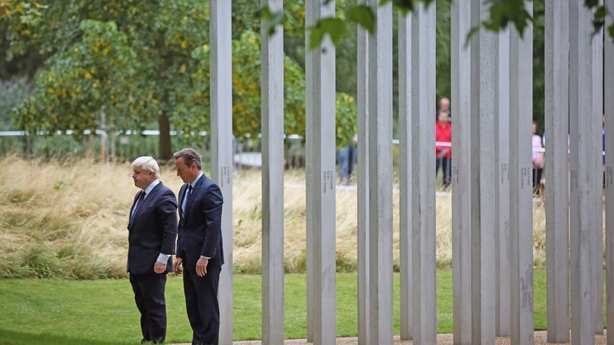
British Prime Minister David Cameron and Mayor of London Boris Johnson laid wreaths at the permanent memorial to the victims in Hyde Park at 8.50am - the time a series of explosions hit the transport network on 7 July 2005.
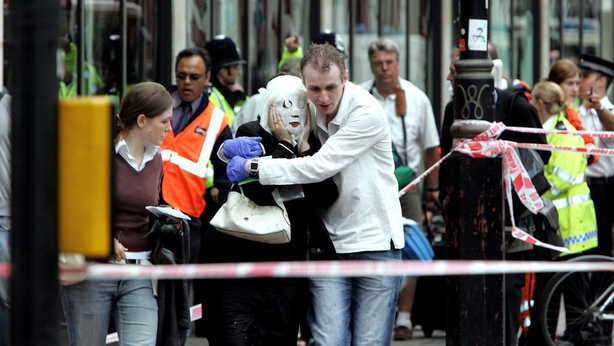
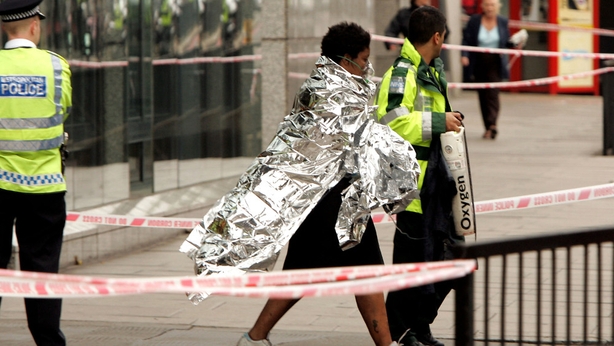
That morning during rush-hour, four young British Muslims travelled to London where they detonated homemade bombs hidden in rucksacks on three underground trains and a bus.
Inspired by al-Qaeda, they killed themselves and 52 other people and wounded around 700 others.
Citizens from Poland, Israel, Australia, France, Italy, Afghanistan, Nigeria, New Zealand and a Vietnamese-American were among the victims.
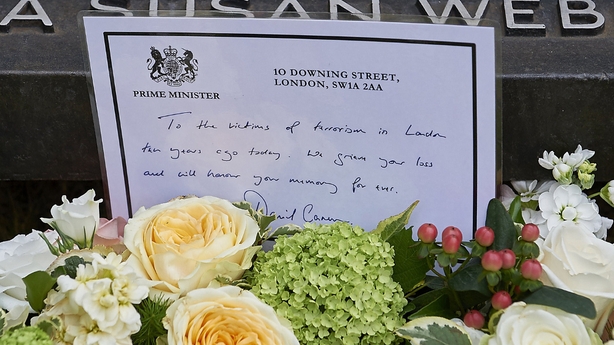
In a note attached to his wreath, Mr Cameron wrote: "To the victims of terrorism in London ten years ago today. We grieve your loss and will honour your memory for ever."
Also laying wreaths at the Hyde Park memorial were Transport Commissioner Sir Peter Hendy, Fire Commissioner Ron Dobson, and chief executive of London Ambulance Dr Fiona Moore.
Others were speaker of the House of Commons John Bercow and MP Harriet Harman.
The wording on the wreath laid by Mr Johnson read: "Ten years may have passed, but London's memory is undimmed. We honour again today the victims of 7/7. You will live forever in the hearts of the people of this city. Boris Johnson"
My thoughts today are with all who were killed and injured in the appalling 7 July bombings in London 10 years ago.
— Daniel Mulhall (@DanMulhall) July 7, 2015
Mr Cameron said in a statement this morning: "Ten years on from the 7/7 London attacks, the threat from terrorism continues to be as real as it is deadly."
He said: "The murder of 30 innocent Britons whilst holidaying in Tunisia is a brutal reminder of that fact. But we will never be cowed by terrorism."
Ceremonies included a national minute of silence, which was marked at 11.30am.
It comes just four days after Britain paid a similar tribute to those killed when an Islamist gunman opened fire at the Tunisian resort of Sousse.
A further service is being held this afternoon at the memorial site for survivors and relatives, which Prince William is attending.
Watch a video montage of the tenth anniversary of the 7/7 attacks https://t.co/SxJy9w01uY
— RTÉ News (@rtenews) July 7, 2015
Britain is currently on its second highest alert level of "severe".
That means a militant attack is considered highly likely, mainly due to the danger the authorities say is posed by so-called Islamic State group fighters and Britons who have joined them.
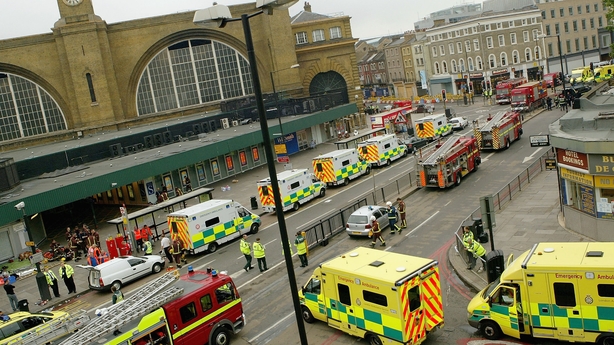
On Thursday 7 July 2005, Shehzad Tanweer, 22, Mohammed Sidique Khan, 30, Hasib Hussain, 18 and Jermaine Lindsay, 19, arrived at King's Cross at around 8.23am.
At 8.30am four men fitting their descriptions are seen hugging before splitting up.
Khan boarded a west-bound Circle Line train, Tanweer an east-bound Circle Line train, and Lindsay a south-bound Piccadilly Line train. Hussain also appears to walk towards the Piccadilly Line entrance.
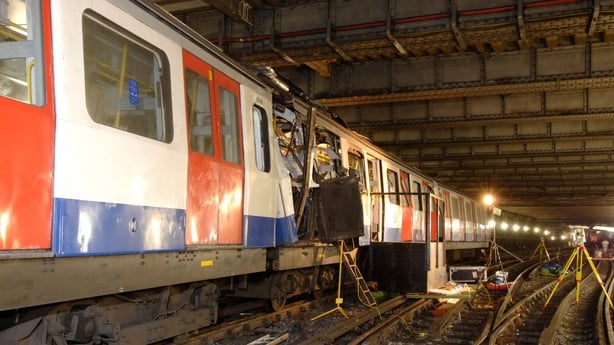
At 8.50am three bombs exploded within a minute on London Underground trains.
Tanweer detonated his bomb at Aldgate, Khan set his device off at Edgware Road and Lindsay blew himself up between King's Cross and Russell Square.
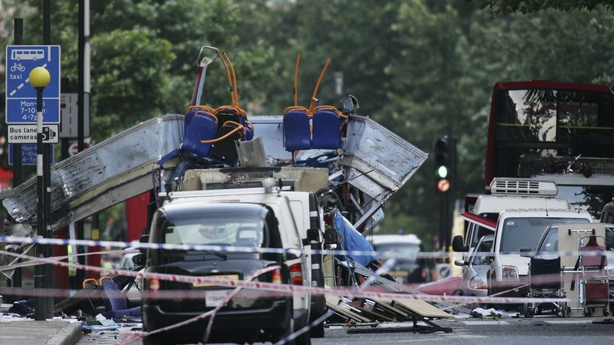
Hussain detonated his device on a number 30 bus at Tavistock Square at 9.47am.
Twenty-six died in the bombing at Russell Square on the Piccadilly line, six in the bombing at Edgware Road on the Circle line, seven in the bombing at Aldgate on the Circle line, and 13 in the bombing on the bus at Tavistock Square.
One of those who died at Russell Square was 22-year-old Ciaran Cassidy, whose parents are from Ireland. He worked at a legal and stationery firm in Chancery Lane and was saving up to go to Australia.
