


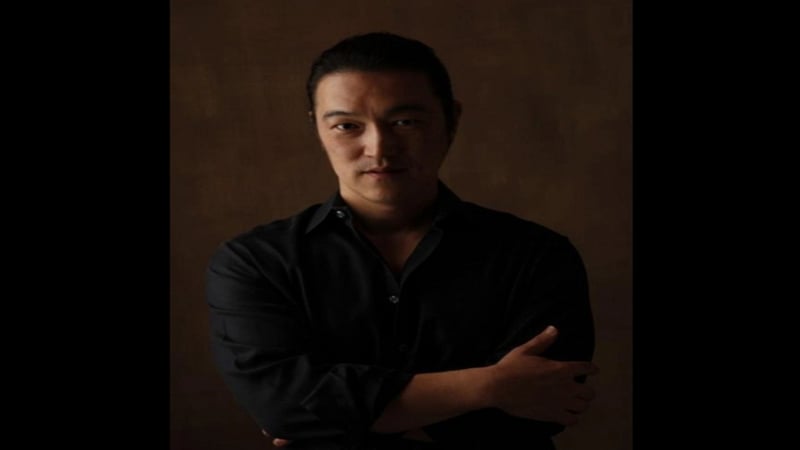
Japan Defence Minister Gen Nakatani has said a video purporting to show the death of IS captive Kenji Goto appears to be genuine.
It follows the Islamic State militant group saying it had killed Japanese hostage Mr Goto, after the apparent failure of sustained international efforts to secure his release through a prisoner swap.
The hard-line Islamist group, which controls large parts of Syria and Iraq, released a video purporting to show the beheaded body of journalist Mr Goto and threatened further attacks on Japanese targets.
IS has said Mr Goto was held along with a Jordanian pilot. Efforts to win their release had focused on the possible release of an Iraqi would-be suicide bomber jailed in Jordan ten years ago. The video did not mention the pilot.
Japan condemned the militants and said Prime Minister Shinzo Abe's cabinet would meet in response to the video, which showed a hooded man standing over Mr Goto, followed by footage of a body.
The release of the video came exactly a week after footage purportedly showing the beheaded body of another Japanese hostage Haruna Yukawa.
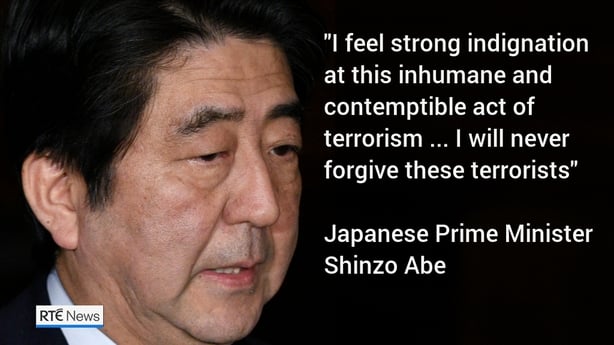
"I cannot help feeling strong indignation that an inhumane and despicable act of terrorism like this has been committed again," Chief Cabinet Secretary Yoshihide Suga said, adding the video appeared to show Mr Goto. "We resolutely condemn this."
A grim-faced Mr Abe told reporters Japan would not give in to terrorism and said his country would work with international partners to bring those responsible for Mr Goto's apparent killing to justice.
A White House spokeswoman said the United States was working to confirm the authenticity of the latest video and "strongly condemns" the militant group's actions.
The IS threats to kill their Japanese hostages came after Mr Abe announced $200m in non-military aid for countries contending with the Islamic militant group.
His government has rejected any suggestion it acted rashly and stressed the assistance was humanitarian.
Video addressed prime minister
Addressing the Japanese prime minister directly, the militant in the video said: "Because of your reckless decision to take part in an unwinnable war, this knife will not only slaughter Kenji, but will also carry on and cause carnage wherever your people are found. So let the nightmare for Japan begin."
The militant had the same British accent as the man featured in previous IS videos showing beheadings. Mr Goto wore an orange jumpsuit like captives in past footage.
The landscape in the video showed a hill and land covered in scrub, and appeared different to the desert setting of previous videos.
Islamic State, which has seized large swaths of Iraq and Syria, has beheaded a number of Western journalists and aid workers, saying they were paying the price for their governments' fight against the group.
It has also killed many local people, through beheadings, stonings and shootings, accusing them of violating their hardline interpretation of Islamic law.
In November the Syrian Observatory for Human Rights monitoring group said the group had killed 1,432 Syrians off the battlefield since the end of June when it declared a caliphate in the territory under its control.
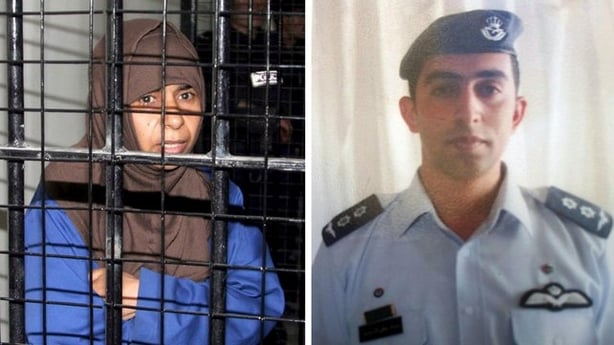
There was no mention in the one-minute video of Jordanian pilot Muath al-Kasaesbeh, who was seized by Islamic State after his jet crashed in northeast Syria in December during a bombing mission against the militants.
An audio message purportedly from Mr Goto earlier this week said Mr Kasaesbeh would be killed if Jordan did not free Iraqi Sajida al-Rishawi, in jail for her role in a 2005 suicide bomb attack that killed 60 people in the Jordanian capital Amman.
Abe's government had put high priority on seeking the release of Mr Goto, a veteran war correspondent captured by the militants in late October when he went to Syria seeking Mr Yukawa's release.
