


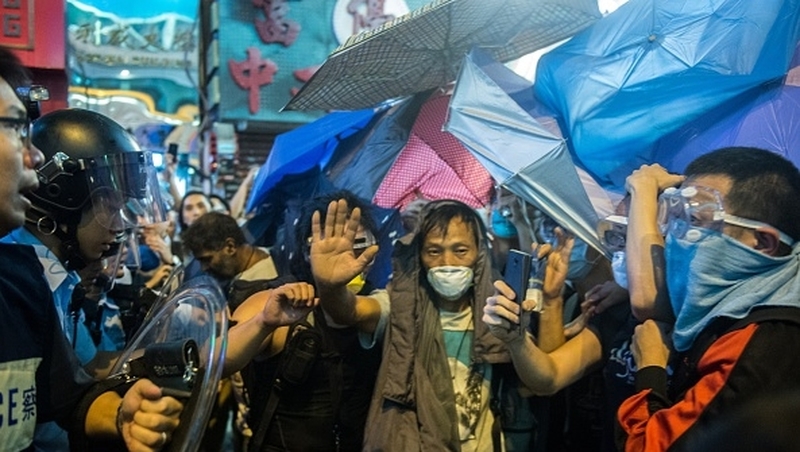
Hong Kong pro-democracy activists recaptured parts of a core protest zone from police early today.
It comes after hours of turmoil that the city's police chief warned undermined order and jeopardised public safety.
Dozens of people were injured in the skirmishes, including 15 police, which raged through the night.
Several thousand protesters, some wearing protective goggles and helmets clashed with police in the densely populated Mong Kok district.
At least 26 people were arrested.
Police used batons and pepper spray, and scuffled violently with activists.
However, they were eventually forced to pull back less than 24 hours after they re-opened most of the area to traffic.
The protests have been going on for three weeks and pose one of the biggest political challenges for China since the crushing of pro-democracy demonstrations in Beijing in 1989.
Hong Kong Police Commissioner Andy Tsang broke three weeks of public silence to say his force had been "extremely tolerant" but had failed to stop protesters becoming more "radical or violent".
"To these protesters, you may think that your illegal acts have prevented the police in going about our duties, disrupted our deployments and even forced us to retreat," Mr Tsang told a news conference.
"Superficially that may be the case. But let me tell you this: these illegal acts are undermining the rule of law, undermining (what) Hong Kong has been relying on to succeed."
After police retreated, demonstrators swiftly stacked up barricades made out of packing crates and fences.
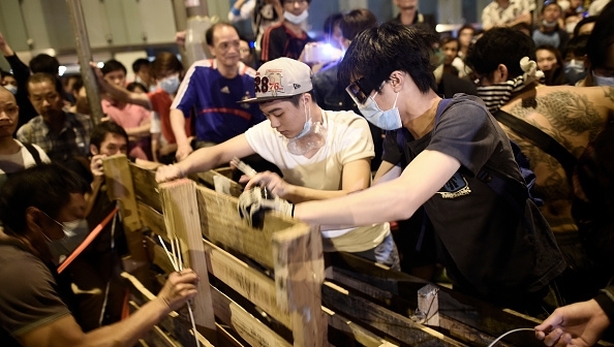
Mr Tsang said the reoccupation of the area "seriously undermined public order and seriously jeopardized public safety".
The protesters, led by a restive generation of students, have been demanding China's Communist Party rulers live up to constitutional promises to grant full democracy to the former British colony which returned to Chinese rule in 1997.
Hong Kong is ruled under a "one country, two systems" formula that allows the thriving capitalist hub wide-ranging autonomy and freedoms and specifies universal suffrage for Hong Kong as an eventual goal.
But Beijing ruled on 31 Aug it would screen candidates who want to run for the city's chief executive in 2017, which democracy activists said rendered the universal suffrage concept meaningless.
The protesters are demanding free elections for their leader.
